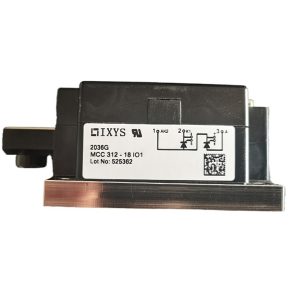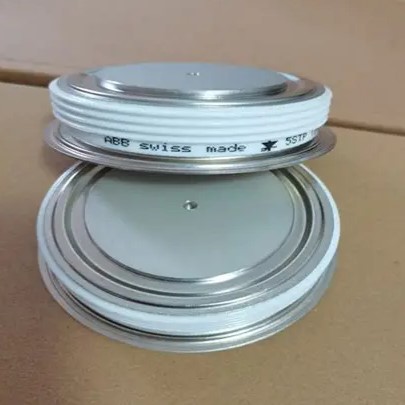
Thyristor (SCR) – Core Power Electronics Device for DC Drives
Brand name: HANI
Packing Details : Wooden box with fumigation or Wooden Fram or Steel Frame
Delivery Details: 30~60days or Based on the quantity
Shipping: Sea freight、Land freight、Air freight
HANI specializes in industrial electrical automation, delivering integrated drive and control solutions to safeguard your production.
Product Details
Thyristor (SCR) – Core Power Electronics Device for DC Drives
A comprehensive technical reference covering industrial automation products, semiconductor physics, application engineering, and practical selection criteria for modern power conversion systems.
The silicon-controlled rectifier, universally recognized as the Thyristor or SCR, remains one of the most consequential semiconductor switching devices in the field of power electronics. Since its first demonstration at Bell Laboratories in the 1950s and subsequent commercialization by General Electric in 1957, the thyristor has evolved from a laboratory curiosity into a workhorse component that underpins megawatt-scale industrial infrastructure. In today’s landscape of industrial automation products, the SCR continues to hold an irreplaceable position in applications demanding robust, cost-effective control of direct current drives, high-current rectification, and phase-angle power regulation. For engineers and procurement specialists like HANI who evaluate industrial automation products on a daily basis, understanding the nuances of thyristor technology is essential to making informed sourcing decisions that balance performance, reliability, and total lifecycle cost.
Unlike fully controllable switches such as IGBTs or MOSFETs, the SCR is a semi-controlled, latching device with a unique set of operational characteristics that make it particularly well-suited for line-commutated converters, soft-start motor controllers, and high-power DC drive systems. This article provides an exhaustive examination of thyristor fundamentals, key electrical parameters, packaging configurations, thermal management strategies, application domains, and product selection guidelines—all grounded in established semiconductor physics and international testing standards. Throughout this discussion, the term power electronics serves as the unifying framework, connecting device-level behavior to system-level performance in industrial automation products deployed across metallurgy, electrochemical processing, traction power, and beyond.
1. Fundamental Operating Principle of the Thyristor
At its core, a thyristor is a four-layer, three-junction PNPN semiconductor device with three terminals: anode (A), cathode (K), and gate (G). The device’s static I-V characteristic exhibits a distinct forward-blocking region, a breakover point, and a forward-conduction region with low on-state voltage drop typically ranging from 1.0 V to 2.5 V depending on the die area and current rating. This latching behavior is the defining feature of the SCR: once triggered into conduction by a gate current pulse, the device remains in the on-state even after the gate signal is removed, so long as the anode current exceeds the holding current (IH). Turn-off occurs naturally when the anode current falls below the holding current threshold during the reverse-bias portion of an AC cycle—a process known as line commutation.
The two-transistor analogy provides the most intuitive model for understanding thyristor operation. The four-layer structure can be decomposed into an NPN transistor and a PNP transistor interconnected such that the collector of each drives the base of the other. When a gate current injects carriers into the P-base region, the NPN transistor begins to conduct, which in turn drives the PNP transistor into conduction. This regenerative feedback loop rapidly saturates both transistors, latching the entire SCR into a low-impedance state. The physics underlying this behavior—carrier injection, diffusion, and recombination across the wide N-drift region—determines critical parameters such as the critical rate of rise of on-state current (di/dt) and the critical rate of rise of off-state voltage (dv/dt), both of which must be carefully managed in power electronics designs involving industrial automation products.
2. Key Electrical Parameters and Their Significance
Selecting an appropriate thyristor for a given power electronics application requires careful evaluation of multiple interdependent parameters. The table below summarizes the most critical specifications that engineers must consider when integrating an SCR into industrial automation products.
| Parameter | Symbol | Typical Range | Engineering Significance |
|---|---|---|---|
| Average On-State Current | IT(AV) | 5 A – 6000 A | Determines the maximum continuous DC current the SCR can handle at a specified case temperature; fundamental for thermal budgeting in industrial automation products. |
| Repetitive Peak Reverse Voltage | VRRM | 100 V – 6000 V | Defines the maximum allowable reverse bias; must substantially exceed the peak line voltage to ensure safe operation in power electronics circuits. |
| Repetitive Peak Off-State Voltage | VDRM | 100 V – 6000 V | Maximum forward voltage the thyristor can block without turning on; critical for voltage safety margin calculations. |
| Gate Trigger Current | IGT | 5 mA – 300 mA | The minimum gate current required to reliably latch the SCR; influences drive circuit design and noise immunity. |
| Critical di/dt | di/dtcr | 50 – 1000 A/μs | Maximum rate of current rise the thyristor can withstand without localized hot-spot formation and potential device failure. |
| Critical dv/dt | dv/dtcr | 100 – 2000 V/μs | Maximum rate of forward voltage rise that can be applied without unintended triggering; requires snubber network consideration in power electronics designs. |
| Thermal Resistance (Junction to Case) | Rth(j-c) | 0.01 – 0.5 °C/W | Governs heat dissipation capability; directly impacts the current derating curve and heatsink sizing for industrial automation products. |
3. Classification of Thyristor Types
The thyristor family encompasses several distinct device categories, each optimized for specific power electronics applications. Understanding these classifications is vital when specifying components for industrial automation products. The following taxonomy is based on switching speed, voltage blocking capability, and intended circuit topology.
| Type Designation | Turn-Off Time (tq) | Voltage Range | Primary Application Domains |
|---|---|---|---|
| Phase-Control SCR (Standard / KP Series) | 50–400 μs | 100 V – 4500 V | DC motor drives, AC series speed regulation, electrolytic plating rectifiers, synchronous machine excitation; the workhorse of industrial automation products at line frequencies. |
| Fast-Switching Thyristor (Inverter-Grade / KK Series) | 10–40 μs | 100 V – 2000 V | Induction heating, medium-frequency power supplies, inverter circuits, chopper systems; essential for power electronics operating above 400 Hz. |
| Rectifier Diode (ZP Series) | N/A (uncontrolled) | 100 V – 6000 V | General-purpose rectification, electrochemical processing, traction power supplies, motor field excitation; frequently paired with SCR devices in hybrid bridge configurations. |
| Asymmetric SCR | 20–60 μs | 200 V – 2500 V | Voltage-source inverters, pulsed power systems; offers reduced reverse blocking capability in exchange for improved forward conduction characteristics. |
| Gate Turn-Off Thyristor (GTO) | 10–25 μs | 600 V – 6000 V | High-power traction drives, HVDC transmission, large motor drives; can be turned off via negative gate current in advanced power electronics systems. |
4. BEIZHENG ELECTRICAL Thyristor and Rectifier Product Portfolio
Beijing Beizheng Electric Co., Ltd. (BEIZHENG ELECTRICAL) manufactures a comprehensive range of thyristor and rectifier diode products that serve as core components in countless industrial automation products worldwide. The company’s product lines—designated KP (standard SCR), KK (fast-switching thyristor), and ZP (rectifier diodes)—are engineered to comply with Chinese national standards GB4939, GB4940, JB5837, JB5838, JB5839, JB5841, and the corresponding International Electrotechnical Commission (IEC) specifications. These devices are available in both stud-type and flat-base (disc/hockey-puck) packages, with cooling options encompassing forced-air and water-cooled configurations for high-power power electronics installations.
| Model Number | Device Type | Nominal Current | Voltage Class | Package Style | Cooling Method |
|---|---|---|---|---|---|
| PBK5233B | Standard SCR (KP Series) | ~5200 A | ~3300 V | Flat-base (Disc) | Water / Forced Air |
| PBZ5123L | Rectifier Diode (ZP Series) | ~5100 A | ~2300 V | Flat-base (Disc) | Water / Forced Air |
| PBZ5233B | Rectifier Diode (ZP Series) | ~5200 A | ~3300 V | Flat-base (Disc) | Water / Forced Air |
| PBZ52122A | Rectifier Diode (ZP Series) | ~5200 A | ~12200 V | Flat-base (Disc) | Water / Forced Air |
| PBK1233L | Standard SCR (KP Series) | ~1200 A | ~3300 V | Stud-type / Flat-base | Forced Air |
| PBK52122A | Standard SCR (KP Series) | ~5200 A | ~12200 V | Flat-base (Disc) | Water / Forced Air |
Note: The model designations above represent standard catalog items from BEIZHENG ELECTRICAL. The “PBK” prefix denotes KP-series thyristor devices, while “PBZ” identifies ZP-series rectifier diodes. Numerical digits encode approximate current and voltage ratings—consult factory datasheets for exact specifications. These industrial automation products are widely deployed in DC drive systems, electrochemical rectification plants, and large-scale power electronics installations.
5. Application Domains in Industrial Automation
The thyristor finds its most demanding and mission-critical applications within the ecosystem of industrial automation products. Below is a detailed examination of the primary sectors where SCR-based power electronics converters continue to dominate.
5.1 DC Motor Drives for Heavy Industry
DC drives remain the preferred solution for applications requiring high starting torque, wide speed range, and precise torque control—attributes that characterize rolling mills in steel plants, mine hoists, paper mill winders, and extruders. In these systems, a three-phase fully controlled thyristor bridge rectifier converts fixed-frequency AC mains power into adjustable DC voltage, enabling smooth armature voltage control from near-zero to rated speed. The inherent ruggedness and overload capacity of the SCR make it far more tolerant of the severe load transients encountered in such industrial automation products compared to more fragile power semiconductor alternatives. A typical 6-pulse thyristor converter for a 500 kW DC motor may employ six flat-base SCR devices rated at 1600 V / 800 A each, mounted on a common water-cooled heatsink assembly with integrated RC snubber networks to manage dv/dt stresses.
5.2 Electrochemical Processing and Electrolysis
Chlor-alkali plants, aluminum smelters, copper electrorefining facilities, and electroplating lines all require massive quantities of low-voltage, high-current DC power—often in the range of 50 kA to 500 kA at voltages between 5 V and 1000 V. Thyristor rectifiers, frequently configured as 12-pulse or 24-pulse systems to minimize harmonic distortion, are the standard technology for these applications. The ZP-series rectifier diodes and KP-series SCR devices from manufacturers like BEIZHENG ELECTRICAL are supplied in high-current flat-base packages specifically designed for the parallel-connected, water-cooled busbar arrangements typical of electrochemical power electronics installations. These industrial automation products must deliver continuous-rated current for years without interruption, demanding exceptional long-term stability from every semiconductor junction.
5.3 Induction Heating and Medium-Frequency Power
Fast-switching thyristor devices (KK series) are purpose-built for resonant inverter circuits operating at frequencies from 500 Hz to 20 kHz. Induction furnaces, billet heaters, and surface hardening equipment depend on these SCR-based inverters to generate the alternating magnetic fields that induce eddy currents in metallic workpieces. The reduced turn-off time of fast thyristor variants—achieved through gold or platinum doping, electron irradiation, or optimized carrier lifetime engineering—enables efficient operation at these elevated frequencies while maintaining the high current-handling capability essential for megawatt-scale power electronics in industrial automation products.
5.4 Soft Starters and AC Power Control
In medium-voltage induction motor applications, thyristor-based soft starters provide controlled voltage ramping to limit inrush currents and mechanical stress during motor starting. By phase-angle control of anti-parallel SCR pairs in each phase, the soft starter gradually increases the RMS voltage applied to the motor terminals, reducing peak starting currents from 6–8 times full-load current to a more manageable 2–3 times. These industrial automation products are widely deployed in pumping stations, compressor drives, and conveyor systems where across-the-line starting would cause unacceptable voltage sags on the distribution network.
6. Mounting, Thermal Management, and Protection Practices
The reliable operation of any thyristor-based power electronics system depends critically on proper mechanical mounting, effective heat removal, and adequate protection against overcurrent and overvoltage transients. For flat-base (disc-type) SCR devices—the dominant package for currents above 200 A—the clamping force applied by the heatsink assembly must be precisely controlled, typically in the range of 10–25 kN for large devices, to ensure uniform pressure distribution across the semiconductor die without inducing mechanical damage. Uneven clamping can lead to localized current crowding, hot-spot formation, and premature device failure in industrial automation products.
Thermal management for high-power thyristor installations employs either forced-air cooling with extruded aluminum heatsinks (for currents up to approximately 600 A per device) or deionized water cooling via hollow copper busbars and cold plates (for higher currents up to 6000 A). The junction temperature must be maintained below the maximum rated value—typically 125°C for standard SCR devices and 115°C for fast-switching types—to preserve blocking capability and long-term reliability. Thermal calculations should account for ambient temperature, altitude derating, and the thermal resistance of any interface materials between the thyristor case and the heatsink surface.
Protection circuits are equally vital. RC snubber networks connected across each SCR limit the rate of rise of off-state voltage (dv/dt) and dampen the ringing that occurs during commutation. Fast-acting semiconductor fuses with I²t ratings coordinated to the thyristor‘s surge current capability provide essential short-circuit protection. Gate drive circuits must deliver clean, fast-rising current pulses with adequate amplitude to ensure reliable triggering under all operating conditions, particularly at low temperatures where the gate trigger current specification of the SCR increases. These design considerations apply universally across industrial automation products that incorporate power electronics switching devices.
7. Standards Compliance and Quality Assurance
All BEIZHENG ELECTRICAL thyristor and rectifier diode products are manufactured and tested in accordance with the following national and international standards, ensuring consistent performance and reliability in industrial automation products:
- GB 4939 / GB 4940 – Chinese national standards for rectifier diodes and thyristor devices, covering terminology, ratings, and test methods for power electronics semiconductors.
- JB 5837 / JB 5838 / JB 5839 – Mechanical industry standards specifying detailed requirements for ZP rectifier diodes, KP SCR devices, and KK fast-switching thyristor products respectively.
- JB 5841 – Standardized test procedures for verifying the electrical and thermal characteristics of power semiconductor devices used in industrial automation products.
- IEC 60747 series – International Electrotechnical Commission semiconductor device standards, harmonizing thyristor specifications across global power electronics markets.
8. Frequently Asked Questions (FAQ)
Q: What is the fundamental difference between a thyristor (SCR) and a power transistor such as an IGBT?
A: The thyristor is a latching, semi-controlled device that, once triggered, remains conducting until the anode current falls below the holding current—turn-off is passive and relies on circuit commutation. An IGBT, by contrast, is a fully controllable switch that can be actively turned both on and off via its gate terminal. This makes the SCR inherently more robust for line-commutated power electronics applications but unsuitable for circuits requiring forced commutation at high frequencies. In industrial automation products, the choice between thyristor and IGBT technology depends on switching frequency requirements, cost constraints, and the nature of the power source (line-commutated vs. self-commutated).
Q: How do I determine the correct voltage rating for a thyristor in a three-phase bridge rectifier application?
A: The thyristor‘s repetitive peak off-state voltage (VDRM) and repetitive peak reverse voltage (VRRM) should be selected with a safety margin of at least 2.5 to 3 times the peak line-to-line voltage of the AC supply. For a 400 VRMS three-phase system, the peak line voltage is approximately 565 V, suggesting a minimum VRRM/VDRM rating of 1400–1700 V for the SCR. Additional derating factors for supply voltage fluctuations, switching transients, and altitude should be incorporated in power electronics designs for industrial automation products.
Q: What cooling method should be chosen for a high-current thyristor installation?
A: For SCR devices rated below approximately 600 A average current, forced-air cooling with high-efficiency aluminum heatsinks is generally sufficient and cost-effective. For currents above this threshold—common in electrochemical rectification and large DC drive industrial automation products—water cooling becomes necessary to maintain safe junction temperatures. The thermal resistance from junction to case (Rth(j-c)) and the maximum allowable junction temperature specified in the thyristor datasheet are the starting points for heatsink sizing calculations in any power electronics thermal management design.
Q: Can BEIZHENG ELECTRICAL thyristors be used as direct replacements for devices from other manufacturers?
A: In most cases, yes—provided that the electrical ratings (VRRM, VDRM, IT(AV), ITSM, di/dt, dv/dt, and gate drive requirements) are matched or exceeded, and the mechanical form factor (stud diameter, pole piece dimensions, and overall height) is compatible with the existing clamping assembly. BEIZHENG’s PBK and PBZ series thyristor and rectifier products are designed to dimensional standards that align with international norms for flat-base power electronics devices. Always consult the detailed datasheet and, when replacing SCR devices in industrial automation products, verify snubber component values to ensure dv/dt protection remains adequate.
Q: What is the expected service life of a properly installed thyristor in an industrial automation product?
A: When operated within rated electrical and thermal limits, a thyristor has no inherent wear-out mechanism and can reliably function for decades. The predominant failure modes in power electronics are linked to external factors: thermal cycling fatigue of die-attach solder and wire bonds, inadequate clamping pressure causing increased contact resistance, contamination of the semiconductor junction due to hermetic seal degradation, and overstress from unanticipated surge events. Properly maintained SCR-based industrial automation products routinely achieve service lives exceeding 20–25 years in continuous operation.
Q: For a customer like HANI sourcing industrial automation products, what are the key differentiators of BEIZHENG thyristors?
A: BEIZHENG ELECTRICAL differentiates its thyristor and rectifier portfolio through rigorous compliance with both Chinese national standards and IEC specifications, extensive in-house testing of every production batch, and a manufacturing pedigree that spans decades in power electronics. For procurement professionals like HANI who evaluate industrial automation products, the combination of competitive pricing, certified performance data, and responsive technical support makes BEIZHENG a dependable partner for both OEM production and aftermarket replacement SCR requirements across DC drives, electrochemical rectification, and induction heating applications.
9. Conclusion: The Enduring Relevance of Thyristor Technology
Despite the proliferation of fully controllable semiconductor switches in recent decades, the thyristor remains an indispensable component in the power electronics landscape. Its unique combination of high blocking voltage, massive current-handling capability, rugged latching behavior, and cost-effectiveness ensures that SCR-based converters will continue to dominate line-commutated industrial automation products for the foreseeable future. From the multi-megawatt DC drives that roll steel and hoist ore to the electrochemical rectifiers that produce aluminum and chlorine, the thyristor is the silent workhorse upon which modern industrial civilization depends.
For engineers and buyers navigating the complex landscape of industrial automation products, a thorough understanding of thyristor operating principles, device classifications, thermal management requirements, and standards compliance is not merely academic—it is a practical necessity that directly impacts system reliability, operational efficiency, and total cost of ownership. BEIZHENG ELECTRICAL’s comprehensive range of KP, KK, and ZP series devices, represented by the PBK and PBZ product families, offers a proven, standards-compliant solution for virtually any power electronics application requiring high-power rectification or phase control. As DC drive technology continues to evolve alongside digital control platforms and Industry 4.0 connectivity, the fundamental SCR at the heart of these systems remains as relevant today as it was when it first revolutionized power electronics over six decades ago.
— Technical Documentation · BEIZHENG ELECTRICAL —
HANI is one of China’s leading professional industrial electrical automation manufacturers, providing complete drive and control solutions to customers worldwide. HANI focuses on designing and manufacturing integrated automation systems that meet the industry’s highest standards of precision, efficiency, and durability. Our engineering expertise lies in providing turnkey electrical automation projects to optimize the performance of modern industrial manufacturing plants.