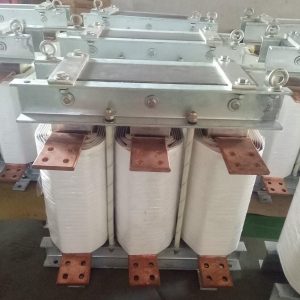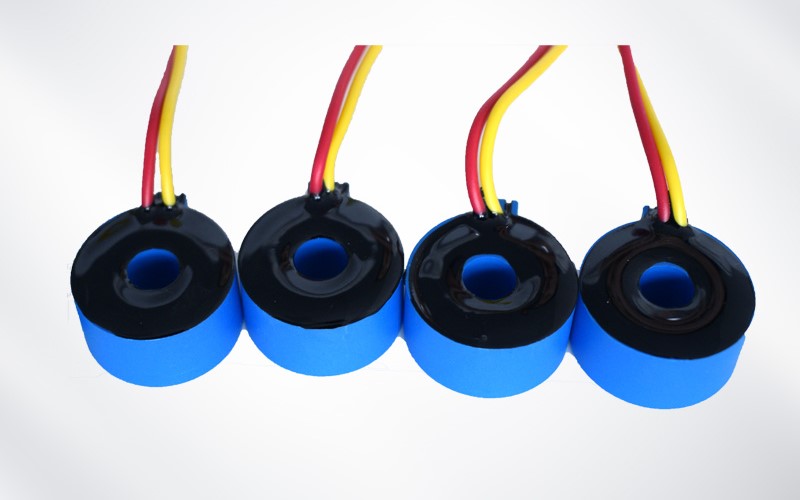
Current Transformer for Electrical Control Panel & Drive Systems
Brand name: HANI
Packing Details : Wooden box with fumigation or Wooden Fram or Steel Frame
Delivery Details: 30~60days or Based on the quantity
Shipping: Sea freight、Land freight、Air freight
HANI specializes in industrial electrical automation, delivering integrated drive and control solutions to safeguard your production.
Product Details
Within the architecture of modern industrial automation products, precise current sensing is not merely a monitoring function — it is a foundational safety and control imperative. The current transformer engineered by HANI for electrical control panels and drive systems represents a critical node in the signal chain, converting high-magnitude primary currents into standardized low-energy secondary signals suitable for metering, protection relays, and closed-loop motor control algorithms. This detailed technical resource examines the electromagnetic principles, core material science, application-specific selection criteria, and installation practices that define high-performance current transformers in power-dense automation environments.
1. The Electromagnetic Foundation and Role in Automation
A current transformer operates on the fundamental principles of Ampère’s circuital law and Faraday’s law of induction. When a primary conductor carrying alternating current passes through a magnetic core, it establishes a time-varying magnetic flux density B(t), governed by the material’s permeability µ. This flux links a secondary winding, inducing an electromotive force proportional to the rate of change of flux linkage, minus excitation losses. In precision industrial automation products, the secondary output is typically 1A or 5A for electromechanical relays, or a low-voltage signal (e.g., 333 mV) burdened by a precision resistor for direct interface with PLC analog input modules and power electronics gate drivers.
The accuracy of this transformation is dictated by the magnetizing impedance branch within the equivalent circuit. A non-ideal core demands a finite excitation current, which introduces ratio error and phase displacement. For electrical control panel designers, compliance with IEC 61869-2 accuracy classes — ranging from 0.1 for revenue metering to 5P for overcurrent protection — defines the permissible error limits at rated burden and frequency. In power electronics applications, particularly variable frequency drives, the harmonic content superimposed on the fundamental introduces additional core losses and potential saturation, making material selection paramount.
2. Magnetic Core Material Comparison
The core is the transducer’s heart. Selecting the correct material for industrial automation products determines linearity, saturation characteristics, and thermal stability. The following table distills empirical data from B-H curve analysis and IEEE transactions on magnetic components.
| Core Material | Initial Permeability µᵢ | Saturation Flux Density Bₛ (T) | Best Application Window | Typical Accuracy Achievable |
|---|---|---|---|---|
| Cold-Rolled Grain-Oriented Silicon Steel (CRGO) | ~1,500 – 3,000 | 1.9 – 2.03 | 50/60 Hz protection CTs, metering | Class 0.5 – 3, 5P10 |
| Nickel-Iron Alloy (Permalloy 80) | ~20,000 – 100,000 | 0.7 – 0.8 | High-precision metering, residual current monitoring | Class 0.1, 0.2S |
| Nanocrystalline (Fe-Cu-Nb-Si-B) | >80,000 | 1.2 – 1.25 | Wide-band drive CTs, compact panel CTs | Class 0.2, extended frequency |
| Ferrite (MnZn) | 1,500 – 5,000 | 0.4 – 0.5 | High-frequency switching converters, EMI filtering | Moderate, frequency dependent |
Table 1: Comparative magnetic properties of common CT core materials used in industrial automation products. Data reflects standard annealed samples.
3. Integration Architecture within Electrical Control Panels
Mounting a current transformer inside an electrical control panel involves more than mechanical fixation. It demands careful coordination of creepage distances, secondary lead routing, and burden calculation. HANI current transformers are designed with dual-secure terminals (screw and spring-clamp) that maintain low contact resistance under vibration, a necessity for industrial automation products subject to motor starting transients. The secondary wiring must be tightly twisted and routed away from high-voltage busbars to minimize capacitively coupled interference. IEEE Std C57.13-2016 recommends that the total secondary burden, including lead resistance, must not exceed the rated value, otherwise the core will operate in a non-linear region near saturation, producing clipped waveforms that confuse protection relays.
Split-core variants allow retrofitting onto existing buswork without disconnecting primary cables. This feature is particularly valuable in electrical control panel retrofits where downtime is measured in thousands of dollars per minute. The laminated core halves must achieve intimate contact; a mere 20-micron air gap can reduce effective permeability by an order of magnitude, dramatically degrading accuracy. Newer designs employ interleaved laminations that achieve a virtual gap closure, preserving Class 0.5 linearity up to 120% of rated current.
4. Handling Non-Sinusoidal Loads in Power Electronics
Modern drive systems utilizing IGBT or SiC MOSFET inverters generate output currents rich in harmonics. A standard 60 Hz silicon steel core, when subjected to a 5 kHz switching ripple, experiences exponentially increased eddy-current losses. The classic Steinmetz equation, P = k * f^α * B^β, reveals that losses rise supralinearly with frequency. For power electronics sensing, nanocrystalline cores exhibit superior performance due to their extremely thin ribbon thickness (~18 µm) and high resistivity, suppressing eddy currents. HANI’s drive-optimized CT line incorporates a Faraday shield between the primary and secondary to divert common-mode capacitive currents that are prevalent in PWM environments, thus protecting downstream industrial automation products like PLC analog cards from destructive common-mode voltages.
Furthermore, the DC component that can arise from asymmetrical PWM patterns poses a severe risk of core “walking” into saturation. To combat this, our design team employs a controlled air-gap technique in powdered iron composite cores, trading a small reduction in incremental permeability for a dramatic increase in DC tolerance. This ensures the CT reliably reproduces the current waveform’s average and instantaneous values, enabling field-oriented control (FOC) algorithms to maintain rotor flux angle integrity.
5. Selection Guideline: Rating, Burden, and Physical Format
The intersection of primary current range, accuracy class, and installation environment dictates the optimal transformer. Below is a systematic reference for common industrial automation products deployment scenarios.
| Application | Primary Range | Recommended Class | Secondary Output | Mounting Style | VA Burden Rating |
|---|---|---|---|---|---|
| Motor Overload Relay (Panel) | 5 – 150 A | Class 3 or 5P10 | 5 A | Solid-core ring, DIN rail adapter | 2.5 – 5 VA |
| VFD Output Current Feedback | 10 – 400 A | Class 0.5, extended frequency | 333 mV or 1 A | Split-core with nanocrystalline iron | 0.1 – 0.5 VA (voltage mode) |
| Energy Metering (Main Breaker) | 100 – 5000 A | Class 0.2S or 0.5S | 1 A | Bar-type or window-type | 5 – 15 VA |
| Earth Leakage / RCD | 0.01 – 5 A | High sensitivity µr core | mV output | Toroidal, multi-conductor pass-through | Minimal burden |
Table 2: Pre-engineered selection matrix to accelerate design-in of current transformer units for standard automation equipment.
6. Safety Imperatives: Secondary Open-Circuit Hazards
A cardinal rule in deploying a current transformer within any electrical control panel is that the secondary winding must never be left open-circuited while primary current flows. When the secondary is open, the primary ampere-turns generate a magnetomotive force unopposed by a compensating secondary MMF. The core flux density spikes to a value limited only by core saturation, and the resulting flux collapse induces voltage pulses that can reach several kilovolts — sufficient to puncture interlayer winding insulation or pose a lethal shock hazard. All HANI panel-mount CTs are shipped with a built-in voltage-limiting metal-oxide varistor or a shorting-type terminal block, providing intrinsic safety for industrial automation products during commissioning.
7. Phase Displacement and Its Impact on Vector Control
In high-performance power electronics, the absolute current magnitude is often less critical than the phase angle fidelity. A CT with a phase displacement of, say, 30 minutes at rated frequency introduces an angular error in the d-q reference frame transformation. In a permanent magnet synchronous motor drive, this error directly distorts the estimated electrical rotor position, reducing torque-per-ampere efficiency and potentially causing instability. Nickel-iron cores operated in the low-flux-density Rayleigh region exhibit minimal hysteresis-induced phase lag, making them the preferred choice for laboratory-grade power electronics dynamometer systems.
HANI mitigates phase error through a proprietary distributed air-gap annealing process on select nanocrystalline cores, resulting in a near-linear magnetization curve over a wide dynamic range. The phase displacement characteristic is held to within ±15 minutes from 10% to 120% of rated current, ensuring that the feedback loop of an electrical control panel drive controller remains optimally tuned.
8. Frequently Asked Questions on Current Transformer Application
Q: Can I use a single CT to feed both a protection relay and a panel meter?
Yes, but burden summation is critical. The total impedance of series-connected loads must not exceed the CT’s rated burden at the accuracy limit. In typical industrial automation products panels, dedicated metering cores (Class 0.5) and protection cores (5P20) are wound on the same primary bushing but electrically separate to prevent a faulty meter from loading down the protection circuit. Always verify the composite error curve.
Q: What is the difference between a Rogowski coil and a conventional current transformer for drive systems?
A Rogowski coil has an air core and outputs a voltage proportional to di/dt, requiring an integrator circuit. It cannot saturate and is excellent for high-frequency switching components. A conventional current transformer outputs a scaled current directly and provides galvanic power for passive overload relays. For power electronics, where DC offsets and high crest factors exist, Rogowski coils are complementary, but CTs remain superior for low-frequency fundamental metering and relaying in the electrical control panel.
Q: How do temperature extremes affect accuracy?
Ambient temperature influences both core permeability and secondary winding resistance. Silicon steel loses approximately 0.05% permeability per °C rise above 75°C. Nanocrystalline alloys, stabilized by a transverse field annealing step, exhibit a flatter thermal coefficient up to 120°C. HANI CTs intended for industrial automation products exposed to process heat are temperature-compensated through the nickel-alloy shunt calibration.
Q: Why does my drive’s CT waveform appear distorted at low speeds?
Low fundamental frequency combined with high carrier frequency causes the excitation current to become a significant fraction of the total primary ampere-turns. This leads to visible droop in the current waveform. Selecting a core with high inductance and low core loss at the carrier frequency spike is mandatory. This is a known challenge in power electronics and industrial automation products involving sensorless vector drives at stall.
9. Production Validation and Routine Testing
Every current transformer leaving the HANI production line undergoes a rigorous three-point excitation test, inter-turn insulation resistance measurement at 2.5 kV DC, and ratio verification using a traceable, compensated AC comparator bridge. For customers integrating these into electrical control panel assemblies, a statistical process control X-bar chart of phase angle error is supplied upon request, providing evidence of Cpk values exceeding 1.33 for critical specifications. Our in-house metrology for industrial automation products complies with ISO/IEC 17025 laboratory practices, ensuring that the published accuracy limits are met with a guard band.
Partial discharge testing is conducted on medium-voltage class transformers destined for power electronics applications, such as 11 kV drive input sections. The acceptance criterion is less than 10 pC at 1.5 times the line-to-ground voltage, confirming the integrity of the epoxy resin encapsulation against voids. These processes transform raw magnetic materials into precision industrial automation products that sustain critical processes.
10. Evolutionary Trends: DC-Tolerant Nanocrystalline and Digital Interface CTs
The frontier of current transformer development for industrial automation products is shifting towards integrated digital outputs. The IEC 61850-9-2 process bus standard demands merging units that digitize CT signals at the source. HANI is developing hybrid transformers where a precision low-power CT communicates over a fiber-optic link, eliminating copper burden mismatch. Simultaneously, the adoption of SiC-based power electronics pushes the need for galvanically isolated current sensing that remains linear from DC to several hundred kilohertz. Fluxgate-augmented CTs represent this ultimate convergence, nulling the core flux via an active compensation winding, thus achieving DC accuracy previously only possible with Hall-effect devices, but with the temperature stability inherent to the transformer principle.
— Engineered, validated, and supported by the applied magnetics group at HANI.
HANI is one of China’s leading professional industrial electrical automation manufacturers, providing complete drive and control solutions to customers worldwide. HANI focuses on designing and manufacturing integrated automation systems that meet the industry’s highest standards of precision, efficiency, and durability. Our engineering expertise lies in providing turnkey electrical automation projects to optimize the performance of modern industrial manufacturing plants.