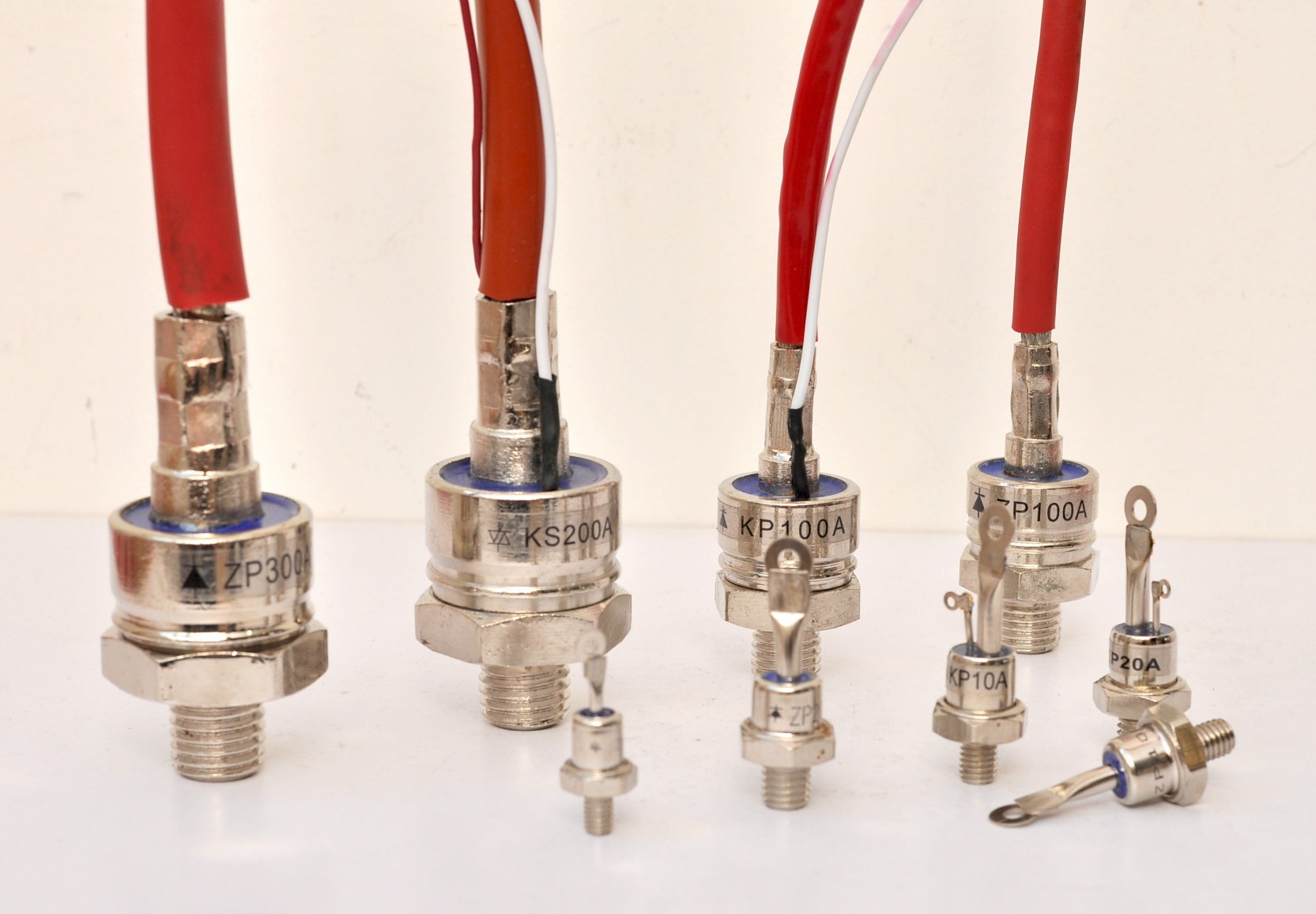
ZP Series Power Diode – Electrical Motor Control Components
Brand name: HANI
Packing Details : Wooden box with fumigation or Wooden Fram or Steel Frame
Delivery Details: 30~60days or Based on the quantity
Shipping: Sea freight、Land freight、Air freight
HANI specializes in industrial electrical automation, delivering integrated drive and control solutions to safeguard your production.
Product Details
ZP Series Power Diode – Electrical Motor Control Components
Engineered for demanding industrial automation products, the ZP rectifier diode series delivers unmatched ruggedness in motor drives, excitation systems, and high-current power conversion. From 5 A to 6000 A and blocking voltages up to 6000 V, these Power Diodes form the foundation of robust Power Electronics.
The role of ZP diodes in modern motor control
In the universe of industrial automation products, the conversion of AC line power into a stable DC bus is essential for variable speed drives, servo controllers, and DC motor starters. The ZP Diode — an ordinary recovery rectifier — remains the most cost-effective and physically robust solution for line-frequency rectification. Unlike fast recovery types, the ZP series is optimised for low forward voltage drop and high surge current capability, both of which are critical when feeding capacitive DC links or inductive motor fields. Whether applied in a 6-pulse bridge for a 450 kW rolling mill drive or as a freewheeling diode in a traction chopper, the ZP silicon rectifier consistently ensures predictable Power Electronics behaviour.
Device physics and design rationale
The ZP Diode utilises a single P-N junction with a heavily doped P-type anode and a wide, lightly doped N-type base region. This doping profile allows the device to sustain reverse voltages up to several kilovolts while maintaining a moderate forward conduction drop. The positive temperature coefficient of the avalanche breakdown voltage contributes to a self-limiting behaviour during transient overvoltage events. In Power Electronics terms, the ZP structure favours an optimised trade-off between reverse recovery charge (Qrr) and on-state voltage, making it particularly suitable for 50 Hz or 60 Hz rectification stages found in industrial automation products. Surge current ratings exceed 20 times the average rated current for 10 ms, a direct result of the large die area and the low thermal resistance joint between the silicon pellet and the molybdenum or tungsten backing disc. These plates are encased in either a screw-type (bolt) or a flat-base (hockey-puck) hermetic package, both of which have been refined over decades of high-volume production.
Product range and key electrical parameters
Every ZP Diode in the family is described by a set of parameters that define its fit within industrial automation products. Average on-state current (IF(AV)) and repetitive peak reverse voltage (VRRM) are the primary selection criteria, but the true device character emerges from surge current, thermal impedance, and the forward voltage curve. The table below lists representative types; custom voltage grades and double-side-cooled variants are available for severe-duty Power Electronics installations.
| Type | IF(AV) (A) @ Tc=85 °C |
VRRM Range (V) | IFSM (A) 10 ms sine |
VFM (V) @ IF(AV) |
Rth(j-c) (°C/W) | Package / Cooling |
|---|---|---|---|---|---|---|
| ZP5A | 5 | 100 – 1600 | 150 | ≤1.20 | 2.5 | M6 Bolt / air |
| ZP50A | 50 | 200 – 2400 | 1200 | ≤1.15 | 0.50 | M12 Bolt / air |
| ZP100A | 100 | 400 – 2800 | 2600 | ≤1.10 | 0.25 | M16 Bolt / forced air |
| ZP300A | 300 | 600 – 3200 | 6500 | ≤1.02 | 0.10 | Stud / forced air |
| ZP500A | 500 | 800 – 4000 | 11500 | ≤0.98 | 0.060 | Flat base / water or air |
| ZP800A | 800 | 1000 – 4500 | 18000 | ≤0.95 | 0.035 | Flat base / water |
| ZP1500A | 1500 | 1200 – 5000 | 28000 | ≤0.90 | 0.018 | Double-side cooled |
| ZP3000A | 3000 | 1500 – 6000 | 45000 | ≤0.85 | 0.010 | Double-side cooled |
| ZP6000A | 6000 | 2000 – 6000 | 80000 | ≤0.82 | 0.007 | Double-side cooled |
All devices are manufactured and tested in accordance with GB4939, JB5837, JB5841, and relevant IEC standards. Custom VRRM steps (e.g., 3000 V for 1500 V motor drives) are available within the Power Diode range.
Mechanical configurations and cooling integration
The ZP Diode family is divided into two mechanical forms:
- ▪ Bolt (stud) type – 5 A to 500 A: the anode or cathode is connected to a hexagonal base with an M6 – M24 mounting thread. These parts are directly screwed into heat sinks and typically rely on natural convection or forced air. They are commonly found in compact industrial automation products such as small DC drives, battery chargers, and field excitation modules.
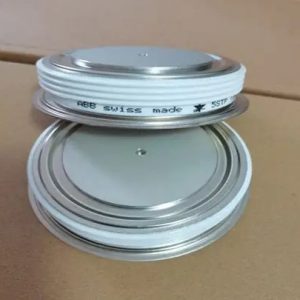
- ▪ Flat base (capsule) type – 500 A to 6000 A: both anode and cathode surfaces are planar, allowing double-side clamped mounting between two bus bars or liquid-cooled chill plates. This arrangement halves the thermal resistance and is mandatory for high-power Power Electronics stages that exceed 1 MW, typical of electrolytic rectifiers and main propulsion drives.
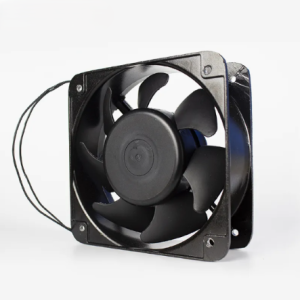
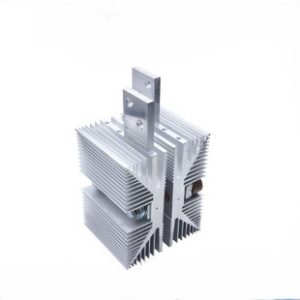
Cooling can be implemented with forced air (fan-cooled aluminium extrusions) or deionised water. A minimum flow rate of 4 L/min per module is recommended for water-cooled flat-base Power Diodes operating near rated current; water quality should correspond to a conductivity < 2 µS/cm to avoid electrolytic corrosion.
ZP series in motor control: practical topology examples
Electric motor control arguably represents the single largest application domain for the ZP Diode. Consider these three archetypes that appear in standard industrial automation products:
- 1. Separately-excited DC motor rectifier. A three-phase, six-pulse bridge built with six ZP rectifiers converts 400 V AC mains into a stiff 540 V DC bus. The natural recovery characteristic of the ZP diode eliminates the reverse recovery oscillations that could disturb the firing circuitry of the adjacent SCRs in the armature bridge. One steel mill operator, working alongside engineer HANI, retrofitted a 1200 A rolling mill drive with ZP2000A/3000V flat-base units and witnessed a 30 % reduction in snubber losses while maintaining the required THD figures.
- 2. Freewheeling diode in DC chopper drives. When an IGBT or GTO chops the DC link to regulate motor armature voltage, the ZP diode conducts the freewheeling current during the off period. Its low VFM directly reduces conduction losses, which is essential for battery-powered traction motors where every watt matters.
- 3. Synchronous motor excitation rectifier. Brushless excitation systems feed the rotor field via a rotating diode bridge. The bolt-type ZP50A to ZP200A diodes, with their high centrifugal-force endurance and low forward drop, are a documented choice for large synchronous motors in LNG compressor stations.
In each case, the durability of the ZP diode stems from its all-diffused junction, glass-passivated edge termination, and the fatigue-resistant Al₂O₃ or AlN insulator disc that positions the silicon pellet inside the housing. These construction details are exactly what HANI’s reliability team validated during a 6000-hour accelerated life test for an offshore crane drive — confirming that the mean time to failure comfortably exceeds 200,000 hours under field-rated conditions.
Production-relevant mounting recommendations
Proper assembly is decisive for long-term stability in industrial automation products. The following table summarises the recommended clamping torque and thermal interface requirements for popular ZP Diode types. These values have been extracted from in-house qualification reports and field return analysis.
| ZP type | Mounting torque (N·m) | Heatsink flatness (µm) | Thermal compound thickness (µm) | Clamping force (kN) – flat type |
|---|---|---|---|---|
| ZP5A – ZP50A (bolt) | 3.5 – 6.0 | < 30 | 50 – 70 | — |
| ZP100A – ZP300A (stud) | 18 – 25 | < 25 | 50 – 70 | — |
| ZP500A (flat) | — | < 20 | 35 – 50 | 12 ± 1 |
| ZP1500A – ZP3000A (flat) | — | < 15 | 25 – 40 | 45 ± 3 |
| ZP6000A (flat) | — | < 10 | 20 – 30 | 90 ± 5 |
Exceeding the recommended torque can crack the ceramic insulation inside the capsule. A calibrated torque wrench with a 4 % accuracy is compulsory in any production line handling Power Diodes for industrial automation products. For water-cooled stacks, the flat base surfaces should be electroplated with a nickel flash (5–8 µm) to prevent galvanic corrosion.
Surge capability and protective measures in Power Electronics
The IFSM value specifies the maximum non-repetitive half-sine-wave surge current that a Power Diode can withstand without degradation. In motor control, this surge capability is particularly important during inrush events — for instance, when a DC link capacitor bank is first charged. The ZP series is designed to absorb an I²t value that corresponds to the thermal capacity of the molybdenum buffer disc and the silicon die thermal time constant ( ≈ 1–3 ms). However, adequate protection still requires a properly dimensioned semiconductor fuse (aR or gR class) and an RC snubber network connected directly across each ZP Diode in series-connected strings.
A typical snubber for a 1600 V, 500 A device consists of a 0.47 µF, 1000 V polypropylene film capacitor in series with a 10 Ω, 50 W non-inductive wire-wound resistor. This network damps the reverse recovery oscillation and limits the dv/dt seen by the junction. Neglecting this protection in Power Electronics designs can lead to erratic breakdown and ultimately to field failures of industrial automation products.
Quality benchmarks and international compliance
Our ZP Diode manufacturing line operates under ISO 9001 and IATF 16949 quality systems. Every wafer undergoes a 100 % visual inspection and a probing test for blocking voltage at 125 °C. Finished devices are subjected to the following routine tests per GB4939 and IEC 60747-2:
- ✓Thermal resistance measurement (Rth(j-c)) with a transient dual-interface method.
- ✓VFM binning at rated current to guarantee parallel current sharing within ±5 %.
- ✓VRRM verification at 25 °C and 150 °C; leakage current limit typically ≤ 20 mA for large area dice.
- ✓Surge current sampling test (lot basis) on 0.1 % of production to confirm I²t.
- ✓Partial discharge test for devices rated ≥ 3000 V ( ≤ 10 pC at 1.5 × VRRM ).
These controls ensure that each ZP Diode entering a motor drive or a chemical rectifier fulfills the lifespan expectations of industrial automation products that often run 24 / 7 for decades.
Frequently Asked Questions
Q: What differentiates a ZP power diode from a fast recovery epitaxial diode (FRED)?
A ZP Diode is an ordinary recovery rectifier designed for line-frequency applications (50–400 Hz), prioritising low forward voltage and high surge current. A FRED is optimised for high-frequency switching with reverse recovery times below 200 ns, but it carries a higher VFM and higher cost. In industrial automation products that operate at mains frequency, the ZP series offers the best price-performance ratio.
Q: Is parallel operation allowed for higher current ratings?
Yes, parallel connection of identical Power Diodes is a standard technique in Power Electronics. To guarantee balanced current sharing, the devices should be thermally coupled on the same heatsink, have matched VFM (within 50 mV at rated current), and be connected with symmetric bus-bar geometry. A small de-rating factor of 10–15 % is recommended for the combined current capacity.
Q: How do I select the heatsink for a ZP500A bolt-type diode?
The heatsink thermal resistance Rth(s-a) must satisfy: (Tjmax – Tamb) / PD – Rth(j-c) – Rth(c-s). For a ZP500A with Tjmax=150 °C, PD ≈ 500 W (at 80 % duty), Rth(j-c)=0.06 °C/W, and Rth(c-s) ≈ 0.02 °C/W with quality paste, the heatsink should offer ≤ 0.09 °C/W for 40 °C ambient. This corresponds to a forced-air-cooled aluminium extrusion with a footprint around 300 × 200 mm.
Q: What does VRRM mean in ZP diodes, and why is the margin important?
VRRM is the maximum repetitive peak reverse voltage the ZP Diode can block safely. In motor drive industrial automation products, the VRRM should be at least 2.5 × the nominal DC link voltage to accommodate switching transients and grid fluctuations. For example, a 560 V DC bus commonly uses 1600 V Power Diodes.
Q: Do ZP rectifiers comply with global standards?
Absolutely. The ZP series is aligned with GB4939, JB5837, JB5841, and the relevant sections of IEC 60747-2. Test certificates are provided with each shipment, and full material declaration (RoHS/REACH) is available for integration into CE-marked industrial automation products.
Q: What is the typical lead time for custom voltage ratings or larger quantities?
Standard catalogue items (VRRM up to 3000 V) are stocked for same-day dispatch. Custom voltages in the 4000–6000 V range typically ship within 4–6 weeks. For OEM quantities of Power Diodes exceeding 5000 pieces per year, we offer Kanban agreements and dedicated production slots to support the just-in-time demands of industrial automation products assembly lines.
Closing perspectives for motor control designers
Choosing the right Power Diode is rarely a headline-grabbing decision, yet it directly influences the reliability, thermal budget, and bill-of-material cost of an entire motor drive. The ZP series, with its five-decade pedigree in Power Electronics, offers a compelling mix of surge toughness, low conduction losses, and straightforward mechanical integration. As more industrial automation products migrate towards higher efficiency levels (IE4/IE5 motors) and wider DC bus voltages, the range of VRRM options from 100 V to 6000 V guarantees a suitable rectifier for every topology — from a simple 230 V single-phase drive to a 3.3 kV multi-megawatt propulsion system.
For technical inquiries, sample requests, or application support related to the ZP Diode in your next industrial automation products project, reach out to your regional power semiconductor specialist. If your engineering team, much like HANI’s, values ruggedness backed by transparent data, the ZP series is ready for evaluation.
HANI is one of China’s leading professional industrial electrical automation manufacturers, providing complete drive and control solutions to customers worldwide. HANI focuses on designing and manufacturing integrated automation systems that meet the industry’s highest standards of precision, efficiency, and durability. Our engineering expertise lies in providing turnkey electrical automation projects to optimize the performance of modern industrial manufacturing plants.