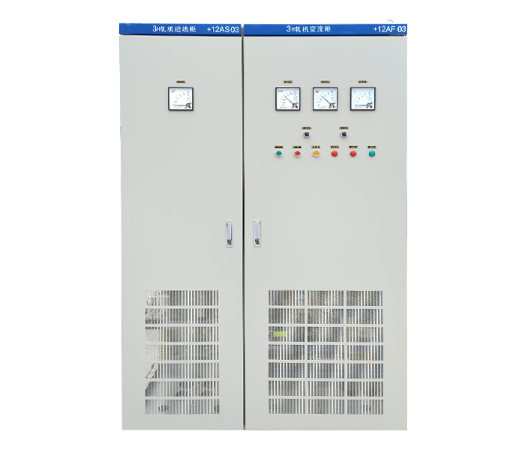
DC Drive Control Cabinet – Custom Electrical Control Panel for Mining & Steel
Brand name: HANI
Packing Details : Wooden box with fumigation or Wooden Fram or Steel Frame
Delivery Details: 30~60days or Based on the quantity
Shipping: Sea freight、Land freight、Air freight
HANI specializes in industrial electrical automation, delivering integrated drive and control solutions to safeguard your production.
Product Details
DC Drive Control Cabinet – Custom Electrical Control Panel for Mining & Steel
In the most demanding sectors — underground mining, hot rolling mills, steel galvanizing lines, and continuous casting — reliable motor control is not a luxury; it is an operational necessity. At the heart of these processes lies a rugged, purpose-built electrical control panel that orchestrates the precise speed, torque, and direction of large DC motors. The DC Drive Control Cabinet, developed around the 6EA series architecture, is exactly that: a fully integrated, custom electrical control panel engineered to withstand the rigours of heavy industry while delivering benchmark static and dynamic performance. Designed and assembled by HANI, this DC Drive Control Cabinet brings together intelligent power management, advanced protection, and modular auxiliary control — all within a structurally reinforced enclosure optimized for thermal management in harsh environments.
What Makes This Electrical Control Panel Different
Unlike a generic motor starter panel, a DC Drive Control Cabinet is a power conversion and regulation system. It rectifies three-phase AC supply into a variable DC voltage, precisely controlling the armature and field currents of a separately excited DC motor. Every element — from the main incoming circuit breaker to the field protection fuses — is selected and coordinated to form a cohesive electrical control panel that must handle frequent overloads, regenerative braking energy, and severe line-side harmonics. HANI’s approach treats each cabinet as a custom electrical control panel, adapting the busbar layout, ventilation strategy, and harmonic mitigation to the customer’s actual load profile and grid conditions.
Core Components Inside the DC Drive Control Cabinet
Every DC Drive Control Cabinet built by HANI follows a transparent and fully documented bill of materials. The standard configuration includes:
- Main incoming intelligent circuit breaker with adjustable protection curves
- Main incoming line reactor (typically 4% impedance) to reduce harmonic distortion and limit di/dt
- AC and DC side surge protection devices (SPD) for overvoltage suppression
- 6EA DC drive control unit (compatible with 6RA70, 6RA80, and DCS800 converters) with CBP2 communication card
- Field supply automatic circuit breaker and field protection semiconductor fuses (Schneider Electric)
- Field reactor for smoothing field current
- Siemens S7-200 PLC for sequencing, interlocks, and auxiliary logic
- Auxiliary power supply circuits for motor blower fans, encoder supply, and space heaters — all protected by Schneider Electric modular devices
- Shunt, armature current meter, field current meter, armature voltmeter, and tachometer for local indication
- Control switches, pilot lamps, and pushbuttons from Schneider Electric Harmony range
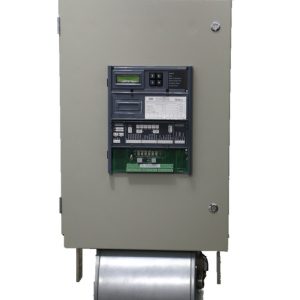
All internal wiring is executed with numbered ferrules, colour-coded conductors, and segregated routing of power and signal cables. This makes the electrical control panel easy to commission, troubleshoot, and maintain over decades of service.
Structural Integrity and Safety Features
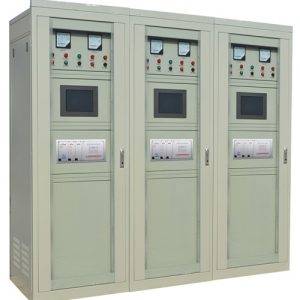
The cabinet enclosure itself is a critical part of the protection philosophy. HANI’s electrical control panel uses a rugged frame with high mechanical strength, capable of withstanding the vibration and shock loads typical in mining and steel plants. Safety is built in layers:
- Large ventilation windows located at the bottom of the door panel, designed for high airflow and effective convection cooling while maintaining IP protection.
- Removable fire-resistant barrier plate at the base of the cabinet to prevent flame propagation from cable trenches.
- Touch-safe terminal covers on all live parts and a dedicated earthing busbar running the full height of the panel.
- Form 2b internal separation (optional) to isolate busbars from functional units, enhancing operator safety.
Converter Protection: Defence for the Thyristor Bridge
The six-pulse or optional twelve-pulse thyristor rectifier inside the DC Drive Control Cabinet represents a significant capital investment. Protecting it is non-negotiable. The electrical control panel integrates four tiers of active protection:
| Protection Function | Method | Science Behind It |
|---|---|---|
| Electronic Overcurrent Protection | Real-time current monitoring via Hall-effect sensors; I²t calculation | Limits armature current based on a thermal model of the thyristor junction, preventing excessive die temperature even during 150% overload. |
| Semiconductor Fuse Monitoring | Blown fuse microswitch detection per branch | Fast-acting fuses are sized to clear fault current before the thyristor I²t rating is exceeded. The cabinet immediately trips on any fuse rupture. |
| Surge Arrester Fuse Monitoring | Continuous continuity check of the RC snubber network fuse | The snubber circuit protects against voltage spikes from transformer switching and commutation notches. A failed snubber exposes thyristors to overvoltage destruction. |
| Heatsink Over-Temperature Protection | Thermistor or thermostat mounted directly on the heatsink assembly | When cooling air volume is insufficient or ambient temperature exceeds design limits, the electrical control panel initiates a controlled ramp-down or immediate trip to protect the silicon. |
These protective measures transform the DC Drive Control Cabinet from a simple power converter into a resilient automation node that guards itself and the connected motor.
Performance Metrics That Define Precision
In cold rolling mills and mine hoists, speed consistency determines product thickness and safety margins. The 6EA-based electrical control panel achieves performance levels that rival digital servo systems:
✔ Static speed accuracy: 0.1% with pulse encoder feedback
✔ Dynamic speed drop: ≤0.25% S (relative to rated speed) under a 100% load impact
✔ Overload capability: 150% for 60 seconds, allowing the mill drive to ride through a heavy bite or a pinch roll slip without tripping
6EA Series DC Drive Control Cabinet Specifications
The table below lists a selection of popular four-quadrant DC Drive Control Cabinet models from HANI’s standard range. Each electrical control panel can be built with extended width cabinets (noted in parentheses) to accommodate larger braking units and busbar cross-sections.
| Model | Rated DC Voltage (V) | Rated DC Current (A) | 150% Overload 60s (A) | Cabinet Dimensions W×D×H (mm) | Heat Loss (kW) |
|---|---|---|---|---|---|
| 6EA0600V44Q4C | 440 | 600 | 900 | 800×1000×2200 | 4.0 |
| 6EA1200V44Q4C | 440 | 1200 | 1800 | 800×1000×2200 | 5.0 |
| 6EA2000V44Q4C | 440 | 2000 | 3000 | (800+800)×1000×2200 | 6.0 |
| 6EA3000V44Q4C | 440 | 3000 | 4500 | (800+800)×1000×2200 | 6.5 |
| 6EA1200V66Q4C | 660 | 1200 | 1800 | 800×1000×2200 | 5.0 |
| 6EA1600V75Q4C | 750 | 1600 | 2400 | (800+800)×1000×2200 | 6.0 |
| 6EA1600V95Q4C | 950 | 1600 | 2400 | (800+800)×1000×2200 | 6.0 |
* Heat loss values are calculated at rated continuous current and are essential for E-house or substation HVAC design. All cabinets are four-quadrant (4Q) regenerative as standard.
Rectifier Transformer and Line Reactor Selection Guide
Selecting the correct upstream transformer and reactor is what separates a trouble-free electrical control panel from one plagued by tripping and harmonics. The following rules are grounded in power electronics engineering and decades of DC drive deployment experience:
| Parameter | Recommendation | Engineering Rationale |
|---|---|---|
| Transformer capacity — regenerative (4Q) drives, centralised supply | 1.5 × sum of connected motor ratings (kVA) | Accounts for reactive power demand, overload capability, and harmonic derating per IEC 61378-1. |
| Transformer capacity — non-regenerative drives | 1.45 × sum of motor ratings (centralised); 1.4 × (dedicated supply) | Lower derating due to absence of circulating current in the reversing bridge. |
| Transformer capacity — flying shear / high-duty cycle | 1.6–1.8 × motor rating | Extreme cyclic loading requires increased thermal inertia to limit winding temperature rise. |
| Transformer secondary voltage — regenerative | Approximately 1:1 to motor rated armature voltage | Maintains sufficient voltage reserve for commutation overlap and grid fluctuation; avoids over-dimensioning that stresses thyristor PIV ratings. |
| Transformer secondary voltage — non-regenerative, stable grid | 95% of motor rated voltage | Lower setting improves displacement power factor, but must guarantee full torque at minimum specified grid voltage. |
| Line reactor impedance | 4% (approx.) at rated drive input current | Limits commutation notches, reduces current ripple, and decouples the drive from parallel-connected equipment on the same bus. |
| Transformer vector group strategy | Allocate multiple transformers at ±30°, ±15° to form 12-pulse, 24-pulse, or 36-pulse systems | Phase-shifting cancels characteristic harmonics: a 12-pulse system eliminates 5th and 7th harmonics, dramatically reducing filter requirements. |
When a rectifier transformer is not used and the electrical control panel is fed directly from a plant bus, the incoming line reactor becomes mandatory. For aggregations up to 1000 kW, group supply via a single reactor is a cost-effective method that HANI often recommends after analysing the site’s short-circuit ratio.
Why a Custom Electrical Control Panel Matters
Off-the-shelf cabinets rarely fit the physical and electrical constraints of an upgrade project in a 40-year-old steel mill. With a custom electrical control panel, engineers can specify exact busbar ratings, control voltage levels, auxiliary power distribution, and even the brand of components — all while matching existing cable entry positions. This eliminates the need for expensive civil modifications and shortens commissioning time. Whether the DC drives are from the Siemens 6RA80 family or ABB DCS800 series, the DC Drive Control Cabinet is tailored around the converter’s cooling and wiring requirements, ensuring that the published heat loss data from the table above actually maps to a sustainable in-cabinet temperature rise of less than 30 K under full load.
Frequently Asked Questions
What is a DC Drive Control Cabinet and how does it differ from a standard electrical control panel?
A DC Drive Control Cabinet is a specialized electrical control panel that houses a complete DC variable-speed drive system — including rectifier, field exciter, protection, PLC, and auxiliary distribution — all in one enclosure. Unlike a simple motor starter electrical control panel that just switches power, this cabinet performs active power conversion, speed regulation with encoder feedback, and regenerative braking management. It must handle continuous conduction currents, high fault levels, and the thermal dissipation of thyristor losses, which requires unique cabinet engineering.
Why do mining and steel industries need an electrical control panel specifically for DC drives?
Mining hoists, rolling mills, and galvanizing lines use large DC motors because of their superior torque response and wide constant-power speed range. A standard electrical control panel cannot deliver the controlled rectification, field weakening, or four-quadrant regenerative operation that these processes demand. The specific DC drives require isolated gate firing circuits, precise current loop tuning, and coordinated protective functions that only a purpose-built DC Drive Control Cabinet can integrate safely.
How does HANI ensure the DC Drive Control Cabinet meets site-specific cooling requirements?
Every electrical control panel from HANI is thermally validated against the heat loss values published in our specification tables. The cabinets feature large bottom-door ventilation windows engineered for a minimum free-air cross-section, and the internal device layout ensures that hot air rises unimpeded to roof-mounted exhaust vents. Where ambient temperatures exceed 40°C or air is contaminated, we integrate closed-loop air-to-water heat exchangers into the cabinet design, maintaining thyristor junction temperatures within the semiconductor manufacturer’s safe operating area.
Can the electrical control panel be configured for different brands of DC drives?
Absolutely. The 6EA series architecture is drive-agnostic. While our reference configuration uses the 6EA control unit (interfacing seamlessly with Siemens 6RA70/6RA80 and ABB DCS800), we can integrate any customer-specified converter into the electrical control panel. The busbar design, reactor matching, and ventilation strategy are recalculated accordingly. This flexibility makes the DC Drive Control Cabinet a preferred choice for plant modernisations where existing spare parts strategies dictate the drive brand.
What are the key indicators of a well-designed DC drive electrical control panel?
Beyond the core performance metrics (0.1% static speed accuracy, ≤0.25% S dynamic speed drop), a quality electrical control panel exhibits clean cable management with labelled wires, a removable fire barrier plate at the base, adequate working clearance around components, and comprehensive nameplate data including heat loss. The panel should also provide a clear single-line diagram on the inner door and demonstrate compliance with IEC 61439-1 for low-voltage switchgear assemblies.
How do I correctly choose the rectifier transformer for my DC Drive Control Cabinet?
Use the capacity factors and voltage guidelines in our selection table above. For a regenerative mill stand with three 500 kW motors, choose a transformer rated at 1.5 × 1500 = 2250 kVA, with a secondary line voltage matching the motor armature rating. Combine transformers on the same bus with phase-shifted windings (±15° or ±30°) to raise the effective pulse number of the electrical control panel installation, reducing harmonic voltage distortion at the point of common coupling. HANI’s application engineers can perform a preliminary harmonic study when you submit your load list.
Built for Heavy Industry — Engineered by HANI
From the mines of South America to the stainless steel finishing lines in Asia, HANI’s DC Drive Control Cabinet has proven itself as a rugged, reliable electrical control panel that operators trust for 24/7 production. With complete control over the design, component selection, and assembly of every electrical control panel, we ensure that your DC drives application receives a solution that is maintainable, safe, and electrically optimised. Contact HANI today to discuss your next custom electrical control panel requirement.
HANI is one of China’s leading professional industrial electrical automation manufacturers, providing complete drive and control solutions to customers worldwide. HANI focuses on designing and manufacturing integrated automation systems that meet the industry’s highest standards of precision, efficiency, and durability. Our engineering expertise lies in providing turnkey electrical automation projects to optimize the performance of modern industrial manufacturing plants.