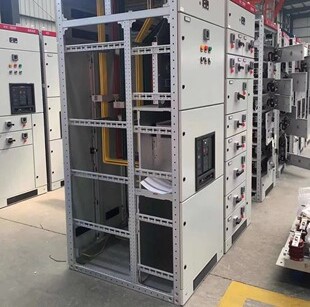
C-Beam Electrical Cabinet – Modular Control Panel Design
Brand name: HANI
Packing Details : Wooden box with fumigation or Wooden Fram or Steel Frame
Delivery Details: 30~60days or Based on the quantity
Shipping: Sea freight、Land freight、Air freight
HANI specializes in industrial electrical automation, delivering integrated drive and control solutions to safeguard your production.
Product Details
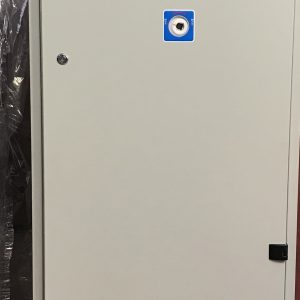
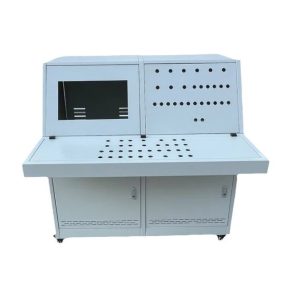
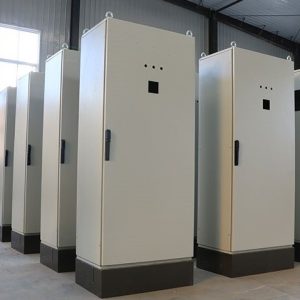
C-Beam Electrical Cabinet – Modular Control Panel Design
In the demanding landscape of industrial automation, the electrical control panel stands as the operational brain of any system. Its housing must deliver far more than simple enclosure—it must provide structural integrity, thermal management, ingress protection, and the flexibility to evolve alongside rapidly changing technologies. The C-Beam Cabinet from HANI has been engineered precisely with these principles in mind, offering a modular, highly configurable platform that redefines what a control cabinet can achieve. Whether you need a compact standalone unit or a multi-bay lineup for complex machinery, this custom enclosure solution ensures your electrical control panel remains protected, organized, and accessible under the harshest operating conditions.
Every aspect of the C-Beam system has been optimized to meet international standards while allowing near-infinite customization. The result is a product category that serves as the backbone for modern electrical control panel manufacturing—from power distribution centers and motor control centers to PLC- and SCADA-based automation panels. The following comprehensive overview explores the engineering, materials, surface treatment, assembly methodology, and real-world applications that make the C-Beam framework the preferred choice for engineers and system integrators seeking a future-proof control cabinet.
Structural engineering of the C-Beam profile
At the heart of every C-Beam electrical cabinet lies an open, C-channel frame constructed from 2.5 mm continuously galvanized steel sheet (box-quality). Unlike traditional welded box-section frames or 9-fold post structures, the C-profile delivers an exceptional strength-to-weight ratio while retaining the ability to bolt panels together on all six faces. The geometry of the “C” shape creates two parallel flanges and a web, generating a high second moment of area that resists bending and torsional loads. For a typical electrical control panel housing heavy drives, transformers, and busbar systems, this torsional rigidity is critical—it prevents door misalignment and ensures that gasketed sealing surfaces remain uniformly compressed, thereby safeguarding the IP integrity of the control cabinet.
Moreover, the frame’s continuous galvanized coating (Z275 grade, typically 275 g/m² of zinc on both sides) serves as sacrificial protection against corrosion on cut edges and punched holes, a feature particularly valuable when the electrical control panel is destined for marine or chemical processing environments. The C-beam sections are joined using heavy-duty corner brackets and M12 bolts, forming a rigid cube that can be reconfigured in the field. This bolted architecture removes the distortions and heat-affected zones associated with welding, guaranteeing dimensional repeatability across every custom enclosure order.
Standard configuration and material specifications
A complete C-Beam cabinet assembly arrives with a consistent set of standard components that form the basis of a highly adaptable electrical control panel platform. The reference configuration includes the C-beam frame, a front door, a removable rear panel, detachable side panels, and a separate roof plate. All these enclosure elements are fabricated from domestic prime-quality cold-rolled steel sheet (box quality), processed on CNC punching and laser cutting centers to ensure edge straightness and hole positioning within ±0.2 mm. The bottom of the cabinet is equipped with a 3.0 mm thick galvanized cable entry plate, pre-punched with oblong slots for cable gland plates and optional brush strips. Four lifting eyebolts are fitted at the top corners, rated for safe lifting of the fully loaded control cabinet.
Material thicknesses are selected to balance weight, cost, and mechanical performance: the enclosure body (side panels, rear panel, roof) uses 1.5 mm cold-rolled steel, the front door is 2.0 mm, and the internal mounting plate is a substantial 3.0 mm. The robustness of the 2.0 mm door eliminates oil-canning effects, so the electrical control panel maintains a crisp, professional appearance even after thousands of operating cycles. Meanwhile, the 3.0 mm mounting plate can support distributed loads of up to 800 kg, sufficient for all standard industrial electrical control panel assemblies including large variable frequency drives, soft starters, and power factor correction banks.
| Component | Material | Thickness | Surface treatment |
|---|---|---|---|
| C-Beam frame | Continuous hot-dip galvanized steel (box quality) | 2.5 mm | Mill galvanized, chromate passivated |
| Body panels (side, rear, roof) | Cold-rolled steel DC01/SPCC | 1.5 mm | 12-stage phosphating + epoxy-polyester powder coat |
| Front door | Cold-rolled steel DC01/SPCC | 2.0 mm | 12-stage phosphating + epoxy-polyester powder coat |
| Mounting plate | Cold-rolled steel DC01/SPCC | 3.0 mm | Zinc-plated (white or yellow passivated) |
| Cable entry bottom plate | Galvanized steel | 3.0 mm | Mill galvanized |
12-stage surface treatment: scientific foundation for long-life protection
The longevity of any electrical control panel enclosure is determined largely by its coating system. HANI’s C-Beam cabinets undergo an internationally recognized 12-step pretreatment and finishing process that produces a finish far exceeding conventional wet-paint approaches. The sequence begins with degreasing to remove forming oils, followed by multiple rinses, then pickling in a phosphoric acid-based solution. This acid step not only removes mill scale and surface oxides but also micro-etches the steel surface, increasing the surface area available for paint adhesion by approximately 30-40% compared with untreated steel.
Following the acid stage, a zinc or iron phosphate conversion coating is applied. The phosphate layer, typically 1.5–3.0 g/m², is crystalline and porous on a microscopic scale, allowing the subsequent powder primer to anchor mechanically. The phosphated panels are then rinsed with deionized water to remove any residual salts, dried in a forced-air oven, and immediately transferred to the coating booth. An epoxy-polyester electrostatic powder primer is sprayed onto all surfaces using automated reciprocators, ensuring consistent film build even inside return flanges. After partial curing, a final polyester powder topcoat is applied and fully cured at 180–200 °C for 20 minutes. The result is a smooth, 60–90 µm thick finish with exceptional scratch, chemical, and UV resistance. Standard colors are RAL7035 (light grey) and RAL7032 (pebble grey), but nearly any RAL or custom shade can be formulated for a custom enclosure project.
Neutral salt spray testing (ISO 9227) on powder-coated panels of this specification routinely exceeds 500 hours without red rust, making the C-Beam system a reliable choice for an electrical control panel destined for wastewater treatment plants, coastal installations, or food-and-beverage facilities where humidity and corrosive agents are ever-present.
Modular bayability: building scalable electrical control panel systems
One of the defining advantages of the C-Beam frame is its inherent ability to be coupled side-by-side, back-to-back, or in multi-dimensional arrays without losing structural integrity. The vertical C-profiles are pre-punched with a 25 mm pitch grid of rectangular slots, allowing adjacent cabinets to be bolted together using dedicated coupling brackets. This modularity means a control cabinet system designed for a small packaging line can later be expanded into a full plant-wide electrical control panel network by adding bays, busbar chambers, or cable marshalling sections. Engineers can plan a single-line diagram knowing that the enclosure infrastructure will accommodate future growth.
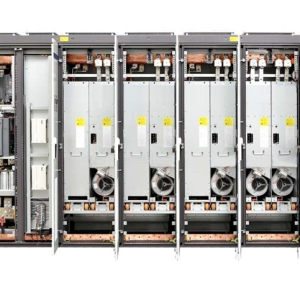
When two or more C-Beam cabinets are combined, the shared walls can be removed to create a wide internal space for continuous DIN rail runs and cable tray pathways, or retained for segregation of power and control circuits—a critical requirement in many electrical control panel safety standards such as IEC 61439. The 25 mm pitch system also permits precise alignment of mounting plates across bays, simplifying the layout of horizontally oriented components like long busbars or multi-door HMI panels.
Custom enclosure capabilities – tailoring the C-Beam cabinet to your application
Off-the-shelf dimensions rarely satisfy every electrical control panel requirement, which is why HANI operates a flexible manufacturing cell dedicated to custom enclosure variations. Width, height, and depth can be specified in 100 mm increments up to maximums of 1200 mm (W), 2200 mm (H), and 800 mm (D) for a single bay. Door configurations range from solid steel to full-view polycarbonate windows, and ingress protection can be elevated from standard IP55 to IP66 with the addition of seamless foamed-in-place polyurethane gaskets and compression locks.
Additional bespoke options include integrated cooling cutouts for filter fans or air-conditioning units, removable gland plates with pre-punched metric knockouts, EMC shielding enhancement through beryllium-copper finger strips on all contact edges, and 19-inch rack-mount profiles welded inside the frame for server-grade IT equipment. Such custom enclosure modifications convert the C-Beam platform into a truly application-specific housing, whether the task is a high-power VFD control cabinet or a precision laboratory instrument enclosure.
Application-specific electrical control panel domains
The versatility of the C-Beam design has led to its adoption across a remarkably wide spectrum of industries. In power generation and distribution, C-Beam control cabinets house synchronizing panels, generator control systems, and medium-voltage relay panels. Inside water and wastewater treatment plants, the corrosion-resistant properties of the powder-coated enclosure protect PLC-based electrical control panels managing dosing pumps, blowers, and UV disinfection. The metallurgical and mining sectors rely on the 3.0 mm mounting plate’s strength to support heavy DC drive systems within C-Beam structures that resist the constant vibration of crushers and mills.
In industrial robotics and automotive production lines, the network of interconnected C-Beam cabinets forms the backbone of safety PLC systems and servo drive controls, where every electrical control panel must guarantee uptime. Marine and offshore applications demand the DNV/GL type-approvable gasketing and anti-condensation measures that are available as standard options. Even in commercial building automation, the aesthetic RAL7035 finish enables C-Beam cabinets to sit visibly in plant rooms, integrating seamlessly with HVAC and lighting control cabinets.
Production quality and international standards compliance
HANI manufactures every C-Beam cabinet in a facility certified to ISO 9001:2015, with the framework for an electrical control panel that complies with IEC 61439-1/-2 for low-voltage switchgear and controlgear assemblies, as well as IEC 60529 for ingress protection. The 12-stage finishing line meets the requirements of ISO 12944 for atmospheric corrosion protection, giving design engineers the confidence to specify a C-Beam control cabinet for Category C3 and C4 environments without additional protective coating.
Each completed frame undergoes a coordinate measuring inspection to verify diagonal tolerance remains within 1.0 mm, ensuring that any two cabinets from different production batches can be perfectly aligned. The earth continuity between all removable metallic parts is verified at less than 0.1 ohm, a vital parameter for the fault current path in any electrical control panel.
Assembly and wiring ergonomics
Beyond its physical properties, the C-Beam control cabinet reduces panel-shop labor hours. The removable side and rear panels allow multiple technicians to work on the electrical control panel simultaneously without obstruction. The large 3.0 mm mounting plate can be pre-assembled with DIN rail, trunking, and components on a bench, then lifted into the frame using the top-mounted eyebolts. These ergonomic considerations translate directly into cost savings and shorter lead times, reinforcing the C-Beam as a production-friendly custom enclosure base.
Frequently Asked Questions
Q: Can the C-Beam cabinet be used for outdoor electrical control panel applications?
A: Yes. When equipped with IP66 gaskets, a rain hood, and a breather drain, the C-Beam cabinet can serve as a fully weatherproof electrical control panel enclosure. The polyurethane gasket is UV-stabilized and remains flexible from -40°C to +85°C, while the powder coat is formulated with UV-resistant polyester resins to prevent chalking and color shift over years of sun exposure.
Q: What customization flexibility exists for a C-Beam custom enclosure?
A: Nearly every dimension and feature can be adapted. Beyond standard sizes, HANI can provide cutouts for operator panels and HMI, ventilated side panels with washable filters, internal swing frames, cable support rails, and special paint finishes including antimicrobial coatings. Each custom enclosure is engineered from the ground up in 3D CAD and verified before metal fabrication begins.
Q: How does the C-Beam electrical control panel compare with welded enclosures in terms of earthquake resistance?
A: Bolted C-Beam frames, counterintuitively, often outperform welded structures under seismic loads because the bolted joints dissipate energy through controlled friction rather than transmitting stress to the weld heat-affected zones. Testing in accordance with IEC 60068-2-6 has shown that C-Beam electrical control panel assemblies maintain structural integrity at vibration levels exceeding 1.5 g-rms.
Q: Is it possible to order the C-Beam control cabinet with pre-installed thermal management?
A: Absolutely. The enclosure can be supplied with factory-fitted cooling fans, thermostats, and heaters, or pre-cut apertures for side-mount or roof-mount air conditioners. This ensures the electrical control panel thermal design is validated as a complete system, reducing commissioning time on site.
Q: What is the typical lead time for a standard C-Beam cabinet?
A: For standard-sized cabinets in RAL7032 or RAL7035, lead times are typically 2 to 3 weeks. Highly customized custom enclosure orders may extend to 5 to 6 weeks depending on complexity and special finish requirements. Rush orders can often be accommodated through HANI’s express production lane.
Q: Does the C-Beam electrical control panel support busbar integration?
A: Yes. A dedicated busbar support system, compatible with standard 40/60/100 mm copper profiles, bolts directly to the C-beam frame. This allows the control cabinet to be configured as a fully type-tested power distribution panel in compliance with IEC 61439-2.
From concept to commissioning, the HANI C-Beam electrical cabinet represents a convergence of robust German-inspired frame technology, meticulous surface engineering, and an unwavering commitment to modular flexibility. Whether you are integrating a single electrical control panel for a compact machine or orchestrating a complex multi-bay control cabinet system for a smart factory, the C-Beam platform delivers the reliability and performance your project demands. To explore how this custom enclosure solution can be adapted to your exact specifications, contact our engineering team—we are ready to support you from the first dimensional sketch to final factory acceptance testing of your completed electrical control panel.
HANI is one of China’s leading professional industrial electrical automation manufacturers, providing complete drive and control solutions to customers worldwide. HANI focuses on designing and manufacturing integrated automation systems that meet the industry’s highest standards of precision, efficiency, and durability. Our engineering expertise lies in providing turnkey electrical automation projects to optimize the performance of modern industrial manufacturing plants.