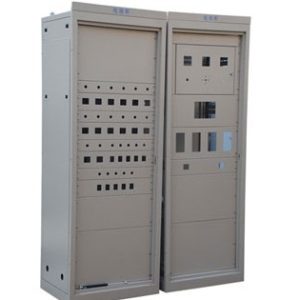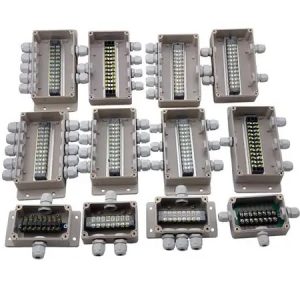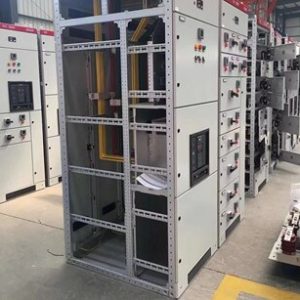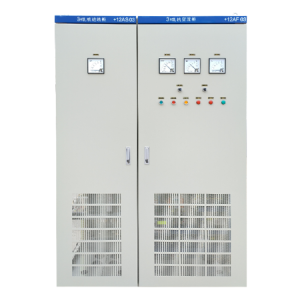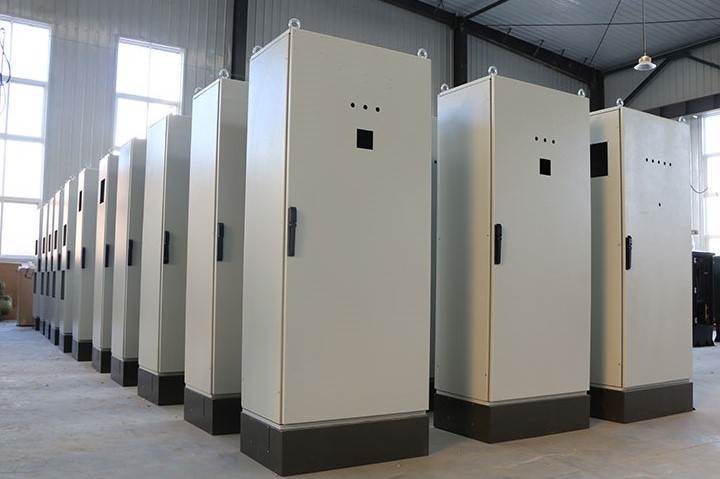
Custom Non-Standard Electrical Control Panel & Enclosure – Tailored Design
Brand name: HANI
Packing Details : Wooden box with fumigation or Wooden Fram or Steel Frame
Delivery Details: 30~60days or Based on the quantity
Shipping: Sea freight、Land freight、Air freight
HANI specializes in industrial electrical automation, delivering integrated drive and control solutions to safeguard your production.
Product Details
Custom Non-Standard Electrical Control Panel & Enclosure – Tailored Design
In modern industrial automation, power distribution, and process control, the electrical control panel serves as the operational brain of machinery and infrastructure systems. While catalog products satisfy many generic applications, real-world engineering often demands solutions that simply cannot fit into a pre-engineered box—literally or figuratively. This is where a truly Custom Electrical Control Panel becomes not a luxury, but a necessity. At HANI, we approach each inquiry with a singular focus: building a Custom Design electrical control panel and Control Cabinet that meets precise dimensional, environmental, and functional specifications without compromise.
Understanding the Full Spectrum of Non-Standard Customization
The term “non-standard” in the context of an electrical control panel covers a broad engineering landscape. It does not merely imply a different coat of paint or a few extra holes. Drawing from established manufacturing frameworks, we categorize tailored solutions into two primary tiers. Each tier addresses a distinct level of complexity and client involvement, ensuring that whether a project is a modest adaptation or a ground-up Custom Design, the resulting Control Cabinet performs with absolute reliability. The science of enclosure thermal management, for instance, dictates that even a 10% change in internal volume can alter natural convection patterns; non-standard dimensions therefore require recalculated vent placement, which our engineers handle as a matter of routine.
Tier 1: Engineered Modifications on Proven Platforms
This approach begins with a robust, field-validated base—such as a folded-and-welded frame structure akin to the nine-fold profile standard known for its 25mm modulus pattern. From this foundation, a Custom Electrical Control Panel emerges through a systematic series of controlled alterations. Dimensions shift to accommodate spatial constraints in existing control rooms, with width, height, and depth adjusted in millimeter increments. Openings for human-machine interfaces, pushbuttons, and cable glands are machined not by guesswork but from client-supplied cutout drawings or our own CAD templates, ensuring that a 22.5mm pushbutton collar actually seats with the proper 0.5mm clearance for the sealing gasket. Color specification follows recognized standards such as RAL, allowing a Control Cabinet to match a facility’s safety coding or corporate branding—RAL 7035 light grey for general industrial environments, or RAL 5015 sky blue for sectors where color demarcates function. Surface treatments extend beyond simple powder coating to include chemical passivation for stainless steel, or multi-stage pretreatments that achieve an ISO 9227 neutral salt spray resistance of over 500 hours for coastal installations. Attachments such as plinths, cable ducts, lifting eyes, and rain hoods are integrated using the same bolt-pattern logic as the original design, preserving structural integrity. This tier delivers a Custom Electrical Control Panel that benefits from a standardized manufacturing backbone while eliminating the compromises of an off-the-shelf solution.
Tier 2: Fully Bespoke Custom Design Fabrication
When a project cannot be anchored to any existing enclosure platform, the design process starts from a blank sheet. A fully bespoke Custom Design electrical control panel emerges from a deep collaboration between the client’s engineering team and HANI’s mechanical and electrical designers. The shape itself becomes a variable. We have produced L-shaped Control Cabinet assemblies that wrap around structural columns, cylindrical enclosures for cleanroom environments where airflow stagnation must be minimized, and split-level cabinets where high-voltage sections are physically partitioned from low-voltage control logic by welded internal steel barriers. Material selection is driven by the installation environment: 316L stainless steel for chemical processing plants where chloride exposure is constant, galvanized steel with a powder topcoat for outdoor solar farm combiners, or even aluminum for weight-sensitive mobile equipment. The structural analysis considers not just static load, but dynamic factors. A floor-standing electrical control panel destined for a seismic zone might incorporate reinforced corner gussets and a base frame analyzed via finite element method to withstand a response spectrum acceleration of 1.5g without permanent deformation. Every busbar support, every gland plate arrangement, every hinged subpanel is a deliberate engineering decision, resulting in a Control Cabinet that is as unique as the machine or process it governs.
Customization Dimension Reference Matrix
| Customization Aspect | Tier 1 (Platform-Based) | Tier 2 (Fully Bespoke) | Scientific/Technical Basis |
|---|---|---|---|
| Dimensional Envelope | Modified from standard in 50mm increments; max deviation typically ±30% from base model | Unrestricted; complex geometries including trapezoidal and multi-section | Internal volume governs natural convection heat dissipation (q = hAΔT) |
| Ingress Protection | Up to IP66 with standard gasketing | Up to IP69K for high-pressure, high-temperature washdown | IEC 60529 test protocols; gasket compression set evaluated per ASTM D395 |
| Material & Finish | Mild steel (Q235B), optional 304 stainless; RAL powder coat | 316L stainless, aluminum 5052/6061, galvanized; wet-spray, passivation, electroplating | Galvanic corrosion potential (ASTM G82); coating adhesion tested per ISO 2409 cross-hatch |
| Thermal Management | Filter fans, resistive heaters sized for adjusted volume | Air-to-air heat exchangers, enclosure AC, thermoelectric coolers | Heat load calculated per IEEE 1106; ΔT maintained within component derating curves |
| Structural Integrity | Standard lift-tested frame; uniform static load rating | FEA-verified for seismic, dynamic lifting, and uneven floor loading | Yield strength of frame materials; deflection limited to L/250 under rated load |
All technical parameters are validated during the design review phase against client specifications.
The Engineering Journey from Concept to Completed Control Cabinet
Producing a Custom Electrical Control Panel is a disciplined engineering exercise that follows a stage-gated process. It begins with a requirement analysis where every datasheet, electrical schematic, and mechanical interface drawing is reviewed. Our engineers pay close attention to the hierarchy of standards: IEC 61439 for low-voltage switchgear and controlgear assemblies, UL 508A for the North American market, and the relevant clauses of IEC 60204 for machinery safety. The Custom Design phase translates these requirements into a 3D solid model. This model is not merely a visual representation; it is a digital twin where component placement is optimized for thermal dissipation and electromagnetic compatibility. For example, variable frequency drives are positioned to minimize the length of motor cables while maintaining adequate clearance from sensitive PLC analog input modules—a practice grounded in the understanding that common-mode noise coupling is proportional to cable length and proximity. Busbar sizing calculations are performed per IEC 60890, considering short-circuit withstand ratings that can reach 65kA for one second in heavy industrial Control Cabinet assemblies. Once the model is approved, production drawings with explicit geometric dimensioning and tolerancing are released to the fabrication floor.
Fabrication itself is a blend of automated precision and skilled craftsmanship for a Custom Electrical Control Panel. CNC punch presses and fiber laser cutters achieve hole-pattern accuracies of ±0.1mm, directly from the 3D model data, eliminating transcription errors. Robotic welding ensures consistent penetration on the structural frame of the Control Cabinet, followed by a surface preparation sequence that can include degreasing, phosphating, and a final powder coating cured in a controlled oven to achieve a uniform film thickness typically between 60 and 80 microns. For a Custom Design that includes silk-screened legends or photo-etched stainless steel nameplates, these are applied only after the coating has fully cured. Assembly follows a documented build book, with each wire numbered and terminated to a specified torque. The completed electrical control panel then undergoes a rigorous factory acceptance test protocol: point-to-point continuity verification, insulation resistance testing with a 500V DC megohmmeter (with readings expected above 1 megaohm per 1000 volts of operating voltage, plus one additional megaohm), and functional simulation under load where applicable. This sequence ensures that when the panel arrives on site, it is not a collection of parts to be debugged, but a verified subsystem ready for integration.
HANI Custom Capability Snapshot
From a single modified wall-mount enclosure to a multi-bay Control Cabinet line-up with busbar systems rated 6300A—every project is engineered with the same commitment to certainty.
Critical Technical Considerations in Custom Electrical Control Panel Specification
Specifying a Custom Design electrical control panel demands attention to parameters that extend far beyond a simple equipment list. The following technical domains form the backbone of a successful, durable installation, and each must be explicitly addressed during the design dialogue.
Short-Circuit Current Rating (SCCR): A Control Cabinet must have an SCCR that equals or exceeds the available fault current at its point of connection. This is not a theoretical exercise; a panel with an inadequate SCCR can rupture under fault conditions. Our Custom Electrical Control Panel designs incorporate tested component combinations—circuit breakers, fuses, and busbar bracing—to achieve coordinated SCCR values, documented on the panel label per NFPA 70 and UL 508A Supplement SB requirements. The let-through energy of current-limiting fuses is modeled to protect downstream devices, a nuance that a catalog panel rarely addresses with the same rigor.
Electromagnetic Compatibility (EMC): In a Custom Design enclosure housing both power electronics and sensitive instrumentation, EMC is not left to chance. The steel enclosure itself provides a degree of shielding, but its effectiveness depends on aperture management. Seams are designed for electrical continuity, often with conductive gaskets at door perimeters. Cable segregation follows the principles of IEC 60204—power cables routed on one side of the Control Cabinet, signal and communication cables on the opposite side, with a physical metallic barrier where they must cross. This spatial discipline minimizes the coupling that could otherwise cause erratic analog readings or communication dropouts.
Thermal Management Verification: Every component within an electrical control panel dissipates heat. A Custom Electrical Control Panel assembled without a thermal strategy will develop hotspots that accelerate component aging—the Arrhenius equation tells us that a 10°C rise above rated temperature can halve the life of electronic components. Our designs calculate total heat dissipation in watts, establish the maximum allowable internal temperature based on the most temperature-sensitive device, and then select the appropriate cooling solution: natural convection, filtered forced-air, closed-loop air-to-air heat exchangers, or active refrigeration. The cooling capacity is always de-rated for altitude where applicable, as thinner air at 2000 meters reduces convective heat transfer by roughly 20% compared to sea level.
Environmental Sealing and Corrosion Defense: An IP65-rated Control Cabinet protects against dust ingress and low-pressure water jets, but maintaining that rating over a decade of service requires more than a silicone gasket. Our Custom Design approach considers gasket material compatibility with potential chemical exposure—EPDM for outdoor weathering, nitrile for incidental oil contact, and silicone for high-temperature applications. Drain plugs, breather vents with hydrophobic membranes, and a slight roof overhang on outdoor cabinets are standard details that prevent standing water from compromising the seal. For installations in wastewater treatment plants or coastal zones, the material stack-up from frame to fasteners is selected to avoid bimetallic corrosion cells.
Industry Applications Demand a Tailored Control Cabinet
The diversity of industries served by a Custom Electrical Control Panel underscores why standardization has limits. A food and beverage processing line requires a Control Cabinet with a sloped top to prevent product accumulation, finished in a washdown-compatible coating, and designed with standoffs to minimize crevices. A water treatment SCADA panel may need integral uninterruptible power supply mounting, battery trays with spill containment, and internal heaters with hygrostats to prevent condensation inside the electrical control panel during cold, humid nights. In the semiconductor sector, a Custom Design might incorporate copper-free aluminum construction to eliminate the risk of copper ion contamination in cleanroom environments. For material handling and crane controls, the Control Cabinet could be engineered to mount directly on a moving bridge, with vibration isolators and a reinforced backplate that prevents contactor chatter. Each of these applications represents a distinct set of constraints, and each demands a solution that was conceived specifically to address them, not adapted from a generic catalog offering.
Technical Note: The ingress protection ratings referenced throughout this product description follow the IEC 60529 standard. The first digit denotes solid particle protection (5=dust-protected, 6=dust-tight), and the second digit denotes liquid ingress protection (5=water jets, 6=powerful water jets, 9K=high-temperature high-pressure washdown). All claims of compliance are verified through type testing or rigorous engineering assessment.
Frequently Asked Questions
What differentiates a truly Custom Electrical Control Panel from a modified standard panel?▸
A modified standard panel begins with an existing enclosure platform and applies limited alterations—different cutouts, a custom paint code, non-standard backpanel placement. A fully Custom Design electrical control panel is engineered without the constraints of a pre-existing frame design. The structural members, panel layout, busbar routing, and thermal solution are all optimized specifically for the client’s set of components and operating conditions. The distinction is akin to altering a suit versus tailoring a new one from selected fabric—the latter fits every contour of the requirement.
How is the thermal management strategy developed for a non-standard Control Cabinet?▸
The process follows a structured calculation methodology. First, every heat-dissipating component—from the main circuit breaker to the smallest DC power supply—is cataloged with its watt loss at rated load. The total heat load establishes the baseline. The surface area of the Control Cabinet is then computed, and the passive heat dissipation through the enclosure walls is estimated using the heat transfer coefficient of the material (approximately 5.5 W/m²K for a painted steel enclosure in still air). The deficit between internal heat generation and passive dissipation defines the required active cooling capacity. A safety factor of 15–25% is then applied. The resulting specification drives the selection of filter fans, heat exchangers, or enclosure air conditioners, which are then positioned to create a managed airflow path that first cools the most temperature-sensitive devices.
What information is required to begin a Custom Design electrical control panel project?▸
A productive design engagement begins with a comprehensive package: a single-line diagram or electrical schematic, a preliminary bill of materials listing major components (make and model), the available fault current at the installation site, the environmental conditions (ambient temperature range, humidity, dust, chemical exposure), any specific dimensional constraints, and the required certifications (UL, IEC, specific regional marks). For a Custom Electrical Control Panel replacing an existing unit, photographs, as-built dimensions, and a list of known operational frustrations with the previous design are extraordinarily valuable. The more context provided, the more precisely the final Control Cabinet will align with both the expressed and latent requirements.
Can a Custom Control Cabinet meet both IEC and UL standards simultaneously?▸
Yes, though it requires careful component selection and design discipline. A Custom Design electrical control panel can be engineered to satisfy IEC 61439 for the international market and UL 508A for North America. This involves using components that carry dual listings where possible, adhering to the stricter of the two standards for creepage and clearance distances, and managing the differences in wire color coding (light blue for neutral under IEC, white or grey under UL). The SCCR marking requirements differ, and the panel labeling must meet both regimes. Our engineering team has experience navigating these dual-compliance projects, which are common in global OEM equipment builds.
What is the typical lead time for a fully bespoke Custom Electrical Control Panel?▸
Lead time is a function of complexity, component availability, and the depth of the design effort. A Tier-1 modified standard electrical control panel can typically be delivered in 4–6 weeks after design approval. A Tier-2 fully bespoke Control Cabinet with long-lead items such as large air circuit breakers, custom copper busbar fabrication, or specialized coatings may require 10–14 weeks. The single most effective way to compress the schedule is to provide complete, accurate technical data at the outset—revisions during the design freeze naturally extend the timeline. We provide a transparent project schedule at the proposal stage, and we adhere to it rigorously.
How are modifications and future expandability addressed in the Custom Design?▸
Future-proofing is a deliberate conversation during the design phase. We can incorporate spare DIN rail space, empty trunking capacity, reserved cutouts with blanking plates, and an oversized busbar system rated for a future load profile. In a Custom Electrical Control Panel, expandability is not an afterthought—it is specified as a design input. The structural frame can be fabricated with extended mounting flanges to accept an additional Control Cabinet bay in the future. All such provisions are documented in the as-built drawings, so the next engineer who works on the panel 15 years later understands exactly what was planned.
The specification and procurement of a Custom Electrical Control Panel is a significant engineering investment, and the decision criteria should never be reduced to the lowest price. The true cost of a Control Cabinet is revealed over its operational life: in uptime, in ease of maintenance, in the absence of nuisance trips, and in the safety of the personnel who interact with it. A Custom Design electrical control panel from HANI represents a deliberate choice to align the hardware with the reality of the application, grounded in verifiable engineering practice and a meticulous fabrication discipline. We invite you to engage our design team with your most challenging requirements—the ones that have been declined elsewhere, the ones that demand a solution without precedent. That is precisely where a true Custom Design approach delivers the certainty that off-the-shelf products cannot provide.
HANI is one of China’s leading professional industrial electrical automation manufacturers, providing complete drive and control solutions to customers worldwide. HANI focuses on designing and manufacturing integrated automation systems that meet the industry’s highest standards of precision, efficiency, and durability. Our engineering expertise lies in providing turnkey electrical automation projects to optimize the performance of modern industrial manufacturing plants.