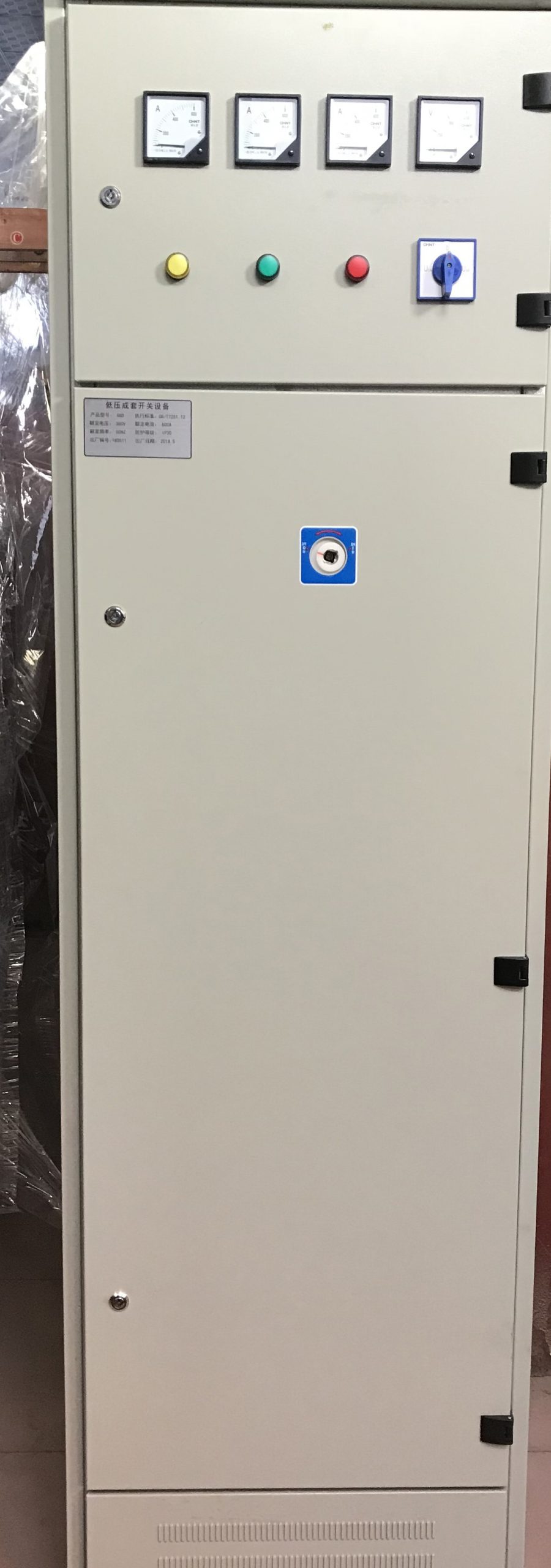
GGD Fixed Type Switchgear Cabinet – Cost-Effective Electrical Control Solution
Brand name: HANI
Packing Details : Wooden box with fumigation or Wooden Fram or Steel Frame
Delivery Details: 30~60days or Based on the quantity
Shipping: Sea freight、Land freight、Air freight
HANI specializes in industrial electrical automation, delivering integrated drive and control solutions to safeguard your production.
Product Details
GGD Fixed Type Switchgear Cabinet – Cost-Effective Electrical Control Solution
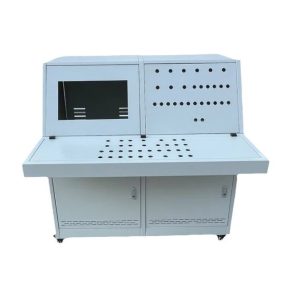
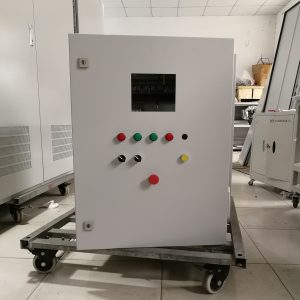
In modern power distribution networks, reliability and budget control must go hand in hand. The GGD fixed type switchgear cabinet stands as a proven electrical control panel that brings together operational safety, long service life, and outstanding cost efficiency. Designed for low-voltage AC systems up to 380V and rated currents reaching 3150A, this GGD Switchgear series is widely adopted in industrial plants, commercial buildings, and utility substations as a trustworthy Fixed Cabinet solution. By integrating circuit breakers, isolating switches, and intelligent metering within a standardized enclosure, this electrical switchgear delivers a complete electrical control panel function that centralizes protection, monitoring, and energy distribution.
1. Understanding the GGD Fixed Cabinet Electrical Switchgear
The acronym GGD stands for “G” (power distribution cabinet), “G” (fixed installation), and “D” (for low voltage). As a electrical control panel, the GGD cabinet houses all switching and protection devices in a rigid, floor-mounted steel enclosure. Unlike withdrawable designs, this Fixed Cabinet relies on bolted busbar connections and hardwired component mounting, which significantly reduces manufacturing complexity and maintenance overhead while enhancing vibration resistance. Every GGD Switchgear unit complies with IEC 60439-1 (now superseded by IEC 61439 series), ensuring systematic type-testing for short-circuit withstand, temperature rise, dielectric properties, and creepage distances. The structure is typically formed from 2mm to 3mm cold-rolled steel sheets with epoxy-polyester powder coating, achieving IP30 to IP40 protection according to IEC 60529. Inside the electrical switchgear, main busbars, branch busbars, and functional units are arranged in clearly separated zones, which helps localize arc faults and facilitates safe inspection.
The defining characteristic of this electrical control panel is the integration of the main circuit, control circuit, and auxiliary devices into one cohesive assembly. A typical Fixed Cabinet configuration includes a top busbar compartment, a central device compartment for air circuit breakers (ACBs) or molded-case circuit breakers (MCCBs), and a bottom cable chamber. Ventilation louvers with fine mesh filters maintain natural air convection cooling, keeping internal temperature rise below the 70K limit prescribed for busbar connections and 80K for terminals in accordance with IEC 61439-1 Table 6. Such thermal management ensures that the electrical control panel operates reliably even under continuous full-load conditions.
2. Technical Specifications at a Glance
When selecting a electrical control panel for an LV distribution project, precise understanding of electrical parameters is essential. The table below summarizes the standard ratings of GGD Switchgear cabinets. Actual configurations can be customized based on site requirements, transformer capacity, and fault level studies.
| Parameter | Standard Value / Range | Remarks |
|---|---|---|
| Rated Insulation Voltage (Ui) | 660V (main circuit) | IEC 61439-1 dielectric test |
| Rated Operational Voltage (Ue) | 380V / 400V AC, 3-phase | 50Hz; 60Hz optional |
| Rated Current of Main Busbar | 630A, 800A, 1000A, 1250A, 1600A, 2000A, 2500A, 3150A | Depends on copper busbar cross-section |
| Rated Short-Circuit Withstand Current (Icw) | 30kA / 50kA / 65kA / 80kA (1s) | Verified by type test |
| Rated Peak Withstand Current (Ipk) | 63kA / 105kA / 143kA / 176kA | Ipk = n × Icw |
| Degree of Protection | IP30 (standard); IP40 (enhanced) | Per IEC 60529 |
| Form of Internal Separation | Form 1 to Form 2b (typical) | Higher forms available on request |
| Enclosure Material | Cold-rolled steel 2.0–3.0 mm with powder coating | RAL 7035 (light gray) standard |
| Cable Entry | Top / bottom, removable gland plates | Gland plate material: steel / aluminium |
These specifications underline why the GGD series is often chosen as the primary electrical control panel in projects where a balance of performance and cost is paramount. The Fixed Cabinet structure guarantees that busbar short-circuit ratings are achieved without complex moving parts, which in turn reduces the risk of contact misalignment found in withdrawable systems.
3. Key Features and Engineering Advantages
✅ Robust Fixed-Type Construction
As a Fixed Cabinet, all devices are firmly mounted on galvanized mounting plates or support rails. The absence of drawers and sliding mechanisms eliminates contact wear, reduces parasitic resistance, and improves thermal performance. This makes the electrical control panel particularly immune to transport vibration and seismic events, as the bolted design acts as a continuous conduction path.
⚡ Optimized Busbar System
The main and distribution busbars in a GGD Switchgear are fabricated from high-conductivity ETP copper (≥99.9% IACS) with tin or silver plating at joints. The busbar supports are made of flame-retardant, glass-fiber-reinforced unsaturated polyester (SMC/DMC), which meets glow-wire test requirements at 960°C according to IEC 60695-2-11, significantly enhancing the fire safety of the electrical control panel.
🔧 Easy Installation & Maintenance
The electrical switchgear is delivered in separate shipping sections that can be bolted together on site. Large removable front and rear door panels provide full access to cable terminations and device interiors. Since this is a Fixed Cabinet, there are no draw-out interlocks to recalibrate, drastically reducing commissioning time for any electrical control panel installation.
Additional advantages include: compartmentalized design up to Form 2b that isolates busbars from functional units; neutral and earth busbars sized at 100% of phase busbar capacity; optional arc fault detection relays; and compatibility with Modbus RTU/TCP energy meters, turning the electrical control panel into a data-ready node in a smart grid infrastructure.
4. Applications Where the GGD Electrical Control Panel Excels
The versatility of this GGD Switchgear makes it a primary electrical control panel choice across multiple sectors. Below are representative application environments:
- Industrial Motor Control Centers: The electrical control panel feeds and protects large induction motors, compressors, and conveyor systems. By integrating soft starters or VFDs directly into the Fixed Cabinet, plant operators achieve a compact footprint while maintaining motor overload protection according to IEC 60947-4-1.
- Commercial Building Distribution: Shopping malls, hospitals, and office towers utilize this electrical switchgear as the main low-voltage distribution hub. Multiple outgoing feeder circuits supply lighting panels, HVAC units, and elevator power, all coordinated through a central electrical control panel that includes a fireman’s interlock for safety.
- Renewable Energy Integration: Solar PV combiner boxes and battery energy storage systems depend on a robust electrical control panel to manage DC-AC conversion outputs. The GGD Switchgear cabinet accommodates DC-rated MCCBs and AC feeder breakers in separate compartments, addressing the mixed-current challenge.
- Infrastructure and Utilities: Water treatment plants, pumping stations, and transport tunnels rely on the electrical control panel’s ability to withstand high humidity and moderate dust ingress when configured with IP40 and anti-condensation heaters. The Fixed Cabinet’s bolted joints are far less susceptible to environmental corrosion compared to sliding contact systems.
5. Manufacturing Excellence and Quality Assurance
At HANI, each electrical control panel undergoes a production process that reflects deep engineering discipline. The manufacturing workflow begins with CNC punching and laser cutting of enclosure panels to a tolerance of ±0.5 mm, followed by bending on press brakes that guarantee rectangularity. All structural components are pre-treated in a seven-tank phosphatizing process to remove oil and scale before the electrostatic powder coating line applies a 60–80 µm layer of epoxy-polyester, achieving salt spray resistance exceeding 500 hours (ISO 9227).
Busbar fabrication is equally rigorous. Copper bars are cut, punched, and bent using automated equipment, then tinned to a minimum thickness of 5 µm to prevent oxidation at joint interfaces. Insulating sleeving is applied using heat-shrinkable tubing rated at 600V. Within the GGD Switchgear assembly, every bolted connection is torqued with calibrated tools and marked with verification paint, ensuring that the completed electrical control panel maintains low contact resistance over its entire 25-year design life.
Testing is non-negotiable. Before a Fixed Cabinet leaves the factory, it must pass a series of routine tests:
- Dielectric voltage withstand test (2500V AC for 1 minute on main circuits)
- Insulation resistance measurement (>1000 MΩ at 500V DC for busbars)
- Continuity of protective bonding circuits (resistance ≤0.1 Ω)
- Operational tests of all switching devices, interlocks, and auxiliary contacts
- Functional verification of metering and protection relays by secondary injection
Type-test certifications for short-circuit, temperature rise, and IP protection are available upon request, affirming that the electrical switchgear meets global compliance standards. HANI also maintains an ISO 9001:2015 certified quality management system, underscoring our commitment to delivering a dependable electrical control panel that performs as specified under all operating conditions.
6. Installation, Operation, and Maintenance Best Practices
A Fixed Cabinet installation typically follows these steps: (1) level the foundation channel using a spirit level and shim as necessary; (2) bolt the cabinet sections together and to the channel steel using M12 anchors; (3) install main and branch busbar bridges, ensuring that every joint is torqued to 60-80 N·m for M12 bolts; (4) make power and control cable terminations following the wiring diagram strictly, with cable lugs properly crimped and heat-shrunk; (5) clean the interior thoroughly and reattach all covers before final energization.
For operational longevity of the electrical control panel, periodic maintenance is recommended at 6-month intervals in clean environments and every 3 months in dusty or high-vibration locations. The maintenance routine includes: thermal imaging scanning of all busbar joints and cable terminations at full load to detect hot spots; retorquing of critical bolted connections; verification of door interlock functionality; cleaning of ventilation filters; and insulation resistance tests. Because this electrical switchgear has no draw-out carriages, the time required for a full inspection is about 30% less than for comparable withdrawable switchgear, making it an attractive electrical control panel for facilities that prioritize uptime.
7. Why Choose the GGD Fixed Cabinet Over Other Switchgear Types
Cost-Efficiency without Compromise: The GGD series reduces initial investment by up to 25% compared to withdrawable designs (e.g., MNS, GCS) because the Fixed Cabinet eliminates expensive drawer units, complex guide rails, and contact clusters. This makes the electrical control panel an ideal choice for budget-conscious projects where functionality cannot be sacrificed.
Higher Short-Circuit Rigidity: A bolted busbar system inherently provides a more rigid connection than sliding contacts, resulting in superior dynamic stability under short-circuit conditions. The peak withstand current capacity of a GGD Switchgear can reach 80kA Icw, confirming its suitability for critical feeder applications.
Simplified Spare Parts Management: With fewer moving parts, the electrical control panel demands a smaller inventory of spare components. Circuit breakers, contactors, and relays are standard off-the-shelf devices, often compatible across multiple brands, which reduces lead times and procurement complexity.
Furthermore, the electrical switchgear’s monolithic assembly style reduces the likelihood of misoperation due to incorrect racking of withdrawable units. Operators can access breakers directly through the front door for opening/closing, while the electrical control panel’s mimic diagram provides clear status indication, contributing to a safer work environment.
8. Frequently Asked Questions
What is the maximum rated current for a GGD electrical control panel?
The standard busbar system of this electrical control panel supports up to 3150A, with the exact rating determined by the cross-sectional area of the copper bars. For higher continuous currents, forced ventilation or parallel cabinets can be engineered while maintaining the Fixed Cabinet design principles.
Can this electrical control panel be retrofitted with intelligent monitoring?
Yes. The GGD Switchgear design accommodates digital multimeters, power quality analyzers, and communication gateways inside the instrument compartment. An existing electrical control panel can be upgraded with Modbus or Ethernet-enabled devices, enabling remote monitoring of voltage, current, power factor, and energy consumption without mechanical modification to the Fixed Cabinet.
Is a fixed type electrical switchgear safe for arc flash?
When designed and tested according to IEC 61439, the electrical switchgear provides adequate arc fault containment. The bolted covers and compartment barriers direct arc gases away from personnel. For higher arc flash hazard categories, optional arc-quenching solutions or active arc fault protection relays can be integrated into the electrical control panel.
What are the standard dimensions of a GGD cabinet?
Typical dimensions for a single Fixed Cabinet are 800mm (W) × 600mm, 800mm, or 1000mm (D) × 2200mm (H). Multi-cabinet lineup configurations are built by joining individual sections, making the electrical control panel scalable for projects ranging from small sub-distribution boards to large power centers.
How does a GGD electrical control panel handle environmental extremes?
With IP40 protection, additional anti-condensation heaters, and tropicalized coating, this electrical switchgear operates reliably in temperatures from -5°C to +40°C and relative humidity up to 95% (non-condensing) at +25°C. For outdoor or harsh environments, the electrical control panel can be housed inside a weatherproof kiosk or containerized substation.
9. Delivering Long-Term Value with the Right Electrical Control Panel
Selecting a electrical control panel is a strategic decision that impacts energy availability, safety, and operational expenditure over decades. The GGD Switchgear Fixed Cabinet represents an engineering tradition that prioritizes inherent robustness and simplicity. By eliminating unnecessary mechanical complexity, this electrical switchgear consistently delivers lower total cost of ownership — from procurement through its 25-year service life — while satisfying stringent international standards. Whether powering an automated production line or ensuring continuous lighting in a critical care hospital, the electrical control panel built on the GGD platform remains a top-tier choice for project engineers, EPC contractors, and facility managers worldwide.
For detailed technical drawings, short-circuit calculation support, or a tailored quotation for your next electrical control panel requirement, contact the product specialists at HANI.
HANI is one of China’s leading professional industrial electrical automation manufacturers, providing complete drive and control solutions to customers worldwide. HANI focuses on designing and manufacturing integrated automation systems that meet the industry’s highest standards of precision, efficiency, and durability. Our engineering expertise lies in providing turnkey electrical automation projects to optimize the performance of modern industrial manufacturing plants.