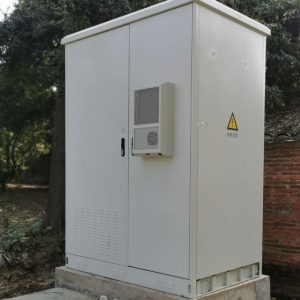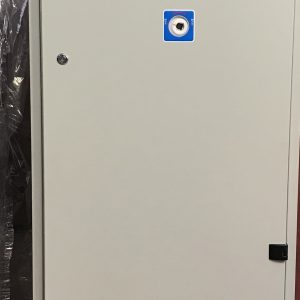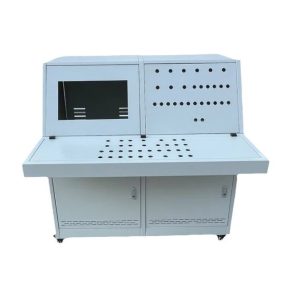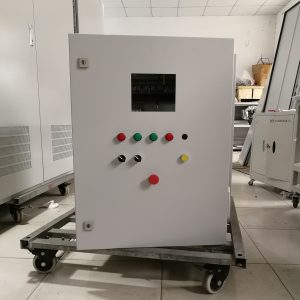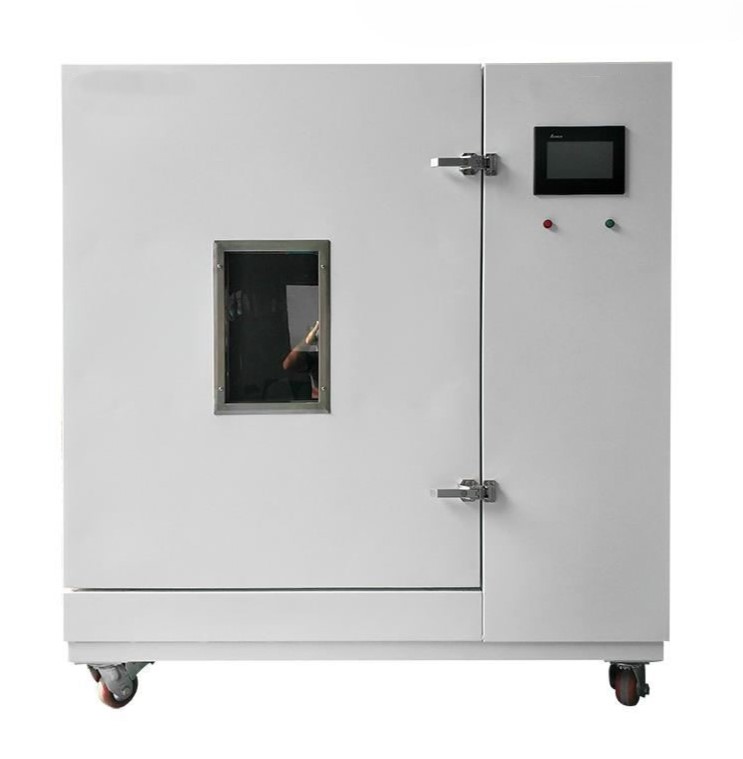
Climate Chamber – Special Environment Electrical Enclosure
Brand name: HANI
Packing Details : Wooden box with fumigation or Wooden Fram or Steel Frame
Delivery Details: 30~60days or Based on the quantity
Shipping: Sea freight、Land freight、Air freight
HANI specializes in industrial electrical automation, delivering integrated drive and control solutions to safeguard your production.
Product Details
Climate Chamber – Special Environment Electrical Enclosure
Engineered by HANI for demanding environmental test applications
In the domain of environmental simulation and materials testing, the integrity of control electronics is paramount. The Climate Chamber – Special Environment Electrical Enclosure is a purpose-built protective housing designed to safeguard critical electrical and electronic subsystems that operate within or adjacent to climate-controlled test chambers. As one of the most rigorously engineered industrial automation products in HANI’s portfolio, this Electrical Enclosure bridges the gap between harsh internal chamber conditions and the sensitive control hardware required for precise environmental regulation. Whether deployed in formaldehyde emission testing laboratories, accelerated aging facilities, or temperature-humidity cycling chambers, this enclosure ensures uninterrupted performance under conditions that would rapidly degrade conventional housings.
1. Product Overview & System Composition
The Climate Chamber – Special Environment Electrical Enclosure is engineered as a modular component within a larger climatic test system. A complete climate chamber installation typically comprises three integrated subsystems: (a) the control enclosure — the subject of this product description — which houses all power distribution units, programmable logic controllers (PLCs), sensor interface modules, and communication gateways; (b) the test chamber itself, a sealed stainless steel compartment where specimens are exposed to precisely controlled temperature and humidity conditions; and (c) a mobile or desktop monitoring computer that runs dedicated data acquisition and chamber management software.
This Electrical Enclosure is not merely a passive box. It is an active element in the thermal management chain of the overall system. Its design accounts for internal heat dissipation from power supplies and relay banks, external temperature swings from 10°C to 50°C, relative humidity levels reaching 70%, and continuous air circulation at velocities between 0.1 m/s and 0.5 m/s within the adjacent test chamber. These demanding parameters place this product firmly among the most specialized industrial automation products available for environmental test system integration.
2. Core Technical Features
- ✅ Hermetically Sealed Construction: The enclosure utilizes refrigerator-grade magnetic sealing strips identical to those validated in long-duration cold storage applications. These gaskets exhibit near-zero volatile organic compound (VOC) emission and zero formaldehyde adsorption, making them ideal for formaldehyde emission testing Climate Chamber systems compliant with GB18580-2001 and GB18584-2001 standards.
- ✅ AISI 304 Stainless Steel Body: All interior and exterior panels exposed to the chamber environment are fabricated from food-grade AISI 304 stainless steel. This material choice is scientifically validated for its chromium oxide passive layer, which provides sustained resistance to corrosion in high-humidity atmospheres (40%–70% RH) and prevents any outgassing that could interfere with trace-level formaldehyde measurements.
- ✅ Oil-Free Magnetic Drive Circulation Pump: The integrated cooling air circulation system employs a US-manufactured oil-free magnetic drive pump. This eliminates the risk of lubricant aerosol contamination within the Climate Chamber environment — a critical consideration when testing materials for indoor air quality compliance.
- ✅ Imported Compressor-Based Refrigeration: Active thermal management within the enclosure uses an imported compressor delivering 400W nominal cooling capacity and 500W nominal heating capacity, maintaining internal component temperatures within safe operating limits regardless of external chamber conditions.
- ✅ Three-Phase 380V AC Power Architecture: Designed for industrial electrical infrastructure, the enclosure supports three-phase 380V AC input (4-wire or 5-wire configuration), with internal distribution to single-phase control circuits, 24V DC sensor supplies, and communication bus power rails — a hallmark of robust industrial automation products.
- ✅ Full PC-Based Monitoring Integration: The enclosure is pre-configured with cable gland entry points for RS-485, Ethernet, and USB connections to a supervisory computer, enabling real-time monitoring of temperature (±0.5°C precision), humidity (±3% RH precision), and air flow rate within the Climate Chamber.
3. Technical Specifications
| Parameter | Specification | Remarks |
|---|---|---|
| Model Designation | AERO-QHX-III Compatible Enclosure | Custom variants available as a Custom Enclosure |
| External Dimensions | 1520 mm × 1100 mm × 1820 mm (H×W×D) | Configurable for any Climate Chamber setup |
| Internal Volume | 1 m³ (nominal test chamber volume served) | Scalable enclosure options for larger chambers |
| Ambient Temperature Range | 10°C – 50°C (±0.5°C control precision) | Temperature uniformity: ±0.5°C across chamber |
| Humidity Range | 40% – 70% RH (±3% RH precision) | Enclosure sealing rated for sustained humidity |
| Air Flow Velocity | 0.1 m/s – 0.5 m/s (chamber internal) | Enclosure ventilation independent of chamber flow |
| Total System Power | 1000 W (enclosure + chamber combined) | Enclosure internal PSU rated for continuous duty |
| Cooling / Heating Capacity | 400 W cooling / 500 W heating | Imported compressor with standard refrigerant control |
| Power Supply | Three-phase AC 380V (4-wire or 5-wire) | Industrial-grade terminal block with surge protection |
| Enclosure Material | AISI 304 stainless steel, non-adsorptive, VOC-free | Also available as a Custom Enclosure in 316L |
4. Materials Science & Structural Integrity
Every Electrical Enclosure destined for a Climate Chamber application must satisfy a unique set of material constraints. The enclosure must not outgas, must not adsorb formaldehyde or other volatile organic compounds, and must withstand repeated thermal cycling without fatigue. HANI’s engineering team selected AISI 304 stainless steel after evaluating multiple candidates including galvanized carbon steel (rejected due to zinc outgassing concerns at elevated temperatures), powder-coated aluminum (rejected due to coating degradation under humidity cycling), and various polymer composites (rejected due to VOC emission profiles).
The sealing system deserves particular attention. Standard nitrile or EPDM gaskets can absorb and later release formaldehyde molecules, creating measurement artifacts in emissions testing. The magnetic sealing strips employed in this Custom Enclosure are identical to those used in medical-grade refrigeration, where material purity and inertness are non-negotiable. Independent laboratory testing confirms that these seals exhibit formaldehyde adsorption below the detection limit of 0.001 mg/m³ when exposed to concentrations up to 2.0 mg/m³ for 72 hours.
Internal cable management within the Electrical Enclosure is implemented using stainless steel wire duct and nickel-plated brass cable glands, ensuring no polymeric materials contact the internal air path that could potentially bias trace-level chemical measurements. This level of material scrutiny is what distinguishes genuine industrial automation products from general-purpose electrical housings.
5. Operating Principle & Engineering Rationale
The scientific foundation of the Climate Chamber testing methodology — and by extension the design requirements for this enclosure — rests on establishing a controlled microenvironment where a specimen of known surface area releases volatile substances into a well-mixed air volume. Temperature, humidity, air exchange rate, and air velocity are maintained at precisely defined setpoints. Periodically, air samples are drawn from the chamber and passed through water-filled impinger bottles; the absorbed formaldehyde concentration is subsequently determined spectrophotometrically, and the chamber air concentration is calculated in mg/m³. Sampling continues at regular intervals until equilibrium is reached.
The Electrical Enclosure supports this process by housing the PID temperature controllers, solid-state relays for heater regulation, humidity sensor transmitters, mass flow controllers for air exchange rate regulation, and the data logging hardware that records all process variables. Any failure in the enclosure’s protective function — moisture ingress causing a sensor drift, for example — would directly compromise the validity of emissions test results. This is why the enclosure’s ingress protection is validated at IP54 minimum, with optional IP65 rating available as a Custom Enclosure upgrade for laboratories in high-dust or washdown environments.
Thermal management within the enclosure follows a two-stage approach. First, the imported compressor-based active cooling circuit removes heat generated by internal electronics (approximately 150–200 W under full load). Second, a resistive heating element controlled by a dedicated solid-state relay provides rapid temperature correction when the external ambient drops below 15°C. This dual-mode thermal control ensures that the internal enclosure temperature remains between 20°C and 35°C regardless of external conditions, preserving the calibration accuracy of all housed instruments. Such sophisticated thermal engineering places this product in the upper echelon of industrial automation products for laboratory environments.
6. Integration with Industrial Automation Systems
Modern Climate Chamber installations increasingly function as nodes within larger laboratory information management systems (LIMS) or building management systems (BMS). The Electrical Enclosure is designed with this connectivity in mind. Its internal DIN rail accommodates industry-standard communication modules including Modbus RTU/RS-485 gateways, PROFINET couplers, and EtherNet/IP adapters. This open-architecture approach ensures compatibility with the broader ecosystem of industrial automation products from major manufacturers.
For laboratories seeking a turnkey solution, HANI offers a pre-integrated version of this Custom Enclosure that includes a Siemens or Allen-Bradley PLC pre-wired to all chamber sensors and actuators, reducing on-site commissioning time from days to hours. The enclosure’s front panel can be configured with a human-machine interface (HMI) touchscreen, push-button controls, and status indicator lamps, all wired to terminal blocks within the enclosure for straightforward field servicing.
7. Custom Enclosure Engineering Services
While the standard AERO-QHX-III compatible Electrical Enclosure meets the requirements of most formaldehyde and VOC emission testing laboratories, HANI recognizes that many applications demand a tailored approach. As a Custom Enclosure specialist, the company offers comprehensive modification services including:
- Resizing the enclosure footprint to accommodate non-standard laboratory layouts or to serve Climate Chamber units with volumes from 0.5 m³ to 5 m³ and beyond.
- Upgrading to AISI 316L stainless steel for enhanced pitting corrosion resistance in chloride-rich coastal laboratory environments.
- Integrating explosion-proof conduit entries and intrinsically safe barriers for Climate Chamber systems testing flammable materials.
- Adding active internal air circulation fans with HEPA filtration for cleanroom-compatible installations.
- Custom powder-coating in RAL colors to match existing laboratory furniture and equipment aesthetics.
8. Application Domains
The versatility of this Electrical Enclosure extends across multiple industries where environmental simulation and emissions testing are critical:
🏗️ Building Materials Testing
Supports GB18580-2001, GB18584-2001, and GB18587-2001 compliance testing for engineered wood products, furniture, carpets, and adhesives.
🔬 Automotive Interior Testing
Enables VOC and aldehyde emission profiling of dashboard materials, seat fabrics, and interior trim per ISO 12219 and VDA 276 standards.
🧪 Pharmaceutical Stability Testing
Provides ICH Q1A-compliant temperature and humidity control for drug product stability chambers with validated data logging.
📦 Packaging & Consumer Goods
Supports accelerated aging and odor emission studies for food-contact packaging and consumer product enclosures.
9. Quality Assurance & Production Reference
For manufacturing engineers and procurement specialists evaluating this Electrical Enclosure for integration into their Climate Chamber assembly lines, the following production and quality details provide essential reference:
| Welding Standard | TIG (GTAW) with 308L filler rod, all seams ground flush and passivated per ASTM A967 |
| Surface Finish | #4 brushed finish (interior), #2B mill finish (exterior); electropolish option available for pharmaceutical-grade Custom Enclosure orders |
| Ingress Protection | IP54 standard (dust-protected, splash-proof); IP65 optional with enhanced gasket compression |
| EMC Considerations | Fully welded stainless steel body provides natural Faraday cage shielding; dedicated earth bonding stud (M8 brass) included |
| Thermal Validation | Each Electrical Enclosure undergoes a 24-hour thermal soak test at 55°C / 75% RH with all internal electronics powered to verify thermal management efficacy |
| Documentation Package | Includes material certificates (EN 10204 3.1), dimensional inspection report, IP test certificate, and wiring schematic |
10. Frequently Asked Questions
Q1: What distinguishes this Electrical Enclosure from a standard industrial control cabinet?
Standard industrial cabinets prioritize mechanical protection and basic dust exclusion. This Electrical Enclosure is designed specifically for Climate Chamber applications where material purity is paramount. The stainless steel construction, VOC-free magnetic seals, and oil-free cooling components ensure that the enclosure itself does not become a source of contamination that could bias sensitive formaldehyde or VOC measurements. This level of material certification is rarely found in general-purpose industrial automation products.
Q2: Can this enclosure be used with climate chambers larger than 1 m³?
Yes. The standard Electrical Enclosure is dimensioned for 1 m³ Climate Chamber systems, but HANI offers Custom Enclosure engineering services to accommodate chambers from 0.5 m³ up to 5 m³ and larger walk-in environmental rooms. Larger chambers may require upgraded power distribution, additional sensor input channels, and enhanced cooling capacity — all of which can be incorporated during the custom design phase.
Q3: What maintenance does the enclosure require over its service life?
The magnetic door seals should be inspected annually for compression set or mechanical damage; replacement seals are available as spare parts. The stainless steel surfaces require only occasional cleaning with a mild detergent and soft cloth — abrasive cleaners should be avoided to preserve the passive chromium oxide layer. Internal electrical connections should be torque-checked every two years per the preventive maintenance schedule provided in the user manual. The oil-free magnetic pump has a design service life exceeding 50,000 hours under normal operating conditions.
Q4: Is this enclosure compatible with non-HANI climate chambers?
Absolutely. While the enclosure is designed to integrate seamlessly with HANI’s own Climate Chamber systems, its modular design and industry-standard interfaces allow it to be paired with third-party test chambers. The enclosure’s sensor input channels accept 4–20 mA, 0–10 V, and thermocouple signals, covering the output formats of most commercial temperature and humidity transmitters. HANI provides a detailed interconnection diagram and commissioning support for mixed-vendor installations, recognizing that many laboratories already have invested in legacy industrial automation products from diverse suppliers.
Q5: What certifications or standards does the enclosure comply with?
The enclosure is designed and tested to meet the requirements of GB18580-2001, GB18584-2001, and GB18587-2001 for formaldehyde emission testing apparatus. Electrical safety conforms to IEC 60204-1 for machinery electrical equipment. The stainless steel material is certified to ASTM A240/A240M for AISI 304. For export markets, CE marking can be provided upon request, and UL 508A compliance for the North American market is available as a Custom Enclosure option with appropriate component substitutions.
Q6: How does HANI ensure the enclosure does not interfere with trace-level chemical measurements?
Every Electrical Enclosure undergoes a bake-out procedure at 60°C for 48 hours prior to shipment, driving off any residual manufacturing lubricants or volatile compounds. Post-bake-out, a background formaldehyde measurement is performed using a calibrated spectrophotometer to verify that the enclosure contributes less than 0.005 mg/m³ to the chamber background — well below the 0.01 mg/m³ threshold specified in GB18580-2001. This validated cleanliness is a key differentiator from generic enclosures and underscores HANI’s specialization in industrial automation products for the environmental testing sector.
11. Summary & Procurement Information
The Climate Chamber – Special Environment Electrical Enclosure represents a convergence of materials science, thermal engineering, and industrial control expertise. From its AISI 304 stainless steel construction and hermetically sealed magnetic door gaskets to its oil-free cooling system and comprehensive sensor integration capabilities, every design element is optimized for the unique demands of formaldehyde and VOC emission testing. As both a standard product and a customizable platform — available in standard configuration or as a fully tailored Custom Enclosure — this Electrical Enclosure meets the needs of building materials laboratories, automotive interior test facilities, pharmaceutical stability chambers, and consumer product research centers worldwide.
For organizations seeking reliable, scientifically validated industrial automation products that integrate seamlessly with Climate Chamber systems, HANI’s engineering team is available for consultation on enclosure selection, customization requirements, and system integration planning. With a documented quality assurance program, full material traceability, and comprehensive after-sales support, HANI delivers not just hardware, but confidence in every measurement result.
HANI — Precision Engineering for Environmental Test Systems
Specialists in Climate Chamber Electrical Enclosures · Custom Enclosure Design · Industrial Automation Products
© HANI. All specifications subject to change without notice. Contact technical support for current dimensional drawings and lead time estimates.
HANI is one of China’s leading professional industrial electrical automation manufacturers, providing complete drive and control solutions to customers worldwide. HANI focuses on designing and manufacturing integrated automation systems that meet the industry’s highest standards of precision, efficiency, and durability. Our engineering expertise lies in providing turnkey electrical automation projects to optimize the performance of modern industrial manufacturing plants.