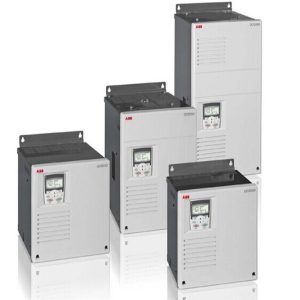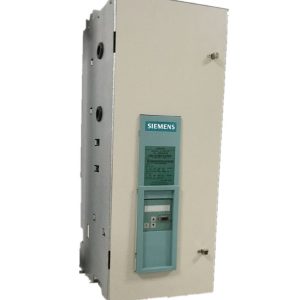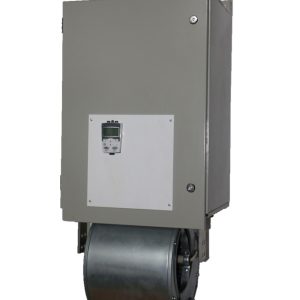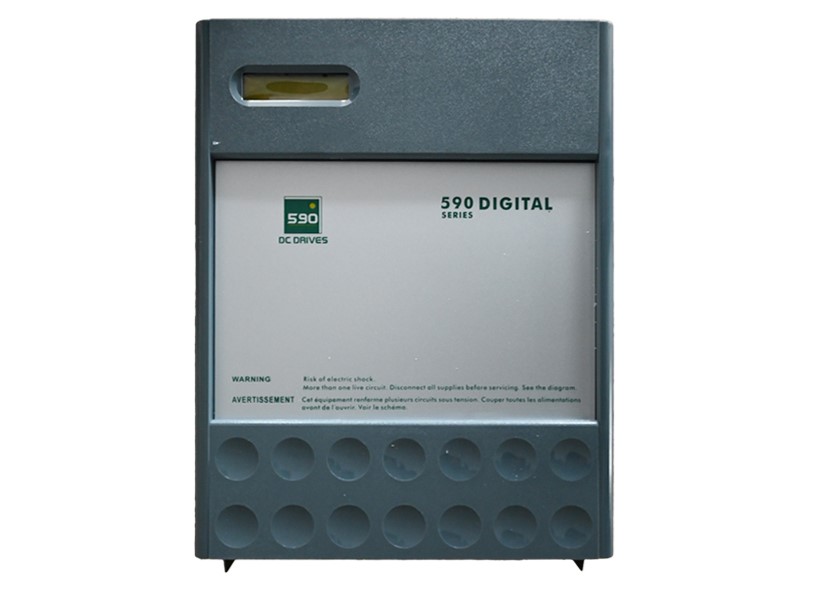
DC Motor Drive Series for Precise Speed Regulation
Brand name: HANI
Packing Details : Wooden box with fumigation or Wooden Fram or Steel Frame
Delivery Details: 30~60days or Based on the quantity
Shipping: Sea freight、Land freight、Air freight
HANI specializes in industrial electrical automation, delivering integrated drive and control solutions to safeguard your production.
Product Details
DC Motor Drive Series for Precise Speed Regulation
In modern industry, the demand for electrical drives and control that deliver unwavering precision has never been greater. Whether it’s a continuous web tension line, a high-speed extruder, or a precision elevator system, the ability to govern motor speed within fractions of a percent directly determines product quality and process efficiency. HANI’s DC Motor Drive series has been engineered from the ground up to address exactly this challenge, combining rugged power electronics with advanced digital regulation algorithms to form a complete electrical motor control platform that excels where stability and response matter most.
1. Fundamentals of DC Motor Speed Regulation and Electrical Drives
At the heart of any DC drive is the fundamental equation of a separately excited DC motor: n = (Va – IaRa) / kΦ. This tells us that speed can be controlled either by varying the armature voltage Va or by weakening the field flux Φ. For base speed and below, armature voltage control is the dominant method; above base speed, field weakening extends the constant-power range. In electrical drives and control engineering, the precision of this regulation hinges on how accurately the drive can sense actual speed, process the error, and modify the applied voltage in real time.
Modern DC Motor Drive units utilize pulse-width modulation (PWM) with insulated gate bipolar transistors (IGBTs) to synthesize a variable DC voltage from a fixed AC or DC bus. The switching frequency, often between 4 kHz and 20 kHz, is chosen to balance low motor heating against audible noise. A high-performance DC drive not only switches power devices efficiently but also embeds digital signal controllers that execute speed and current loops every 50–100 microseconds. This forms the cornerstone of robust electrical motor control where a speed regulation accuracy of ±0.01% can be achieved with feedback from an incremental encoder or resolver.
Key scientific considerations in electrical drives and control for DC motors include armature time constant, load inertia compensation, and the mitigation of torque ripple. If the current loop bandwidth is not at least ten times higher than the speed loop bandwidth, instability can arise. HANI’s design philosophy respects these physical limits by employing adaptive PI controllers with anti-windup and notch filters to suppress mechanical resonance — a testament to deep knowledge in electrical drives and control.
2. HANI DC Motor Drive Series – Technical Architecture
The HANI DC Motor Drive series covers a power spectrum from 0.5 kW to 1.5 MW, supporting armature voltages up to 900 VDC and field supplies up to 360 VDC. Every unit in the series is built around a 32-bit floating-point DSP that runs a cascaded control structure: an inner current (torque) loop and an outer speed loop. For demanding electrical drives and control scenarios, the drive also accommodates an outer position or tension loop, making it a true multi-purpose electrical motor control node.
At HANI, we recognize that no single DC drive fits all applications. That is why the series is divided into three performance classes: Essential, Advanced, and Precision. Below is a comparative overview illustrating the range capability and core specifications of each class. Every model is designed with a commitment to safety standards including IEC 61800-5-1 and features built-in EMC filters that meet C3 industrial limits, reinforcing HANI’s dedication to reliable electrical drives and control.
| Parameter | Essential DCD-E | Advanced DCD-A | Precision DCD-P |
|---|---|---|---|
| Power Range | 0.5 – 45 kW | 15 – 315 kW | 55 – 1500 kW |
| Armature Voltage (max) | 500 VDC | 750 VDC | 900 VDC |
| Field Supply | Up to 10 A, integrated | Up to 25 A, integrated | Up to 60 A, integrated |
| Switching Frequency | 4 – 8 kHz | 4 – 14 kHz | 6 – 20 kHz |
| Speed Feedback Options | Encoder, Tachogenerator | Encoder, Resolver, Tacho | Sin/Cos encoder, Resolver, Absolute EnDat/SSI |
| Speed Regulation Accuracy | ±0.05% (with digital enc.) | ±0.01% (with digital enc.) | ±0.001% (with sin/cos enc.) |
| Current Loop Bandwidth | > 400 Hz | > 800 Hz | > 1200 Hz |
| Communication | Modbus RTU, CANopen | PROFIBUS, EtherCAT, Modbus TCP | EtherCAT, PROFINET, Powerlink |
| Protection Features | Overcurrent, Overtemp, Field loss | + Phase loss, Earth fault | + Safe Torque Off (STO) SIL2, dynamic braking |
Table 1: HANI DC Motor Drive series – comparative specification matrix for fundamental electrical drives and control selection.
3. How HANI Achieves Ultra-Precise Speed Regulation
Precision in a DC drive is not achieved by chance. HANI employs a multi-layer approach rooted in rigorous electrical drives and control theory. The first layer is the current loop, sampled at 16 kHz. A proprietary adaptive PI controller compensates for armature inductance variations caused by brush aging and temperature. The resulting torque linearity is better than 2% across the entire current range, which directly improves low-speed smoothness – a critical factor in electrical motor control for extruders and winders.
The second layer is the speed loop, which runs at 4 kHz. It incorporates a Luenberger observer that fuses feedback from a high-resolution incremental encoder (up to 2 million pulses per revolution) with a model-based estimation of load torque. This state-observer yields effective resolution enhancement, achieving a speed regulation ratio of 1:10,000 in the Precision class. Such capability is essential in electrical drives and control for coordinate measuring machines, test benches, and flywheel energy storage systems where any deviation compromises data integrity or safety.
A unique “Auto-Tune” function measures the motor’s electrical time constant, total inertia, and friction profile automatically. It then populates the optimal gains for the speed and current loops, dramatically reducing commissioning time. HANI’s DC Motor Drive units also support feedforward compensation from a load observer, suppressing torque disturbances before they affect speed. This is a significant advantage in electrical motor control over conventional PI-only solutions.
For field weakening, the drive dynamically maps the armature voltage versus field current characteristic, ensuring maximum torque-per-ampere while protecting the field winding from over-excitation. This coordinated control is a hallmark of advanced electrical drives and control design and contributes directly to energy efficiency and extended motor life.
4. Production-Reference: Selection and Application Guide
Choosing the correct DC drive for a given production machine demands a systematic evaluation of load dynamics, required speed range, and regeneration needs. The following guidelines, based on decades of electrical drives and control field experience, provide a practical reference for manufacturing and process engineers.
Tension Control (Winders, Slitters, Coaters): Use a DC Motor Drive with direct armature current control and diameter compensation. The Advanced class DCD-A, with its built-in taper tension profile and analog load cell interface, is ideal. Since tension is proportional to torque and thus armature current, the drive must maintain a current loop bandwidth of at least 300 Hz. HANI’s electrical motor control algorithm ensures smooth transitions during core changes.
Extruders and Mixers: These require high starting torque and long-term thermal stability. A Precision class DCD-P with field weakening is recommended when the screw needs to run above base speed during purging. The drive’s current limit should be set to 150% for 60 seconds to handle breakaway torque, a standard specification achievable by HANI’s robust DC Motor Drive hardware.
Elevator & Hoist Systems: Speed regulation must be better than ±0.01% with zero-speed holding capability. The DCD-A or DCD-P with shaft encoder and an electromechanical brake control sequence satisfies these needs perfectly. The DC drive provides S-ramp acceleration profiles to minimize jerk, enhancing passenger comfort – a direct result of refined electrical drives and control.
Test Benches: Ultra-low speed smoothness (down to 0.001 rpm) and bidirectional torque control are crucial. The Precision class with sinusoidal encoder and dynamic stiffness compensation offers a torque ripple of less than 0.5%. In such high-performance electrical drives and control applications, the digital communication latency over EtherCAT becomes the limiting factor, which HANI mitigates with a local fast-cycle position module.
Table 2 outlines the recommended feedback device and class for typical production machines, enabling quick selection for any electrical motor control task.
| Application | Recommended Class | Feedback | Key Drive Feature |
|---|---|---|---|
| Paper machine (dryer section) | Advanced DCD-A | Incremental enc. 1024 PPR | Torque sharing over CANopen |
| Plastic film winder | Advanced DCD-A | Incremental + load cell | Adaptive inertia compensation |
| Rubber two-roll mill | Precision DCD-P | Sin/Cos encoder | Friction observer, 200% overload 3 s |
| Steel wire drawing bench | Essential DCD-E | Tachogenerator | Simple potentiometer speed ref. |
| Crane hoist | Advanced DCD-A | Incremental enc. + brake | Onboard brake control logic |
| Precision laboratory dynamometer | Precision DCD-P | EnDat absolute encoder | ±0.001% steady-state accuracy |
Table 2: Application-oriented selection matrix for efficient electrical drives and control deployment.
5. Commissioning, Diagnostics, and Production Best Practices
Effective electrical motor control extends beyond the hardware. HANI equips each DC drive with an intuitive commissioning tool that visualizes current and speed step responses in real time. Best practice dictates that after wiring the armature, field, and feedback, the engineer shall first perform a current loop autotune with the motor shaft locked. The drive injects a pseudo-random binary sequence and identifies the armature model. This ensures the DC Motor Drive parameters match the actual motor characteristics, avoiding instability in later electrical drives and control tuning stages.
Second, the speed loop should be tuned from a conservative bandwidth, gradually increased while monitoring FFT of the speed error signal. A resonance peak indicates mechanical coupling frequencies; HANI’s drive can place an adaptive notch filter precisely at that frequency, a subtle but invaluable asset in electrical drives and control systems for large fans or milling machines.
From a production standpoint, preventive maintenance data is captured by the DC drive. It records brush wear estimates (through voltage drop monitoring), heatsink temperature profiles, and capacitor ripple current hours. This data, accessible via OPC UA in the Precision class, feeds into plant-wide asset management, bringing electrical drives and control into the Industry 4.0 era.
Proper EMC installation is paramount: armature and field cables should be shielded, the shield terminated at both ends with 360° contact, and where possible, the DC Motor Drive should be mounted on an unpainted backplane. HANI provides detailed mounting and cabling instructions to ensure compliance with IEC 61800-3, thus ensuring that the electrical drives and control installation does not interfere with other sensitive equipment.
Frequently Asked Questions
Q: Can a HANI DC Motor Drive operate with an analog tachogenerator and still deliver high precision?
Yes. All series classes accept analog tacho feedback (typically 10–60 V/1000 rpm). The Advanced and Precision classes digitally linearize the tacho response and compensate for brush ripple, achieving ±0.1% regulation even with aging tachogenerators. For applications requiring better than ±0.05% accuracy, we recommend upgrading to a digital encoder, which fully exploits the drive’s electrical motor control capabilities.
Q: What is the field weakening ratio and how does it affect motor life?
The HANI DC drive supports a field weakening range up to 1:5 in the Advanced and Precision classes. The drive continuously monitors field current and armature voltage, ensuring that commutation limits are not exceeded. Flux optimization further reduces motor heating by automatically adjusting field current at light loads, which extends brush and bearing life – a tangible benefit of intelligent electrical drives and control.
Q: How does the drive safely handle a regeneration condition, such as an overhauling load?
All HANI DC Motor Drive models are inherently four-quadrant capable, meaning they can control motoring and regenerating operation in both directions. During regeneration, energy is returned to the DC bus. An external brake chopper or a line-regenerative front-end module can dissipate or recover this energy. The Precision class includes built-in dynamic braking control for rapid deceleration of high-inertia loads without tripping the drive, a vital aspect of safe electrical motor control.
Q: What communication interfaces are available for integrating the DC drive into a PLC-based system?
The Essential class provides Modbus RTU and CANopen. The Advanced class adds PROFIBUS, EtherCAT, and Modbus TCP. The Precision class extends this to PROFINET and Ethernet Powerlink with dual-port switches for ring topologies. All interfaces allow full access to parameters, diagnostics, and motion commands, forming a seamless part of modern electrical drives and control architectures.
Q: Does HANI provide application engineering support for critical speed regulation projects?
Absolutely. HANI’s team of electrical drives and control specialists collaborates with customers from specification through commissioning, offering on-site tuning, custom firmware for special motor types, and remote monitoring setup. This comprehensive support ensures that every DC Motor Drive delivers its specified accuracy and reliability from day one in production.
Conclusion: A New Standard in DC Motor Control
The HANI DC Motor Drive series represents a deliberate fusion of power electronics, feedback processing, and adaptive control specifically tailored for applications where speed must not drift. By embedding decades of experience in electrical drives and control into every unit, HANI delivers a family of products that not only meet but exceed the demands of modern manufacturing. Whether a simple wire drawing bench or a multi-axis synchronized line, the right DC drive from HANI provides the electrical motor control precision needed to keep production parameters exactly where they belong. For more information about integrating HANI’s electrical drives and control solutions into your next project, reach out to our engineering team and discover a level of performance shaped by science and refined by practice.
HANI is one of China’s leading professional industrial electrical automation manufacturers, providing complete drive and control solutions to customers worldwide. HANI focuses on designing and manufacturing integrated automation systems that meet the industry’s highest standards of precision, efficiency, and durability. Our engineering expertise lies in providing turnkey electrical automation projects to optimize the performance of modern industrial manufacturing plants.