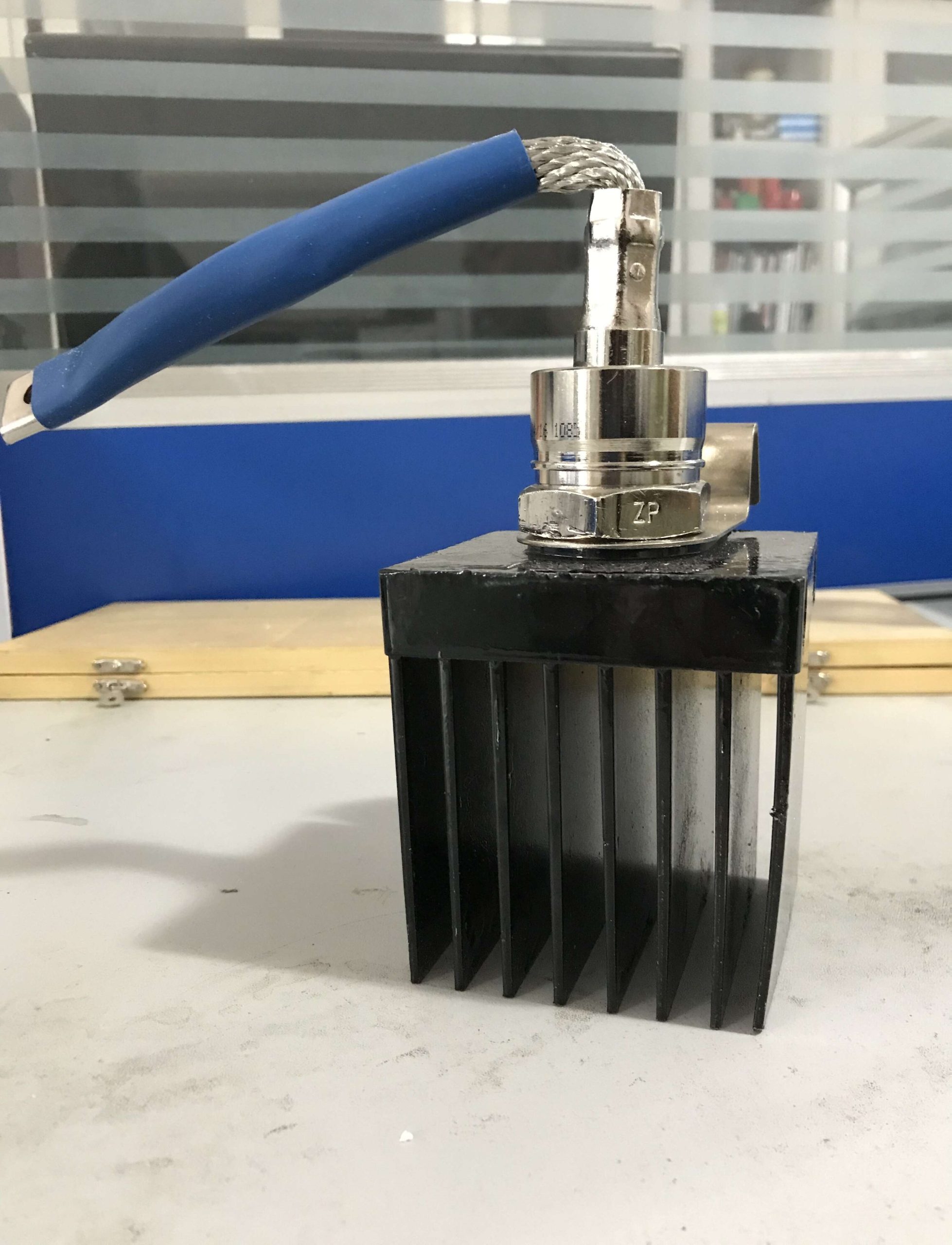
Heatsink for Power Diode – Essential Cooling for Control Devices
Brand name: HANI
Packing Details : Wooden box with fumigation or Wooden Fram or Steel Frame
Delivery Details: 30~60days or Based on the quantity
Shipping: Sea freight、Land freight、Air freight
HANI specializes in industrial electrical automation, delivering integrated drive and control solutions to safeguard your production.
Product Details
Heatsink for Power Diode – Essential Cooling for Control Devices
In the rapidly evolving landscape of industrial automation products, thermal management has emerged as a critical factor determining system reliability and performance. The Heatsink for Diode represents a sophisticated solution engineered specifically for power diodes operating in demanding industrial environments. This comprehensive cooling solution addresses the unique thermal challenges posed by high-power semiconductor devices, ensuring optimal temperature regulation and extended component lifespan across various industrial automation products applications.
Understanding the Critical Role of Power Diode Cooling
Power diodes are fundamental components in modern Power Electronics systems, serving as the backbone for rectification, voltage regulation, and power conversion processes. However, these semiconductor devices generate substantial heat during operation, with power dissipation levels often exceeding 100 watts in industrial applications. Without adequate thermal management, this heat accumulation can lead to catastrophic failure modes including thermal runaway, junction degradation, and premature component failure.
The Heatsink for Diode technology has evolved significantly to meet the increasing demands of contemporary industrial automation products. Modern designs incorporate advanced materials science, computational fluid dynamics optimization, and innovative manufacturing techniques to achieve unprecedented thermal performance metrics. The integration of these cooling solutions is particularly crucial in high-reliability applications where system downtime translates directly to significant operational losses.
Technical Specifications and Material Selection
The performance characteristics of a Heatsink for Diode are determined by multiple interrelated factors including material properties, geometric configuration, and surface treatment methodologies. The following table provides comprehensive technical specifications for our premium Heatsink for Diode product line:
| Parameter | Specification | Notes |
|---|---|---|
| Material Composition | 6063-T5 Aluminum Alloy / OFHC Copper | Dual-material options available |
| Thermal Conductivity | 201-236 W/m·K (Aluminum) / 398 W/m·K (Copper) | Material-dependent performance |
| Thermal Resistance (Rth) | 0.15-0.8 K/W (natural convection) | Dependent on airflow conditions |
| Maximum Operating Temperature | -40°C to +150°C | Continuous operation rating |
| Surface Treatment | Anodized Black / Nickel Plated | Corrosion resistance enhancement |
| Mounting Configuration | M3/M4/M5 Threaded Inserts / Clip Mounting | Flexible installation options |
| Dimensions Range | 50×50×20mm to 200×150×80mm | Custom sizes available |
| Weight Range | 80g to 1200g | Material and size dependent |
Advanced Design Features for Enhanced Performance
Our Heatsink for Diode incorporates several innovative design elements that distinguish it from conventional cooling solutions in the Power Electronics sector. The fin geometry has been optimized using computational fluid dynamics (CFD) simulations to maximize surface area while minimizing airflow resistance. This approach ensures efficient heat dissipation even under low-velocity airflow conditions typical in enclosed industrial cabinets.
The base plate thickness has been carefully engineered to provide optimal thermal spreading characteristics, reducing thermal gradients across the mounting surface. This design feature is particularly beneficial for large-area power diodes where uniform temperature distribution is critical for preventing localized hot spots. Additionally, the incorporation of vapor chamber technology in select models enables isothermal heat distribution across the entire base surface, achieving thermal resistance values as low as 0.08 K/W under forced convection conditions.
Surface treatments play a crucial role in the long-term reliability of industrial automation products. Our anodized finishes provide excellent corrosion resistance while maintaining high emissivity values (ε > 0.85) for enhanced radiative heat transfer. For applications requiring electrical isolation, ceramic-coated variants are available with dielectric strength exceeding 5 kV, ensuring safe operation in high-voltage environments.
Integration Considerations for Industrial Applications
Successful implementation of Heatsink for Diode solutions requires careful consideration of several integration factors. Thermal interface materials (TIMs) selection is paramount, with thermal conductivity values ranging from 3 W/m·K for standard silicone-based compounds to 12 W/m·K for advanced phase-change materials. Proper application techniques, including controlled pressure and uniform thickness, are essential for minimizing interfacial thermal resistance.
Mounting pressure optimization represents another critical aspect of thermal management design. Insufficient pressure can result in air gaps and increased thermal resistance, while excessive force may damage the semiconductor die or compromise mechanical integrity. Our recommended mounting torque specifications range from 0.5 N·m for small packages to 2.5 N·m for high-power modules, with precise values dependent on specific package configurations and TIM characteristics.
Environmental factors must also be considered when deploying Cooling solutions in industrial settings. Contaminants such as dust, oil mist, and chemical vapors can accumulate on fin surfaces, reducing heat transfer efficiency by up to 40% over time. Protective measures including conformal coatings, sealed enclosures, and regular maintenance schedules are recommended to ensure sustained performance throughout the operational lifecycle of industrial automation products.
Performance Validation and Testing Protocols
Rigorous testing protocols are employed to validate the performance characteristics of our Heatsink for Diode products. Thermal resistance measurements are conducted in accordance with JEDEC standards JESD51-1 and JESD51-2, utilizing calibrated thermal test chips and precision temperature measurement equipment. These tests are performed under controlled environmental conditions with documented airflow rates and ambient temperatures.
Accelerated life testing is conducted to evaluate long-term reliability under thermal cycling conditions. Samples are subjected to 1000+ cycles between -40°C and +125°C to simulate years of operational stress in a compressed timeframe. Performance degradation is monitored through periodic thermal resistance measurements, with acceptance criteria typically requiring less than 10% increase in Rth values after completion of the test sequence.
Vibration and shock testing ensures mechanical robustness in demanding industrial environments. Our Cooling solutions are validated to withstand sinusoidal vibration profiles up to 20 g and random vibration spectra consistent with MIL-STD-810G requirements. These tests verify the integrity of fin structures, mounting hardware, and thermal interface materials under dynamic loading conditions typical of mobile and industrial equipment.
Frequently Asked Questions (FAQ)
Q2: How do I select the appropriate heatsink size for my power diode application?
A: Heatsink selection involves calculating the required thermal resistance based on power dissipation, maximum junction temperature, and ambient conditions. The formula Rth_total = (Tj_max – Ta) / Pd provides the target value, where Tj_max is typically 150-175°C for silicon devices, Ta represents ambient temperature, and Pd is power dissipation. Subtract interface resistance and add safety margin (typically 20-30%) to determine the required heatsink Rth. Consult manufacturer datasheets and thermal simulation tools for precise sizing recommendations.
Q3: What are the advantages of copper versus aluminum heatsinks for power diodes?
A: Copper heatsinks offer approximately twice the thermal conductivity of aluminum (398 vs 201-236 W/m·K), resulting in lower thermal resistance for equivalent geometries. However, copper is significantly denser (8.96 g/cm³ vs 2.7 g/cm³) and more expensive. Aluminum provides excellent cost-performance ratio for most industrial automation products, while copper is preferred for space-constrained applications or extreme thermal performance requirements. Hybrid designs combining copper bases with aluminum fins offer balanced solutions for many Power Electronics applications.
Q4: How does surface treatment affect heatsink performance in corrosive environments?
A: Surface treatments significantly impact both corrosion resistance and thermal performance. Anodized finishes provide excellent protection against oxidation and chemical attack while maintaining high emissivity (ε > 0.85) for radiative heat transfer. Nickel plating offers superior corrosion resistance but reduces emissivity to approximately 0.1-0.2, potentially decreasing radiative cooling by 30-40%. For harsh environments, specialized coatings such as PTFE-based treatments or ceramic coatings provide enhanced protection while maintaining acceptable thermal characteristics for Cooling applications.
Q5: What maintenance requirements exist for heatsinks in industrial automation systems?
A: Regular maintenance is crucial for sustained performance of Heatsink for Diode installations. Recommended practices include periodic inspection for dust accumulation (quarterly in clean environments, monthly in dusty conditions), cleaning with compressed air or soft brushes, verification of mounting hardware torque values annually, and replacement of thermal interface materials every 2-3 years or after thermal cycling events. For critical industrial automation products, implement condition monitoring through temperature sensors to detect performance degradation before system failure occurs.
Conclusion: Ensuring Reliability in Power Electronics Systems
The selection and implementation of appropriate Heatsink for Diode solutions represents a critical engineering decision with far-reaching implications for system reliability and operational efficiency. As industrial automation products continue to evolve toward higher power densities and more demanding performance requirements, the importance of sophisticated thermal management strategies cannot be overstated.
Our comprehensive range of Cooling solutions, developed through extensive research and validated through rigorous testing protocols, provides engineers with the tools necessary to address even the most challenging thermal management scenarios in Power Electronics applications. By partnering with HANI, you gain access to cutting-edge thermal technology combined with expert engineering support, ensuring your industrial automation products achieve optimal performance and maximum operational lifespan.
The ongoing advancement of semiconductor technology, coupled with increasing demands for energy efficiency and system miniaturization, will continue to drive innovation in Heatsink for Diode design and manufacturing. HANI remains committed to leading this evolution through continuous investment in research and development, ensuring our customers have access to the most advanced thermal management solutions available for their critical Power Electronics applications.
For detailed technical specifications, custom design services, or application-specific recommendations regarding our Heatsink for Diode products, please contact our engineering support team. We are dedicated to providing comprehensive thermal management solutions that meet the exacting requirements of modern industrial automation products.
HANI is one of China’s leading professional industrial electrical automation manufacturers, providing complete drive and control solutions to customers worldwide. HANI focuses on designing and manufacturing integrated automation systems that meet the industry’s highest standards of precision, efficiency, and durability. Our engineering expertise lies in providing turnkey electrical automation projects to optimize the performance of modern industrial manufacturing plants.