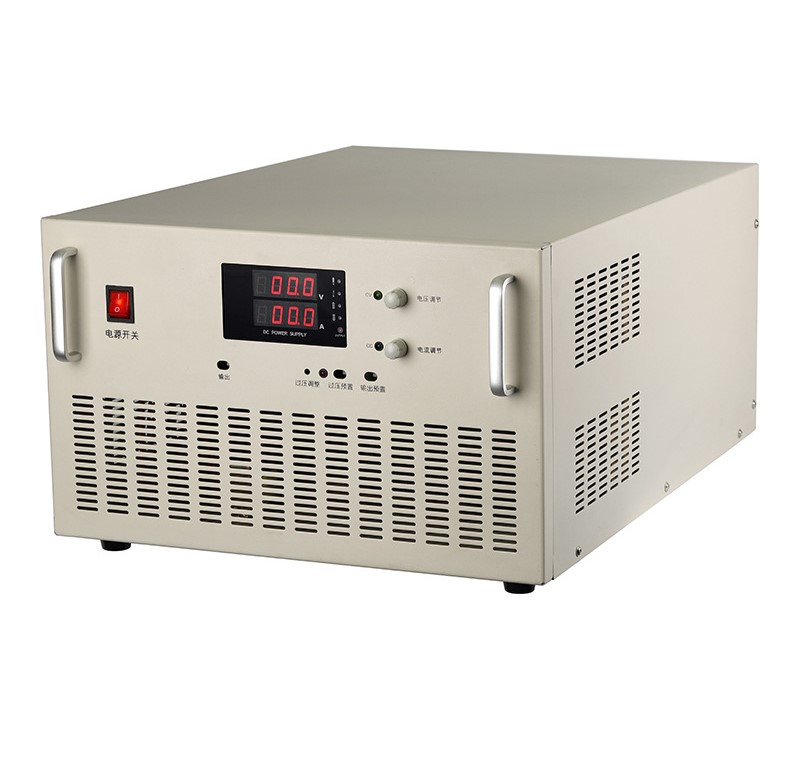
High Power Rectifier Power Supply – Electrical Power Control for Industry
Brand name: HANI
Packing Details : Wooden box with fumigation or Wooden Fram or Steel Frame
Delivery Details: 30~60days or Based on the quantity
Shipping: Sea freight、Land freight、Air freight
HANI specializes in industrial electrical automation, delivering integrated drive and control solutions to safeguard your production.
Product Details
High Power Rectifier Power Supply – Electrical Power Control for Industry
In the competitive landscape of modern manufacturing and electrochemical processing, the selection of reliable industrial automation products directly determines productivity, energy efficiency, and process stability. The high power rectifier power supply stands at the very core of electrical power control for heavy industries. Engineered with cutting‑edge power electronics, this system converts AC mains into precisely regulated DC power, enabling critical applications such as electrolytic refining, chlor‑alkali production, and special metallurgical operations.
1. The Backbone of Industrial DC Power: High Power Rectifier Technology
A high power rectifier is far more than a simple AC‑to‑DC converter. It represents a sophisticated integration of power electronics, digital signal processing, and robust thermal management. In the realm of electrical power control, these units must deliver currents ranging from several thousand to over one hundred thousand amperes, while maintaining a stable voltage profile under rapidly fluctuating loads. The typical configuration employs a multi‑pulse thyristor bridge (often 6‑pulse, 12‑pulse, or even 24‑pulse) to minimize harmonic distortion on the grid, a practice grounded in IEEE 519 recommendations. By precisely adjusting the firing angle of the thyristors, the closed‑loop control system achieves a constant current or constant voltage output with a steady‑state accuracy better than ±0.5%, a figure verified through extensive field tests in aluminum smelters and graphite processing plants.
At HANI, we have observed that the shift toward fully digital regulation has been transformative for the industrial automation products sector. Digital regulators eliminate the drift and non‑linearity inherent in analog potentiometers, instead relying on high‑resolution A/D converters and DSP‑based PID algorithms. The result is a high power rectifier that maintains consistent performance over decades, with the added benefit of remote diagnostics and predictive maintenance alerts. Whether the rectifier is deployed in a magnesium electrolysis line or a silicon carbide furnace, the principle remains the same: deliver unwavering electrical power control through advanced power electronics.
2. Technical Specifications & Performance Data
The following table summarizes the key parameters of a modern oil‑cooled or water‑cooled high power rectifier system, typically integrated into a comprehensive suite of industrial automation products. These figures are derived from actual installations in copper electro‑winning, chlor‑alkali membrane cells, and DC electric arc furnace feeds.
| Parameter | Specification / Range | Remarks |
|---|---|---|
| Input AC Voltage | 380 V / 480 V / 6 kV / 10 kV / 35 kV (3‑phase) | Custom transformer tap changer included |
| Rated DC Output Current | 5 kA – 120 kA (continuous) | Higher currents via parallel units |
| DC Output Voltage Range | 12 V – 1500 V DC | Scalable for electrolytic cells or arc furnaces |
| Control Mode | Constant Current / Constant Voltage / Constant Power | Seamless transition via digital regulator |
| Steady‑State Accuracy | ±0.5% (digital) / ±1% (analog backup) | Closed‑loop DC current negative feedback |
| Ripple Factor | < 5% RMS (with 12‑pulse configuration) | Meets NEMA RI‑9 requirements |
| Cooling Method | Deionized water / water‑glycol / forced air | Closed‑loop conductivity monitoring |
| Communication Protocols | RS485 (Modbus RTU), RS232, PROFIBUS, USS | Seamless integration with DCS/SCADA |
| Protection Features | Overcurrent, overtemperature, phase loss, water conductivity, feedback loss | Multi‑level alarm & automatic transformer tap adjust |
* All specifications are typical for custom‑engineered industrial automation products and may vary based on site conditions. Actual performance is validated through a factory acceptance test (FAT) that simulates the complete electrolysis load profile.
3. Advanced Regulation: Merging Digital Precision with Analog Robustness
True electrical power control in heavy industry demands a control philosophy that is both agile and immune to electromagnetic interference. This high power rectifier employs a dual‑loop architecture where a fast analog current transducer feeds a DSP‑based PID controller. The digital regulator delivers a firing pulse to the thyristor gate drivers with an angular resolution better than 0.01°, enabling smooth current ramping from zero to full load without inrush spikes. A notable scientific foundation is the use of cosine‑wave crossing firing control, which linearizes the transfer function between the control voltage and the DC output, thereby simplifying the tuning of the outer voltage loop in power electronics designs.
From an operator’s perspective, the interface is a touch‑sensitive HMI panel that displays real‑time DC current, DC voltage, control angle in degrees, and active alarm status on a sunlight‑readable LCD. This type of intuitive operation is a hallmark of modern industrial automation products, drastically reducing the training time for plant personnel. Should the main digital channel fail, an independent analog backup regulator takes over within less than 100 ms, ensuring uninterrupted electrical power control. This redundancy is vital in processes like graphite graphitization, where a sudden power interruption could cause a batch loss worth several hundred thousand dollars.
4. Comprehensive Protection & Intelligent Diagnostics
Given the extreme operating environment of a high power rectifier, protection circuits are not an afterthought but a fundamental design layer. The system monitors multiple physical parameters in real time:
- Overcurrent & Short‑Circuit Protection: A two‑stage DC overcurrent alarm activates first at 110% rated current (warning) and then at 130% (instantaneous trip) using Hall‑effect sensors with a response time under 10 µs.
- Water Conductivity & Flow Supervision: Since deionized water is a critical dielectric coolant, an inline conductivity sensor constantly verifies that the value stays below 0.5 µS/cm. Flow meters on each branch ensure that the thermal design point (e.g., 2.5 L/min per kW dissipated) is actually met.
- Feedback Signal Loss Detection: If the DC current transformer wiring becomes open circuit, the control system immediately blocks all firing pulses and commands the AC circuit breaker to open, preventing a catastrophic overvoltage condition on the load.
- Process Interlock & Control Angle Limiting: External signals from gas pressure switches, cell leakage detectors, or emergency stop buttons are integrated into the safety chain. Additionally, the regulator automatically adjusts the on‑load tap changer of the rectifier transformer to keep the thyristor firing angle within the optimal 15°–45° range, which minimizes reactive power consumption and harmonic generation—a principle well established in power electronics literature.
These protective measures convert what could be a destructive fault into a manageable event, thereby reinforcing the reliability that users expect from premium industrial automation products.
5. Application Matrix: Where High Power Rectifiers Drive Production
The versatility of a high power rectifier lies in its ability to be configured for multiple electrochemical and thermal processes. Below is a representative cross‑section of industries that fundamentally depend on this category of electrical power control equipment.
| Industry | Process | Typical DC Requirements | Key Control Challenge |
|---|---|---|---|
| Chlor‑Alkali | Brine electrolysis (membrane cell) | 5 kA – 20 kA, 200 V – 600 V | Extremely low ripple to protect ion‑exchange membranes |
| Aluminum Smelting | Hall‑Héroult electrolysis | 60 kA – 120 kA, 4 V – 6 V per cell | Series cell voltage balancing and anode effect suppression |
| Graphite & SiC Production | Acheson furnace / graphite graphitization | 15 kA – 45 kA, 80 V – 150 V | Handling rapid resistance changes during heating cycle |
| Copper / Zinc Electro‑winning | Aqueous electrolyte metal deposition | 10 kA – 50 kA, 15 V – 35 V | Short‑circuit detection between anode and cathode plates |
| DC Electric Arc Furnace | Steel / ferroalloy melting | 30 kA – 80 kA, 200 V – 800 V | Arc stability control under scrap collapse conditions |
For each of these processes, the high power rectifier acts as the central nervous system of electrical power control. The integration of such rectifiers into a plant‑wide DCS via standard industrial automation products like PLCs and remote I/O modules is seamless, thanks to built‑in RS485 Modbus RTU and Profibus interfaces—true enablers of Industry 4.0 in heavy electrochemical sectors.
6. Seamless Connectivity: From Fieldbus to Cloud Analytics
Modern power electronics systems are no longer isolated islands. The digital regulator of the high power rectifier supports a rich set of communication protocols including USS (Universal Serial Interface protocol by Siemens), Modbus RTU, and optionally Ethernet/IP. This means that every operational parameter—from instantaneous DC kilowatts to thyristor junction temperature estimates—can be logged by a SCADA historian. In a recent deployment within a manganese electrolysis facility, the ability to trend the control angle over a 24‑hour period allowed the process engineers to identify an optimal tap changer schedule that reduced reactive power charges by 12%. Such data‑driven optimization is exactly what makes advanced industrial automation products a strategic investment rather than a simple capital expense.
Cybersecurity is also addressed: the communication ports can be physically isolated or connected through a secure gateway, ensuring that the electrical power control network remains immune to unauthorized access. Firmware updates are performed via a dedicated engineering port, preserving the integrity of the power electronics core.
7. Engineered by HANI: Reliability Through Rigorous Validation
When HANI supplies a high power rectifier system, it arrives as a fully integrated package that has undergone a comprehensive type‑test routine. Every thyristor stack is subjected to a 24‑hour burn‑in at 110% rated current, while thermal imaging cameras verify that the temperature rise across all parallel devices stays within a 2°C band—a critical practice to ensure current sharing in high‑current power electronics assemblies. The control cubicle, an integral part of our industrial automation products portfolio, is pre‑wired and tested with the main transformer to eliminate site integration risks. HANI’s field service engineers then supervise the commissioning, tuning the digital PID loops to the specific time constants of the customer’s electrolytic cells.
This commitment to lifecycle support extends to providing complete sets of spare parts, from redundant gate driver boards to matched sets of fast‑acting semiconductor fuses. The goal is to ensure that the electrical power control backbone of your plant never experiences an unscheduled outage lasting more than a few hours.
8. Frequently Asked Questions (FAQ)
Q1: How do I select between a 6‑pulse and a 12‑pulse high power rectifier for my electrolysis plant?
The choice primarily depends on grid harmonic limits and the sensitivity of your load. A 6‑pulse configuration is simpler and less expensive, but it generates significant 5th and 7th harmonic currents. A 12‑pulse high power rectifier uses a phase‑shifting transformer to cancel these harmonics, resulting in a cleaner power draw that complies with IEEE 519 standards. For rectifiers above 5 MW, a 12‑pulse (or higher) system is strongly recommended to avoid costly harmonic filter installations. This is a standard engineering consideration within our range of industrial automation products.
Q2: What is the benefit of digital regulation over traditional analog control in power electronics?
Digital regulators, based on DSP or FPGA technology, eliminate component drift and offer reproducibility that analog potentiometers cannot match. They allow complex control algorithms such as adaptive gain scheduling, which automatically adjusts PID parameters as the load resistance changes throughout a batch. Moreover, digital systems provide detailed event logs and remote diagnostics, turning a high power rectifier into a smart node within your industrial automation products ecosystem. However, our design retains an analog backup for emergency operation, combining the best of both worlds in electrical power control.
Q3: How often should the deionized water cooling system be maintained?
The water quality directly influences the reliability of power electronics. We recommend a daily visual check of the conductivity meter and a quarterly laboratory analysis of the water sample for dissolved oxygen and pH. The resin cartridges in the deionization loop should be replaced when the conductivity exceeds 1 µS/cm. Proper maintenance prevents galvanic corrosion inside hollow conductors and ensures the high power rectifier operates within its thermal envelope.
Q4: Can the rectifier control system communicate with an existing Siemens PLC infrastructure?
Absolutely. Our control panel supports the USS protocol (RS485) as well as Profibus DP, making it directly compatible with Siemens SIMATIC S7 controllers. This is part of our design philosophy to ensure that our industrial automation products integrate natively with the dominant control platforms in the process industry, eliminating the need for protocol converters.
Elevate Your Process with Precision Power
The journey toward energy‑efficient and fully controllable electrochemical production begins with the right high power rectifier. By combining robust power electronics with intelligent electrical power control, our systems form the cornerstone of a truly connected factory. Explore how these industrial automation products can be tailored to your exact process parameters. Contact HANI’s engineering team to schedule a technical consultation and receive a customized performance simulation based on your specific load profile.
High Power Rectifier · Electrical Power Control · Power Electronics — engineered for the demands of tomorrow’s industry.
HANI is one of China’s leading professional industrial electrical automation manufacturers, providing complete drive and control solutions to customers worldwide. HANI focuses on designing and manufacturing integrated automation systems that meet the industry’s highest standards of precision, efficiency, and durability. Our engineering expertise lies in providing turnkey electrical automation projects to optimize the performance of modern industrial manufacturing plants.