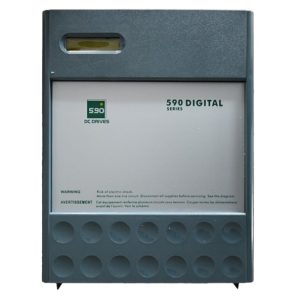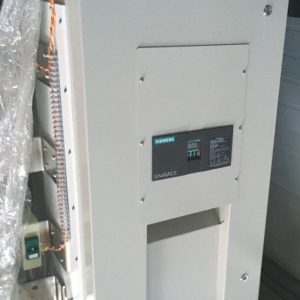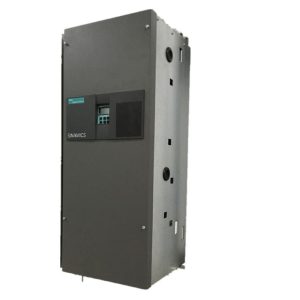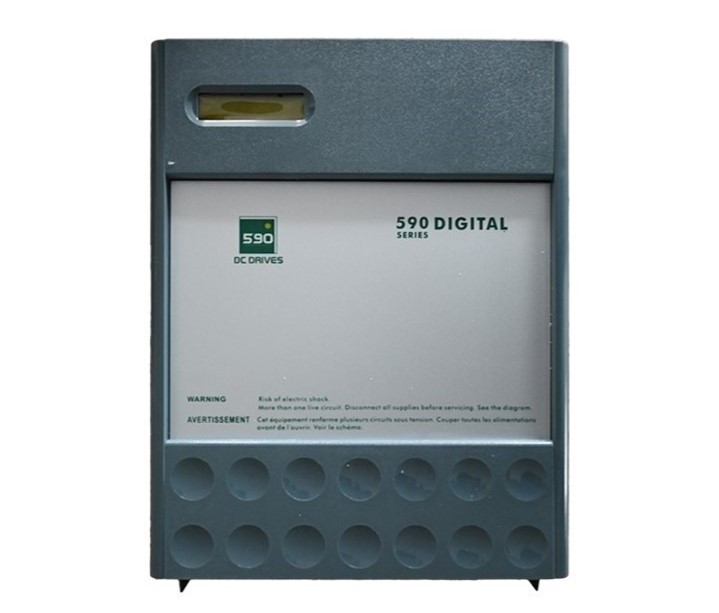
Fully Digital DC Speed Regulator
Brand name: HANI
Packing Details : Wooden box with fumigation or Wooden Fram or Steel Frame
Delivery Details: 30~60days or Based on the quantity
Shipping: Sea freight、Land freight、Air freight
HANI specializes in industrial electrical automation, delivering integrated drive and control solutions to safeguard your production.
Product Details
Fully Digital DC Speed Regulator
A breakthrough in electrical drives and control precision — engineered by HANI for next‑generation automation control environments.
Summary: The Fully Digital DC Speed Regulator is a microprocessor‑based drive controller designed for precise velocity and torque management in DC motors. Built on decades of electrical drives and control research, it integrates advanced digital signal processing with robust industrial communication, making it the cornerstone of modern automation control architectures. It delivers energy savings, silent operation, and maintenance‑friendly diagnostics across metals processing, printing, textile, wire drawing, and crane applications.
1. Introduction to Digital Regulation in DC Drives
Direct‑current motor speed control has been a fundamental pillar of electrical drives and control for more than a century. From rheostatic starters to Ward‑Leonard systems and phase‑controlled thyristor converters, the evolution has always aimed at better dynamic response, higher efficiency, and tighter integration with plant‑wide automation control. The Fully Digital DC Speed Regulator represents the latest step in that evolution, replacing analog feedback loops and trimmer potentiometers with a high‑speed digital core. Unlike earlier semi‑digital drives that still relied on analog current loops, this regulator digitises the entire control chain: speed reference, current sensing, field weakening, and firing angle generation are all executed mathematically inside a dedicated DSP or ARM‑based microcontroller.
This shift brings undeniable advantages: repeatability independent of component aging, software‑configurable protection limits, and the ability to communicate directly with supervisory automation control systems. In modern factories where electrical drives and control networks form the nervous system of production, having a fully digital regulator means the motor no longer behaves as an isolated actuator — it becomes a transparent, programmable node that can report energy consumption, predict wear, and accept real‑time torque adjustments from a SCADA or PLC.
2. Core Hardware Architecture
The internal layout of the Fully Digital DC Speed Regulator is built around a 32‑bit floating‑point processor paired with a high‑resolution FPGA for gate‑driver timing. This dual‑engine architecture allows simultaneous execution of the speed‑loop PID (1 ms update rate) and the current‑loop PI (100 μs update rate), ensuring that the motor responds to load transients almost instantaneously. Power‑stage interfacing is done through optically isolated IGBT or thyristor gate drivers, with isolated ADCs measuring armature voltage, current, and field current. The digital nature of the device eliminates the drift issues once common in electrical drives and control equipment using discrete op‑amp circuits.
All setpoints and feedback signals are processed in the digital domain using 14‑bit or 16‑bit resolution, offering speed regulation accuracy better than 0.01 % of base speed with a digital encoder or resolver. For sensorless applications, the Fully Digital DC Speed Regulator can estimate speed from the back‑EMF voltage, though regulation accuracy in that mode relies on careful motor parameter entry. The front panel includes an OLED graphic display and a nine‑key membrane keypad, but engineers more often configure the drive through a USB‑C service port using HANI’s PC commissioning software — a clear demonstration of how electrical drives and control have merged with IT technology to simplify automation control tasks.
3. Control Algorithms and Performance
Precision in electrical drives and control is ultimately defined by how well the controller rejects disturbances. The Fully Digital DC Speed Regulator deploys a cascade structure where the inner current (torque) loop uses an adaptive PI regulator with anti‑windup, and the outer speed loop employs a 5‑term PID that can be fine‑tuned for inertia matching. What sets this regulator apart is the integrated load‑observer algorithm. By modelling the mechanical system in real time, the observer estimates the load torque applied to the shaft and injects a feed‑forward correction before the speed error even builds up. For industries where automation control demands zero‑speed holding torque — such as extruders or hoists — the regulator supports full four‑quadrant operation with contactor‑less reversing.
Field‑weakening control is equally digital, using a pre‑programmed lookup table or an automatic flux optimisation routine that monitors back‑EMF and adjusts the field current to maintain constant‑power operation above base speed. This feature is essential in coil‑winding and unwinding lines where the Fully Digital DC Speed Regulator must rapidly adapt to changing roll diameters. All loop gains can be autotuned: the drive applies a low‑amplitude pseudo‑random binary sequence to the motor, measures the electromechanical transfer function, and calculates optimal gains. This autotuning reduces commissioning time from hours to minutes — a substantial saving in large plants with hundreds of electrical drives and control nodes.
4. Communication and Integration with Automation Control
No digital drive can claim to be a true automation control asset without industrial networking. The Fully Digital DC Speed Regulator comes standard with Modbus RTU/TCP and CANopen ports, while optional fieldbus modules cover PROFINET, EtherNet/IP, and EtherCAT. These interfaces allow a central PLC to read more than 200 drive parameters — speed feedback, RMS current, IGBT junction temperature, kWh consumption — and write commands such as speed setpoint, torque limit, or emergency stop. The drive profile follows the CiA 402 standard for power drive systems, ensuring compatibility with off‑the‑shelf automation control software from Siemens, Rockwell, and Beckhoff.
Real‑world integration often demands more than data exchange. The regulator’s onboard PLCopen‑compliant motion engine can execute simple cam profiles and electronic gearing locally, reducing the load on the central automation control network. For safety, two independent STO (Safe Torque Off) channels are hard‑wired through redundant relays, meeting SIL 3 / PL e requirements without external contactors. Diagnostic data is streamed continuously to HANI’s cloud‑ready historian, enabling predictive maintenance of electrical drives and control assets.
5. Detailed Technical Specifications
The table below summarises the key ratings and capabilities of the Fully Digital DC Speed Regulator family, which spans 5 kW to 1 600 kW armature power. All units share the same digital control board, ensuring consistent behaviour across a wide power range — a major advantage when standardising electrical drives and control hardware across a multi‑line factory.
| Parameter | Value / Range |
|---|---|
| Input supply (3‑phase) | 230 V – 690 V AC, 50/60 Hz |
| Armature rated current | 10 A to 3 200 A (continuous) |
| Field current (regulated) | 3 A to 80 A, 0‑310 V DC |
| Speed feedback options | Incremental encoder (RS‑422), resolver, tachogenerator (±10 V), back‑EMF estimation |
| Regulation accuracy (digital encoder) | ±0.005 % of base speed |
| Current loop bandwidth | > 400 Hz (‑3 dB) |
| Field weakening ratio | Up to 1:5 (extended with external cooling) |
| Overload capacity | 150 % for 60 s, 200 % for 10 s |
| Communication ports | RS‑485 (Modbus RTU), CANopen; optional: PROFINET, EtherNet/IP, EtherCAT |
| I/O (digital/analogue) | 6 DI, 2 DO, 2 AI (±10 V / 4‑20 mA), 1 AO |
| Safety function | STO (Safe Torque Off), SIL 3 / PL e, dual‑channel |
| Protection features | Overcurrent, overvoltage, undervoltage, phase loss, field loss, overtemperature, encoder break, earth fault |
| Ambient operating temperature | ‑10 °C to +50 °C (derating above 40 °C) |
| Enclosure protection | IP20 (standard), IP54 with optional kit |
| Certifications | CE, UL 61800‑5‑1, RoHS, ISO 13849‑1 |
All ratings are valid for 1 000 m altitude and non‑condensing humidity. For heavy‑duty metals applications, HANI supplies a 6‑pulse or 12‑pulse thyristor bridge option that reduces line‑side harmonics in accordance with IEEE 519.
6. Applications Across Industry Sectors
The versatility of the Fully Digital DC Speed Regulator makes it a preferred choice wherever DC motors are still valued for their high starting torque and straightforward speed control. Primary application domains include:
Metals & Rolling Mills
Precise tension control in cold‑rolling mills and levelers, where automation control coordinates multiple stands.
Wire & Cable Drawing
Constant‑tension drawing and annealing lines benefit from the regulator’s fast torque response.
Printing & Converting
Register accuracy depends on speed‑hold performance, a core strength of digital electrical drives and control.
Hoists & Cranes
Four‑quadrant operation and STO safety make it ideal for vertical lifting in automation control networks.
Extruders & Injection Molding
Tight torque regulation avoids melt pressure surges, protecting mechanical components.
Textile Machinery
Synchronised spinning and weaving lines where electrical drives and control orchestrate dozens of axes.
7. Installation, Commissioning, and Tuning
Commissioning a drive system used to be a black art reserved for electrical drives and control specialists. The Fully Digital DC Speed Regulator changes that paradigm. Once the power wiring and motor feedback are connected, the start‑up wizard guides the technician through motor data entry, encoder alignment, and auto‑phasing of the thyristor bridge. The drive automatically detects the mains frequency and phase sequence, adjusting the synchronisation reference accordingly. For automation control integration, the wizard can also scan the network for available PLCs and pre‑populate the communication mapping.
The HANI PC tool (free of charge) displays live trace graphs of speed, current, and firing angle, allowing the engineer to visualise step‑response transients and tune the PID interactively. A built‑in FFT analyser helps detect mechanical resonances, which can then be notched out using the regulator’s adaptive filter. All settings can be saved to an SD card or cloud backup, greatly simplifying mass deployment across identical electrical drives and control panels.
8. Energy Efficiency and Harmonic Management
While DC drives are sometimes perceived as less efficient than their AC counterparts, a modern Fully Digital DC Speed Regulator can achieve power conversion efficiencies above 97 % at full load, thanks to low‑drop thyristors and synchronous rectification in the field circuit. The digital controller also implements an energy‑optimisation mode that dynamically reduces field current when the motor runs below rated torque, lowering constant losses. In a 24/7 paper‑mill application, such a feature can reduce annual energy consumption by 6‑12 %.
For electrical drives and control installations where harmonic distortion is a concern, HANI offers an integral active front‑end option or a 12‑pulse transformer connection that cancels the 5th and 7th harmonics. The regulator’s onboard THD i monitor logs harmonic currents and can alert the automation control system if IEEE 519 limits are exceeded. This level of transparency is vital for plants subject to utility power‑quality audits.
9. Frequently Asked Questions
Can the regulator operate with brushed motors only, or does it support brushless DC motors as well?
The Fully Digital DC Speed Regulator is designed for brushed permanent‑magnet or wound‑field DC motors. Brushless DC (BLDC) motors require a different commutation strategy; however, HANI offers a separate BLDC series within the same electrical drives and control platform.
How does the STO function differ from a conventional emergency stop?
STO safely removes torque‑producing energy from the motor without external contactors. Unlike an emergency stop that simply cuts mains power, STO is an integrated safety function within the electrical drives and control system itself, capable of meeting SIL 3 with dual‑channel monitoring.
What happens if the encoder fails during operation?
The regulator detects encoder loss within 10 ms and can be configured to either coast‑stop or switch to sensorless back‑EMF estimation. A fault is immediately reported to the automation control network, ensuring rapid diagnostics.
Is the drive field‑bus agnostic, or are proprietary gateways required?
The base unit includes Modbus and CANopen. For EtherNet/IP, PROFINET, or EtherCAT, HANI provides a plug‑in communication module that snaps into the drive’s option slot — no external gateway is necessary, preserving the compact electrical drives and control panel layout.
Can multiple regulators be connected in a master‑follower configuration?
Yes. Up to 32 units can share a torque or speed reference over CANopen or Modbus TCP. This is frequently used in load‑sharing applications such as long conveyor belts, where synchronised automation control is essential for material handling.
What maintenance does the digital regulator require?
The digital control section is maintenance‑free. For the power section, HANI recommends annual inspection of thyristor heatsink cleanliness and fan filter replacement (if forced‑air cooling is used). The regulator’s own temperature supervision will alert the user before overheating occurs.
10. Why HANI for Electrical Drives and Control?
When selecting a supplier for electrical drives and control components, long‑term reliability and support weigh as heavily as technical specifications. HANI operates a global network of application engineers who assist with drive sizing, harmonic calculations, and automation control interface programming. Each Fully Digital DC Speed Regulator is subjected to a 48‑hour burn‑in test at rated current before shipment, and a full test report is included in the delivery. This commitment to quality underpins every installation — from a single extruder retrofit to a complete cold‑mill electrification comprising several hundred electrical drives and control axes.
Looking ahead, the roadmap for the Fully Digital DC Speed Regulator includes OPC UA over TSN, predictive analytics based on motor current signature analysis, and a cybersecurity‑hardened firmware aligned with IEC 62443. In an era where electrical drives and control convergence with IT infrastructure is accelerating, HANI remains at the forefront, delivering products that blend rugged industrial heritage with digital‑first design.
Contact HANI today to discuss your Fully Digital DC Speed Regulator requirements, request a live demo, or schedule a tailored training session on electrical drives and control best practices. Our automation control team is ready to support your next project.
© HANI Automation — Precision in Motion.
HANI is one of China’s leading professional industrial electrical automation manufacturers, providing complete drive and control solutions to customers worldwide. HANI focuses on designing and manufacturing integrated automation systems that meet the industry’s highest standards of precision, efficiency, and durability. Our engineering expertise lies in providing turnkey electrical automation projects to optimize the performance of modern industrial manufacturing plants.