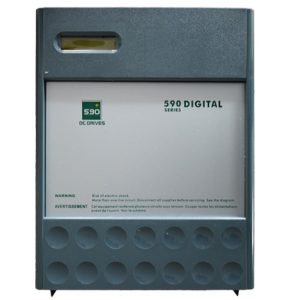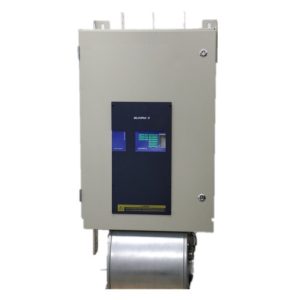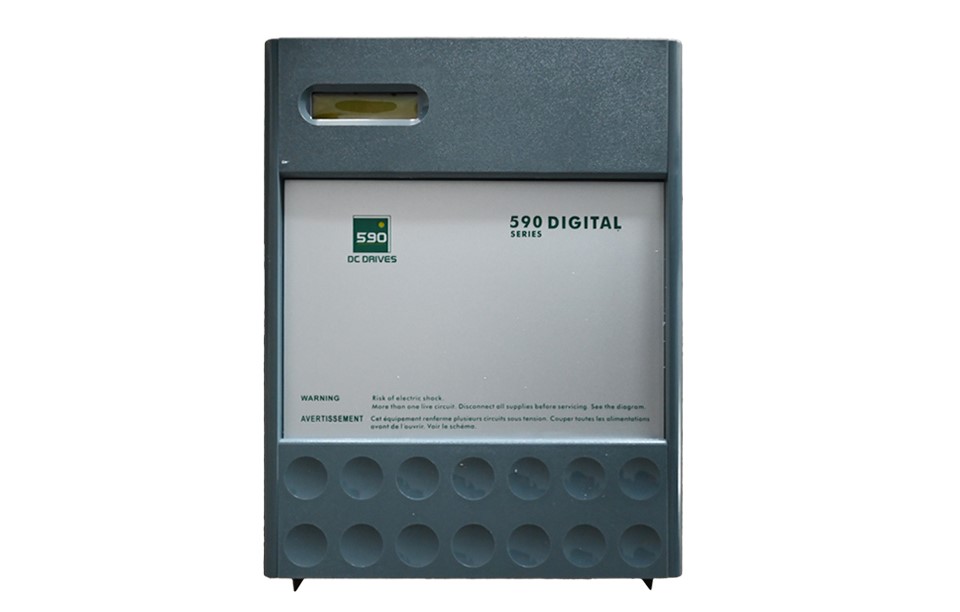
DC Speed Regulator Industrial Automation Component
Brand name: HANI
Packing Details : Wooden box with fumigation or Wooden Fram or Steel Frame
Delivery Details: 30~60days or Based on the quantity
Shipping: Sea freight、Land freight、Air freight
HANI specializes in industrial electrical automation, delivering integrated drive and control solutions to safeguard your production.
Product Details
DC Speed Regulator Industrial Automation Component
Precision motor control engineered for the modern automated environment
In the rapidly evolving landscape of industrial production, the pursuit of precision in electrical drives and control systems stands as a non-negotiable pillar of operational success. A DC Speed Regulator is not merely a peripheral device; it represents the central nervous system of any motion-centric application. For enterprises that refuse to compromise on throughput and accuracy, integrating a high-grade DC Drive into the Industrial Automation architecture is the defining factor between average output and peak performance. At HANI, we recognize that true control is born from robust design and uncompromising engineering standards.
1. The Physics of Precision: Why DC Drives Dominate
While the market sees an influx of AC variable frequency technology, the DC Speed Regulator retains an unshakable foothold in heavy-duty Industrial Automation. The fundamental physics of torque production in a DC motor is inherently linear. A standalone DC Drive manipulates armature voltage and field current with a direct proportionality that AC flux vector algorithms strive, often imperfectly, to emulate. In processes where low-speed hold-torque and sudden load impacts are common—such as extrusion, wire drawing, and high-speed stamping—the analog-like smoothness of a stable electrical drives and control loop is scientifically superior. The control of a separately excited DC motor permits direct manipulation of the magnetic flux, independent of the load; this is a physical decoupling that provides immediate, surge-free torque stepping from zero to nominal speed.
Furthermore, the regeneration capabilities of a four-quadrant DC Drive offer a natural path for energy return. During the overhauling phase of a crane or a decelerating centrifuge, the mechanical inertia is converted back into the electrical grid. This is handled by the thyristor bridge in inversion mode, a solid-state switching process devoid of the complex active front-end harmonics mitigation often required by AC drives. HANI integrates these electrical drives and control principles directly into our hardware, ensuring that the thermal management of the switching devices is not an afterthought but a foundational design rule, validated by finite element analysis of heatsink dissipation under 150% overload conditions.
2. Architecture Comparison: Single vs. Double Conversion
| Feature | Analog Thyristor Regulator | Microprocessor-Based DC Speed Regulator |
|---|---|---|
| Response Bandwidth | Limited by op-amp slew rate (typically 400-800 Hz) | Digital adaptive PID (up to 2 kHz closed-loop bandwidth) |
| Firing Circuit Precision | RC phase-shift tolerance drift due to temperature | Digital phase-locked loop (DPLL) with 0.01° resolution |
| Field Weakening Control | Basic voltage follower or external pot | Automatic flux optimization with I²t compensation |
| Diagnostics & Protection | Fuse blow and basic thermal trip | Predictive fault logging, phase loss, SCR short detection |
Table 1 — Comparative architecture evaluation for electrical drives and control components in harsh industrial automation environments.
Modern Industrial Automation demands the right column. A digitally controlled DC Speed Regulator eliminates the drift and calibration nightmares of legacy analog cards. The armature bridge, typically comprised of six silicon-controlled rectifiers in a fully-controlled 3-phase topology, relies on a microcontroller that samples the back-EMF and armature current at microsecond intervals. This ensures that the DC Drive can maintain a speed regulation of 0.01% with a digital encoder feedback loop, a critical spec for paper mills and coating lines where tension must be absolutely unwavering.
3. Signal Integrity and Galvanic Isolation in Harsh Grids
A superior DC Speed Regulator is defined as much by its power section as by its signal conditioning. Industrial power lines are notoriously dirty, plagued by voltage sags, swells, and high-frequency noise from neighboring VFD drives. The feedback transducers for electrical drives and control must therefore employ true galvanic isolation. We utilize Hall-effect current transducers with a linearity error below 0.1% and a response time under 1 µs. The armature voltage sensing is fed through a differential amplifier with high common-mode rejection, protecting the digital core from the catastrophic effects of ground loops.
Isolation is not just a safety feature; it is a signal quality necessity. When a DC Drive operates in a “motoring” quadrant, the current loop must be decoupled from the logic ground. Optocouplers with a dV/dt immunity of at least 15 kV/µs are mandatory to prevent spurious triggering of the thyristors during high-frequency transients. This is a specific detail where substandard generic DC Speed Regulator brands fail, resulting in “flashover” misfires that shred gearboxes. The Industrial Automation stack relies on clean pulse trains; every bit of jitter in the gate pulse translates to torque ripple on the shaft.
4. Application-Specific Tuning: Extrusion to Elevators
The versatility of a robust DC Drive allows it to morph its personality based on firmware parameters, but the hardware must be capable of the range first.
- Plastics Extrusion:
Extruder screws demand constant torque over a 1:100 speed range. The DC Speed Regulator achieves this through full adaptive field weakening. As back-EMF reaches the supply ceiling, the field current is reduced precisely to maintain proportional torque, a classic case of optimal electrical drives and control strategy. The melt pressure PID loop can be nested inside the drive, bypassing the PLC cycle time entirely. - Steel Cold Rolling Mills:
Inter-stand tension control in a tandem mill is the ultimate test of a DC Drive. The current minor loop must execute in under 3 ms to prevent strip breakage. The speed matching between stands relies on the derivative of the crop shear signal, making high-speed digital I/O a core component of the Industrial Automation system. - Mining Hoists:
Overhauling load capability is essential. The regenerative DC Speed Regulator seamlessly transitions from rectification to inversion, pushing power back to the main transformer with a firing angle automatically adjusted to maintain the maximum safe DC link voltage. S-ramp acceleration profiles in the DC Drive protect the mechanical brakes.
5. The Digital Link: Fieldbus Integration
A standalone DC Speed Regulator is no longer an isolated island. In the hierarchy of Industrial Automation, it must speak the language of the supervisory system. Whether through Profibus DP, ProfiNet, or Modbus RTU, the drive exposes its internal parameter map to the PLC. This allows for supervisory setpoint cascading and health monitoring. The critical metric here is process data cycle time. A sluggish fieldbus update on the DC Drive can introduce a stochastic latency in the speed reference update, undermining the performance of the outer motion controller. It is vital that the drive’s communication ASIC supports synchronous cyclic messaging, aligning the motor control PWM period with the network scan. Diagnostics via Ethernet/IP allow maintenance teams to pull trending data from the electrical drives and control cabinet, observing IGBT junction temperature or fan hours before thermal failure.
6. Standard Compliance and EMC Integrity
Deploying a DC Speed Regulator in a factory floor congested with sensors and wireless nodes requires electromagnetic compatibility discipline. The high di/dt generated during forced commutation of thyristors radiates across a broad spectrum. Mitigation lies in the input reactor design and snubber circuitry. A linear choke on the three-phase input limits the commutation notches that propagate back into the distribution transformer. Simultaneously, an RC snubber across each SCR damps the ringing associated with the recovery charge of the p-n junction. This is where physics meets compliance; the EN 61800-3 standard for adjustable speed electrical drives and control equipment differentiates between Category C2 and C3 environments. Users must verify that the drive’s internal filtering matches the impedance of the site transformer to prevent harmonic voltage distortion from exceeding the 8% THD limit specified in IEEE 519. This is an absolute responsibility in modern Industrial Automation facility management.
| Specification | Single-Quadrant Unit | Four-Quadrant Regenerative DC Drive |
|---|---|---|
| Supply Voltage (3-Phase) | 380V – 480V AC (±10%) | 380V – 480V AC (requires autotransformer tap if overvoltage) |
| Armature Current Range | 35A to 850A | 60A to 1200A (Field: 10A to 45A) |
| Control Mode | Speed (tacho/encoder) or Armature Voltage feedback | Speed/torque control, Auto-Tuning PID, Field weakening |
| Protection Grade | IP20 Standard (Open Chassis); IP54 with enclosure | IP20 / IP23 for high airflow forced ventilation |
| Ambient Temperature Range | 0°C to +40°C (derating 2% per °C up to 55°C) | 0°C to +45°C with 100% continuous rating |
Table 2 — Generalized hardware specifications for HANI-integrated industrial automation DC drive platforms.
7. Frequently Asked Engineering Questions (FAQ)
Q: Does a digital DC Speed Regulator eliminate the need for a field current controller?
A: No, and it’s a common misconception. A separate field exciter module within the DC Drive is mandatory for shunt-wound motors. The field current loop prevents thermal runaway if the field coils heat up and reduce resistance. In advanced electrical drives and control architectures, the field weakening is automatic: the field current is inversely proportional to speed above the base RPM. The regulator monitors the actual field current via a shunt, adjusting it continuously to maintain the desired flux. Without this, the motor would dangerously over-speed.
Q: Why is a DC Drive still preferred over an AC VFD for extruder main drives?
A: Extrusion requires a completely flat torque profile from near-zero speed to full operating speed. The DC Speed Regulator offers continuous torque delivery at stall without the low-speed cogging associated with standard induction motors under VFD control. Moreover, the commutation current limit in a DC Drive is instantaneous; the micro can inhibit firing pulses within microseconds during a screw jam. The mechanical overcurrent withstand capability, with the mass of the motor acting as a smoothing flywheel, ensures downtime in Industrial Automation processing lines is minimized.
Q: How do I calculate the correct SCR module rating for a regenerative DC Speed Regulator?
A: Select the average current rating (ITAVM) based on the motor’s maximum continuous armature current. The safety derating should be at least 1.5x for heavy-duty Industrial Automation cycles. Crucially, inverting operation demands careful voltage safety margin (VRRM). Because the regeneration pushes the DC link close to the peak inverse voltage, a 1600V thyristor is standard for a 460V line. The thermal impedance of the double-sided cooling must be validated using the expected conduction angle.
Q: What is the role of the S-ramp in the DC Drive application?
A: An abrupt step change in the speed reference causes a massive overshoot in the inner current loop. The S-ramp provides a “jerk control” boundary. By smoothing the derivative of acceleration, the DC Speed Regulator prevents belt slipping in conveyors and mechanical shock in winders. It’s a simple math function inside the firmware but a critical safety feature. HANI configures the electrical drives and control profile to give operators independent control over acceleration time and initial rounding.
8. Sustaining Performance: Field Diagnostics and Component Lifecycle
The longevity of a DC Drive is directly correlated to the maintenance of its cooling path and the quality of the connection torque on the busbars. Predictive diagnostics built into modern Industrial Automation regulators monitor the ripple voltage on the DC bus. An increasing ripple with a steady DC average indicates a failing smoothing choke or a degrading capacitor bank. In thyristor bridges, the leak current during the off-state is sometimes measured via a diagnostic self-test sequence to catch fatigue in the silicon pellet before a full short-circuit occurs. Such is the depth of modern electrical drives and control engineering; the DC Speed Regulator evolves into a predictive monitoring hub. It is not uncommon to see drive faults recorded down to the millisecond, providing post-mortem data that identifies whether the root cause was a stalled rotor or an earth fault. This data-driven approach eliminates the wasteful swapping of expensive semiconductors.
Harmonics remain the silent killer of power factor correction capacitors in the same facility. A DC Speed Regulator with a 12-pulse topology, often achieved via a phase-shifting transformer feeding two discrete 6-pulse bridges, can reduce the 5th and 7th harmonic distortion to near-acceptable levels without extensive active filters. In Industrial Automation settings where the grid authority imposes strict penalties, this bulk reduction in Total Harmonic Distortion (THD) is a financial saving that offsets the capital cost of the transformer. The control logic for the dual bridge DC Drive ensures balanced current sharing within 2% between the parallel bridges to prevent thermal runaway of one specific leg.
When specifying electrical drives and control components, the DC Speed Regulator remains the high-torque gold standard. A precision DC Drive delivers unmatched deterministic response in any Industrial Automation framework. With a rigorous engineering approach, HANI ensures every module withstands the physical harshness of the production floor.
Integration guide based on industrial automation standards. Technical specifications subject to continuous development.
HANI is one of China’s leading professional industrial electrical automation manufacturers, providing complete drive and control solutions to customers worldwide. HANI focuses on designing and manufacturing integrated automation systems that meet the industry’s highest standards of precision, efficiency, and durability. Our engineering expertise lies in providing turnkey electrical automation projects to optimize the performance of modern industrial manufacturing plants.