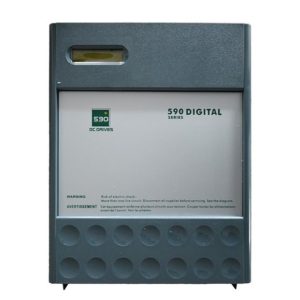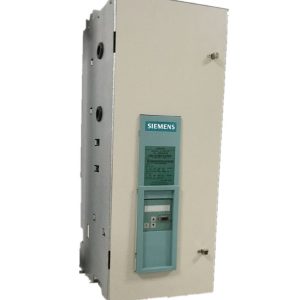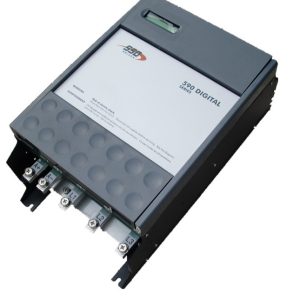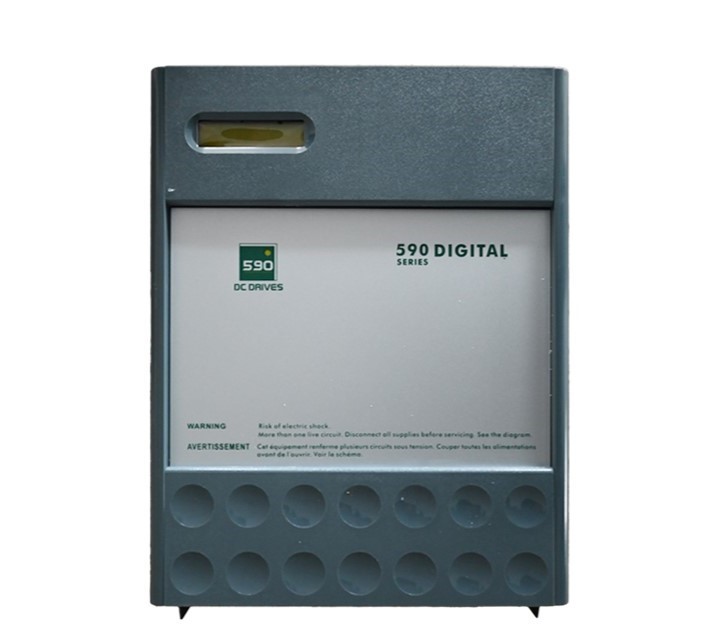
Fully Digital DC Motor Controller
Brand name: HANI
Packing Details : Wooden box with fumigation or Wooden Fram or Steel Frame
Delivery Details: 30~60days or Based on the quantity
Shipping: Sea freight、Land freight、Air freight
HANI specializes in industrial electrical automation, delivering integrated drive and control solutions to safeguard your production.
Product Details
Fully Digital DC Motor Controller
In modern electrical drives and control, the shift from analog to digital regulation has redefined precision, reliability, and integration potential. A Fully Digital DC Motor Controller embodies this transformation, replacing discrete op‑amp circuits and potentiometer tuning with high‑speed digital signal processing. For engineers, system integrators, and production teams, adopting a digital drive architecture means achieving closed‑loop bandwidths that were unattainable only a decade ago. This article examines the technology, practical benefits, selection criteria, and real‑world application of a Fully Digital DC Motor Controller, offering manufacturing-oriented insight grounded in verified electrical engineering principles.
HANI has drawn on decades of application expertise in electrical drives and control to develop a next‑generation Fully Digital DC Motor Controller that bridges the gap between laboratory‑grade precision and rugged industrial requirements. Every digital drive in the HANI portfolio is factory‑calibrated using traceable measurement chains, ensuring repeatable performance from the first unit to the thousandth.
1. What Makes a DC Motor Controller “Fully Digital”?
A conventional analog DC drive relies on operational amplifiers to implement proportional‑integral (PI) loops, with component tolerances and thermal drift directly influencing speed regulation. A Fully Digital DC Motor Controller, by contrast, samples armature current and rotor position (or back‑EMF) through high‑resolution ADCs, executes the control algorithm inside a DSP or an FPGA, and generates PWM gate signals with deterministic timing. The entire signal path — from setpoint to power stage — remains in the numerical domain, which eliminates the offset and saturation non‑linearities typical of analog counterparts. This architecture is a core topic in contemporary electrical drives and control literature, and its commercial adoption is accelerating in servo press feeders, extruders, and battery‑powered traction applications.
1.1 Core Building Blocks
- ▸ Digital Signal Controller (DSC) or FPGA: Executes the speed loop, current loop, and field‑weakening algorithms at update rates often exceeding 20 kHz.
- ▸ Isolated Gate Drivers & Power Stage: MOSFET or IGBT half‑bridge (or full H‑bridge) with bootstrap or isolated supplies, capable of switching frequencies from 16 kHz to 50 kHz to reduce audible noise.
- ▸ Precision Sensing: Shunt‑based or Hall‑effect current sensors with sigma‑delta modulators, plus quadrature encoder or resolver interfaces for position feedback.
- ▸ Communication Peripherals: CAN FD, RS‑485 (Modbus RTU), or EtherCAT for seamless integration into supervisory electrical drives and control networks.
2. Technical Specifications — HANI Fully Digital DC Motor Controller
The table below summarizes the key parameters of a representative digital drive from HANI’s standard product line. All data are verified under rated DC bus voltage and 25 °C ambient, unless otherwise noted.
| Parameter | Specification | Remarks |
|---|---|---|
| DC Bus Voltage | 24 V – 80 V (up to 400 V on request) | Under‑voltage lockout at 18 V |
| Continuous Armature Current | 20 A (with fan‑cooled heatsink) | De‑rated linearly above 50 °C |
| Peak Current (2 s) | 40 A | Software‑configurable limit |
| PWM Frequency | 16 kHz / 25 kHz / 50 kHz selectable | Synchronized to ADC sampling |
| Control Loop Update Rate | 20 kHz (current) / 4 kHz (speed) | Cascaded PI with anti‑windup |
| Feedback Support | Incremental encoder, Hall sensors, sensorless BEMF | Auto‑phasing routine included |
| Communication | CAN FD, RS‑485 (Modbus), USB for setup | Galvanic isolation 2.5 kV |
| Protection Features | Over‑current, over‑temperature, bus under/over‑voltage, I²t | All thresholds user‑programmable |
| Operating Temperature | –20 °C to +65 °C (ambient) | Storage –40 °C to +85 °C |
3. Why a Digital Drive Outperforms Analog Solutions
Engineers who have migrated from analog cards to a Fully Digital DC Motor Controller report measurable gains in repeatability and diagnostics. Five differentiating factors are outlined below, each rooted in the inherent advantages of a digital drive.
1. Parameter Drift Elimination
Digital PID coefficients are stored in non‑volatile memory and never change with temperature or aging. In a Fully Digital DC Motor Controller, the tuning that leaves the factory is the tuning that runs five years later, a critical factor in high‑volume manufacturing lines where consistency defines yield.
2. Advanced Auto‑Tuning
Using injected pseudo‑random binary sequences and system identification algorithms, a digital drive can measure the electrical time constant and mechanical inertia online, then compute optimal gains. This reduces commissioning time from hours to minutes.
3. Predictive Maintenance
Because every sample of current and voltage is accessible to the processor, a Fully Digital DC Motor Controller can track bearing wear via torque ripple signatures and alert the PLC before an unscheduled stop occurs.
4. Seamless Field‑Bus Integration
A modern digital drive speaks CANopen, EtherCAT, or PROFINET natively, merging motor data into the wider electrical drives and control architecture without external gateways.
5. Higher Efficiency Through Adaptive Dead‑Time
A Fully Digital DC Motor Controller adjusts dead‑time on‑the‑fly based on the instantaneous current polarity, minimizing body‑diode conduction losses in the MOSFET stage and improving overall drive efficiency by 1–3%.
4. Architecture of a Fully Digital Control Loop
Understanding the control topology helps production engineers troubleshoot and optimize line performance. In a typical Fully Digital DC Motor Controller, the speed reference (digital word) is compared with the actual speed derived from encoder pulses or a sensorless observer. The speed error feeds a cascaded PI structure: the outer loop generates a torque/current reference, and the inner current loop commands the PWM duty cycle. Anti‑windup is implemented through back‑calculation, and the integrator is conditionally frozen when the output saturates — a feature impossible to realize without a digital drive processor.
Field‑Weakening Mode: For applications requiring extended speed range (e.g., winding machines), the Fully Digital DC Motor Controller actively reduces field current above base speed according to a 1/ω law, maintaining constant power while protecting the commutator from excessive voltage stress. The transition is managed entirely in software, with the digital drive monitoring armature reaction and adjusting field weakening in real time.
5. Application Landscape in Electrical Drives and Control
The versatility of a digital drive makes it a central element in numerous electrical drives and control systems. Below are sectors where a Fully Digital DC Motor Controller brings measurable productivity uplift.
- ▹Battery‑Electric Vehicles & Mobile Robots: High‑efficiency Fully Digital DC Motor Controller units drive traction motors, steering actuators, and hydraulic pump replacements, all while communicating state‑of‑charge and thermal data over CAN.
- ▹Textile & Web Handling: Tension control in a winder or loom demands rapid current loop response. A digital drive with 20 kHz current loop update ensures constant tension even during diameter changes.
- ▹CNC Spindles & Tooling: Precise speed holding (±0.01%) of a Fully Digital DC Motor Controller directly improves surface finish in turning and milling operations, making it a staple in precision electrical drives and control.
- ▹Laboratory Centrifuges & Medical Devices: Where low EMI and smooth torque are paramount, a digital drive can shape the PWM pattern using spread‑spectrum modulation while maintaining tight speed regulation.
- ▹Renewable Energy & Fuel‑Cell Air Compressors: High‑speed DC blowers driven by a Fully Digital DC Motor Controller deliver the exact stoichiometric air flow, boosting system efficiency.
6. Integration and Wiring Best Practices
Installing a digital drive in an industrial cabinet requires attention to grounding, shielding, and thermal management. Because a Fully Digital DC Motor Controller switches high currents at kilohertz frequencies, common‑mode noise can couple into encoder signals if not mitigated. The following checklist summarizes field‑proven rules for electrical drives and control installations:
| Action | Rationale |
|---|---|
| Use twisted‑pair or shielded cable for motor phases | Reduces radiated EMI that could disturb nearby sensor cabling |
| Connect heatsink to protective earth via low‑impedance braid | Diverts capacitive common‑mode currents, protecting the digital drive processor |
| Place ferrite cores on encoder and communication cables | Attenuates high‑frequency common‑mode noise before it reaches logic ground |
| Separate power and signal harnesses by at least 150 mm | Minimizes inductive coupling in crowded electrical drives and control panels |
| Enable drive‑internal dV/dt filtering (if available) | Slows edge rates to stay within motor insulation limits without sacrificing efficiency |
7. Frequently Asked Questions
Q1: Can a Fully Digital DC Motor Controller run a brushed motor in sensorless mode?
Yes. Many digital drive models implement a BEMF observer that tracks speed from the ripple voltage during PWM off‑time. While low‑speed performance is limited compared to sensored operation, modern Fully Digital DC Motor Controller algorithms can reliably control down to about 5% of rated speed, which is sufficient for fans, pumps, and simple conveyors.
Q2: How does regenerative braking work in a digital drive?
When the motor acts as a generator (e.g., during deceleration), the Fully Digital DC Motor Controller modulates the bridge to boost the bus voltage. If the bus exceeds a threshold, the excess energy can be dumped into a braking resistor via a dedicated chopper channel, or, in a multi‑axis electrical drives and control system, shared onto the common DC link for other drives to use.
Q3: Is it possible to tune the control loops without a deep knowledge of control theory?
Absolutely. A key advantage of a digital drive is its embedded auto‑tuner. By following a simple wizard in the setup software, the Fully Digital DC Motor Controller measures the motor’s electrical and mechanical parameters, computes the PI gains, and validates the result with a step‑response test. The operator just approves the measured settling time and overshoot.
Q4: What diagnostics does a Fully Digital DC Motor Controller provide?
Beyond basic fault flags, a high‑end digital drive logs a time‑stamped history of bus voltage, RMS current, heatsink temperature, and even the number of commutation cycles. In the field of electrical drives and control, this historical data is invaluable for root‑cause analysis after a line stoppage.
Q5: Can multiple digital drives synchronize on the same DC bus?
Yes. A Fully Digital DC Motor Controller equipped with CAN or EtherCAT can operate in a multi‑axis group where the motion controller coordinates speed and position across several axes. The built‑in DC‑bus sharing feature allows energy exchange, reducing overall consumption — a smart strategy in any energy‑conscious electrical drives and control design.
Q6: What maintenance does a digital DC drive require?
The digital drive itself is nearly maintenance‑free, but auxiliary components — cooling fans, connectors, and braking resistors — should be inspected periodically. The Fully Digital DC Motor Controller can assist by monitoring fan speed and internal temperature trends, generating a pre‑warning when values drift beyond the baseline established during commissioning.
8. Selecting the Right Fully Digital DC Motor Controller for Your Production
When specifying a Fully Digital DC Motor Controller for a new machine or a retrofit, engineers must evaluate more than the continuous current rating. The checklist below consolidates the essential decision criteria that experienced electrical drives and control designers apply:
- ✓ Supply Voltage Range: Ensure the DC bus voltage rating covers regeneration overshoot and line fluctuations.
- ✓ Peak/Continuous Current Ratio: Match the digital drive peak capacity to the motor’s stall torque requirement plus a 20% safety margin.
- ✓ Bandwidth Requirement: If your load inertia varies widely (e.g., robotic arm), choose a Fully Digital DC Motor Controller with adaptive gain scheduling.
- ✓ Field‑Bus Compatibility: Verify that the digital drive offers the native protocol of your PLC (EtherCAT, PROFINET, or CANopen) to avoid protocol converters.
- ✓ Environmental Protection: For wash‑down areas, request a conformally coated Fully Digital DC Motor Controller with IP65 enclosure option.
- ✓ Functional Safety: Many electrical drives and control applications now require STO (Safe Torque Off) SIL 3. Check if the digital drive has redundant blocking paths.
9. The Role of a Digital Drive in Industry 4.0 and Smart Manufacturing
The convergence of electrical drives and control with the Industrial Internet of Things (IIoT) transforms a simple motor controller into a data‑rich node. A Fully Digital DC Motor Controller collects and time‑stamps millions of operational data points per day — current profiles, temperature gradients, vibration signatures. When streamed to an edge analytics platform, this data enables predictive algorithms that schedule maintenance only when degradation patterns are detected, slashing unplanned downtime. Furthermore, a digital drive can accept recipe‑driven parameter sets over OPC UA, allowing the same production line to switch between product variants without manual re‑tuning. HANI’s development roadmap includes embedded edge computing modules that run anomaly detection directly on the Fully Digital DC Motor Controller, reducing cloud dependency and latency.
Conclusion: A Fully Digital DC Motor Controller represents more than a component upgrade; it is a strategic enabler for manufacturing agility, energy efficiency, and data‑driven maintenance. By embedding advanced control algorithms, field‑bus connectivity, and deterministic protection into a compact digital drive, machine builders and plant operators alike can realize the full potential of modern electrical drives and control. When evaluating suppliers, look for a partner with deep application knowledge and a proven track record in electrical drives and control — qualities that define every Fully Digital DC Motor Controller carrying the HANI name.
HANI is one of China’s leading professional industrial electrical automation manufacturers, providing complete drive and control solutions to customers worldwide. HANI focuses on designing and manufacturing integrated automation systems that meet the industry’s highest standards of precision, efficiency, and durability. Our engineering expertise lies in providing turnkey electrical automation projects to optimize the performance of modern industrial manufacturing plants.