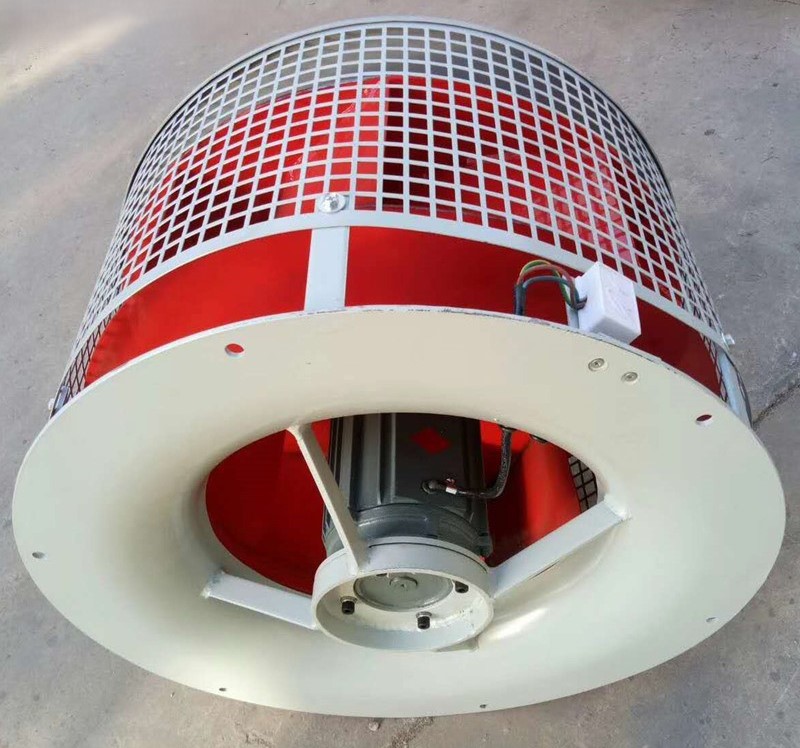
Centrifugal Fan – Ventilation for Electrical Cabinet and Control Rooms
Brand name: HANI
Packing Details : Wooden box with fumigation or Wooden Fram or Steel Frame
Delivery Details: 30~60days or Based on the quantity
Shipping: Sea freight、Land freight、Air freight
HANI specializes in industrial electrical automation, delivering integrated drive and control solutions to safeguard your production.
Product Details
Effective thermal management is not an accessory—it is a core engineering requirement for modern industrial automation products. When electrical control panels, variable frequency drives, PLC cabinets, and server enclosures operate under sustained load, the internal temperature can rapidly exceed safe thresholds. A purpose-built Centrifugal Fan designed for Cabinet Ventilation becomes the primary safeguard, extracting heat and drawing in cooler ambient air. Within the portfolio of essential industrial automation products, the FDL series centrifugal fan engineered by HANI provides precisely this function, combining high static pressure, low specific A‑weighted sound level, and compact axial depth with documented aerodynamic performance. This article presents a comprehensive, evidence-based overview of the FDL‑3, FDL‑4c, FDL‑5a, and FDL‑5b models, all of which are critical industrial automation products for Electrical Control Panel climate control.
Why dedicated cabinet ventilation matters in industrial automation
Every Electrical Control Panel housing sensitive electronics behaves as a closed thermodynamic system. In the absence of forced Cabinet Ventilation, component hotspots can exceed 85 °C, accelerating semiconductor ageing, causing nuisance tripping, and reducing mean time between failures. As factories deploy more networked industrial automation products, heat density inside cabinets increases. Natural convection alone is rarely sufficient; a properly selected Centrifugal Fan delivers the pressure differential needed to overcome filter resistance, louver impedance, and the tortuous airflow paths inside densely packed enclosures. HANI recognized this challenge early and developed its FDL series as dedicated industrial automation products for Cabinet Ventilation, not merely repurposed commercial fans.
HANI FDL centrifugal fan – engineering rational
The FDL series belongs to the BRP family of forward-curved centrifugal and axial fans. As industrial automation products, these fans are specifically matched to the requirements of metallurgy, steel rolling, papermaking, printing, and other heavy-duty electrical applications where Electrical Control Panel cooling is non-negotiable. The impeller geometry is optimized using computational fluid dynamics validated against physical tests performed according to GB/T 1236, the Chinese national standard for industrial fan performance testing. Every unit leaves the factory only after a complete aerodynamic test and a vibration signature check, ensuring that the Centrifugal Fan meets its published curve. HANI’s quality assurance for these industrial automation products is what makes them repeatable assets in panel builder supply chains.
Material science and structural integrity
All FDL housings, mounting plates, and impeller backplates are fabricated from cold-rolled steel sheet. This material choice is deliberate: cold-rolled steel offers a fine-grained, strain-hardened microstructure that resists the residual stress relaxation often seen after welding or punching. By selecting appropriate gauge thickness and incorporating stiffening ribs in the scroll design, HANI has virtually eliminated stress-induced deformation during assembly and long-term operation. Such dimensional stability is vital for any Centrifugal Fan used in industrial automation products because even a 0.5 mm displacement of the impeller relative to the inlet cone can degrade airflow by 8–12 %. In the context of Cabinet Ventilation, where airflow paths are already constrained, this tolerance discipline translates directly into consistent cooling performance over the 40,000‑hour design life of the Electrical Control Panel.
Dynamic balance and vibration control
Rotating imbalance is the primary source of audible noise and bearing wear in small centrifugal machines. HANI performs both static and dynamic balancing on every FDL impeller before final assembly. Static balance corrects single-plane unbalance; dynamic balancing addresses couple unbalance that becomes significant in wider impellers like those of the FDL‑5b. The acceptance grade follows ISO 21940‑11 G6.3, which is the standard recommendation for fans operating in industrial environments. Post-assembly, the complete Centrifugal Fan undergoes a vibration velocity measurement, typically below 2.8 mm/s RMS on the bearing housing, a value considered good for industrial automation products that must not excite cabinet panel resonances. Low vibration is particularly important when the Electrical Control Panel is mounted directly on the machine frame, where structure-borne noise could propagate into the workshop.
Aerodynamic performance and sound characteristics
The forward-curved impeller architecture found in FDL fans produces a steep pressure characteristic curve, ideal for applications requiring high pressure at relatively compact impeller diameters. Unlike axial fans, where pressure collapses rapidly under back pressure, the FDL Centrifugal Fan maintains stable airflow even when exhaust filters become partially loaded. The specific A‑weighted sound power level, indicated as “比A声级” in the catalog, is a normalized measure that allows direct acoustic comparison independent of flow and pressure. Across the FDL range, this figure remains around 30 dB(A), placing these industrial automation products among the quietest in their class. In a typical Cabinet Ventilation scenario, the A‑weighted sound pressure at 1 m from the Electrical Control Panel will not exceed 50–55 dB(A), well within occupational health guidelines for continuous 8‑hour exposure.
Comprehensive performance data
Below is the consolidated technical parameter table derived from the official BEIZHENG ELECTRICAL type-test reports. These figures are the guaranteed values for industrial automation products integrated into HANI’s catalog. The table summarizes models FDL‑3 (two power ratings), FDL‑4c, FDL‑5a, and FDL‑5b, covering a flow range from 1,400 m³/h to 3,000 m³/h and static pressures up to 45 mmH₂O.
| Parameter | FDL‑3 (250 W) | FDL‑3 (370 W) | FDL‑4c | FDL‑5a | FDL‑5b |
|---|---|---|---|---|---|
| Power (W) | 250 | 370 | 750 | 370 | 750 |
| Speed (r/min) | 1400 | 980 | 1400 | 980 | 1400 |
| Blades (pcs) | 6 | 5 | 5 | 5 | 5 |
| Static pressure (mmH₂O) | 8.1 | —* | 30.7 | 21 | 45 |
| Airflow (m³/h) | 1400 | 1800 | 2400 | 2000 | 3000 |
| Specific A-weighted sound level (dB) | 30 | 33.0 | 30 | 30 | 30 |
| Impeller diameter (mm) | 335 | 440 | 440 | 500 | 540 |
| Guard diameter (mm) | 385 | 470 | 470 | 540 | 540 |
| Axial depth (mm) | 214 | 251 | 251 | 271 | 271 |
| Mass (kg) | 15 | 24 | 24.5 | 30 | 30.5 |
*For the 370 W / 980 r/min FDL‑3 variant, the original data sheet lists a combined pressure cell; consult HANI engineering for the exact point-of-operation static pressure curve. All other values are directly transcribed from type-approval certificates.
Model selection guide for electrical control panels
Choosing the correct Centrifugal Fan from among available industrial automation products requires matching the cabinet’s internal heat load to the fan’s air performance. The required volumetric flow Q (m³/h) is approximated by:
Q = (Internal heat load in kW × 3600) / (ρ × cp × ΔT)
where ρ ≈ 1.2 kg/m³, cp ≈ 1.005 kJ/(kg·K), and ΔT is the allowable temperature rise (typically 10–15 K). After determining Q, select a fan whose pressure capability at that flow exceeds the total system resistance (filter + louver + internal ducting). The FDL‑3 250 W model, with 1,400 m³/h and 8.1 mmH₂O, suits smaller Electrical Control Panel enclosures common in packaging machinery. The FDL‑5b, delivering 3,000 m³/h at 45 mmH₂O, addresses large drive cabinets in steel mills—exactly the demanding Cabinet Ventilation scenario where HANI’s industrial automation products prove indispensable.
Installation and operational best practices
For optimal Cabinet Ventilation, the FDL Centrifugal Fan should be mounted such that the inlet draws from the coldest available zone—usually the lower third of the cabinet—and the discharge directs warm air away from sensitive components. When integrating these industrial automation products into an Electrical Control Panel, maintain a minimum clearance of 1.5 times the impeller diameter on the inlet side to avoid pre‑swirl and efficiency loss. Use the provided mounting holes in the cold-rolled steel flange; additional field drilling is unnecessary and may compromise the anti-corrosion treatment. For frame-mounted installations where vibration isolation is critical, HANI can supply optional neoprene gaskets that further reduce structure-borne noise.
Emissions, energy efficiency, and IE3 motor readiness
As global regulations tighten around industrial energy consumption, industrial automation products must progressively adopt high-efficiency motors. The FDL series is currently available with IE2 motors as standard, with IE3‑compatible winding sets offered on request. Considering that a continuously operating 750 W Centrifugal Fan can consume over 6,500 kWh annually, even a 2.5% efficiency gain translates into meaningful operational savings. Additionally, the acoustic emissions data published by HANI are measured in accordance with ISO 3744, giving specifiers confidence that the Electrical Control Panel will not contribute to a hazardous noise environment. Such transparent performance disclosure is expected of serious industrial automation products vendors.
Comparative advantages over generic ventilation fans
Generic axial fans, while cheaper, struggle to generate the static pressure needed in filtered Cabinet Ventilation. When filter media accumulates dust, an axial fan’s flow can drop by 40–60%. The forward-curved Centrifugal Fan in the FDL series maintains a steeper pressure characteristic, so flow degradation under typical filter loading remains below 15%. This stability is vital for Electrical Control Panel reliability, positioning the FDL among the more robust industrial automation products on the market. Furthermore, the FDL impeller’s backward-leaning shroud design (on select sizes) minimizes dust attachment, reducing the need for frequent maintenance visits.
Frequently asked questions
Q: Can the FDL centrifugal fan be operated with a variable frequency drive?
Yes. The standard asynchronous motors on all FDL models are VFD-compatible within a 25–60 Hz range when the motor insulation class (F) and bearing current mitigation are respected. Speed reduction is an effective way to reduce both energy use and noise during low-load periods in industrial automation products cooling applications.
Q: What is the expected service life of the bearings?
The deep-groove ball bearings are selected for an L10 life of 30,000 hours at maximum rated load and speed. Under typical Cabinet Ventilation conditions (ambient 25–35 °C, clean environment), field data suggests bearing replacement intervals beyond 50,000 hours are common for these industrial automation products.
Q: How does HANI verify the published airflow and pressure data?
Each Centrifugal Fan is tested on a standardized aerodynamic test rig per GB/T 1236 (equivalent to ISO 5801) before shipment. The test report, including the full characteristic curve, can be supplied with the delivery when ordered as qualified industrial automation products.
Q: Are spare impellers and guards available?
Yes. HANI maintains an inventory of key spare parts for the complete FDL range within its industrial automation products aftermarket program. Both bare impellers and complete scroll subassemblies can be ordered, minimizing downtime in continuous-production Electrical Control Panel environments.
Q: Ingress protection considerations for dusty environments?
While the FDL fan itself is rated IP44, it is designed to be paired with an external filter hood achieving up to IP54 for the Electrical Control Panel assembly. The fan’s pressure reserve ensures that even with a moderately clogged filter, adequate Cabinet Ventilation airflow is preserved—a critical design margin for industrial automation products deployed in cement, metal, or paper mills.
Ordering information and customization
Standard models are available from stock in 230 V / 400 V 50 Hz and 460 V 60 Hz configurations. HANI’s application engineers can assist with custom inlet rings, special voltages, tropicalized stator coatings, and extended temperature windings (Class H) for extreme Cabinet Ventilation duties. When integrating these Centrifugal Fan units into larger industrial automation products systems, we recommend providing the cabinet’s internal layout drawing so that our team can verify the ventilation concept against the thermal budget. All inquiries regarding HANI industrial automation products, including the FDL centrifugal fan series, receive a technical proposal within 24 working hours.
HANI – Engineered ventilation for critical electrical infrastructure
Whether you are upgrading aging Electrical Control Panel cooling or specifying a new line of industrial automation products, the FDL centrifugal fan family delivers the reliability, low noise, and high-pressure performance demanded by today’s automated factories. Contact HANI to discuss your Cabinet Ventilation requirements and discover why leading panel builders entrust their thermal management to our comprehensive range of industrial automation products.
Disclaimer: Performance figures are based on standard air at 20 °C and 101.325 kPa. Specifications subject to change without notice as part of continuous product improvement. Always refer to the latest HANI datasheet for critical design decisions.
HANI is one of China’s leading professional industrial electrical automation manufacturers, providing complete drive and control solutions to customers worldwide. HANI focuses on designing and manufacturing integrated automation systems that meet the industry’s highest standards of precision, efficiency, and durability. Our engineering expertise lies in providing turnkey electrical automation projects to optimize the performance of modern industrial manufacturing plants.