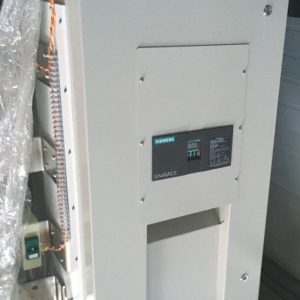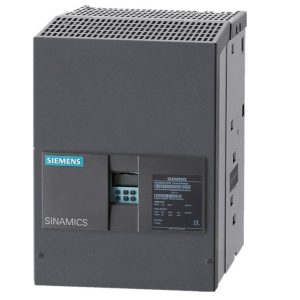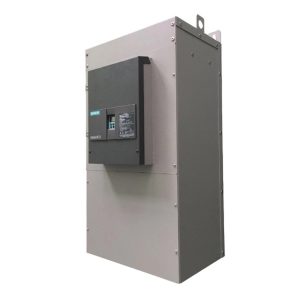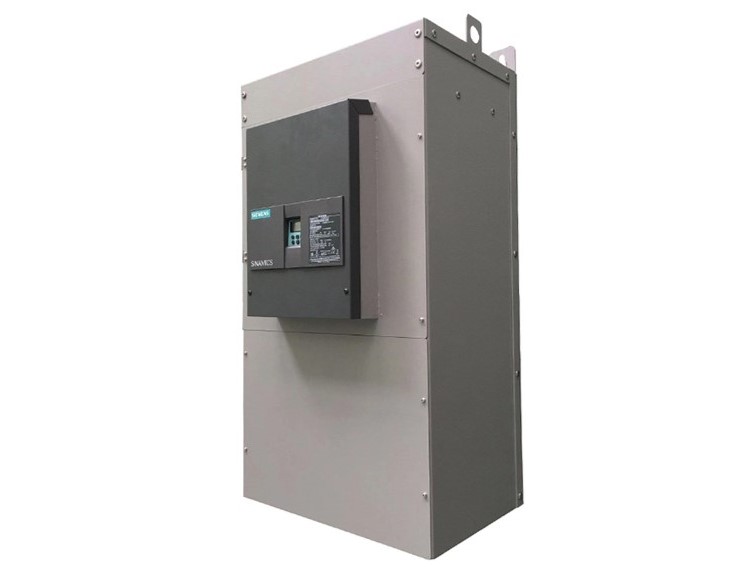
Siemens 6RA80 Expandable DC Drive 3000-4000A – Heavy Industrial Automation Control
Brand name: HANI
Packing Details : Wooden box with fumigation or Wooden Fram or Steel Frame
Delivery Details: 30~60days or Based on the quantity
Shipping: Sea freight、Land freight、Air freight
HANI specializes in industrial electrical automation, delivering integrated drive and control solutions to safeguard your production.
Product Details
Siemens 6RA80 Expandable DC Drive 3000-4000A – Heavy Industrial Automation Control
SINAMICS DCM Platform | High-Current DC Drive Solution for the Most Demanding Industrial Environments
In the domain of electrical drives and control, few products command the respect and trust earned by the Siemens 6RA80 series over decades of continuous industrial service. The 3000A–4000A class of the SINAMICS DCM (DC Master) family represents the pinnacle of high-power electrical motor control for heavy industries—steel rolling mills, mine hoists, cement rotary kilns, and marine propulsion systems where failure is simply not an option. Unlike general-purpose AC drives, this expandable DC drive delivers the low-speed torque, overload capability, and field-proven reliability that only well-engineered DC technology can provide. For systems integrators such as HANI, who require purpose-built, comprehensively documented industrial solutions, the 6RA80 is more than a component; it is the backbone of a production line.
This product introduction covers the complete technical architecture, application scope, expansion philosophy, and lifecycle value of the Siemens 6RA80 high-current DC drive, providing production engineers, procurement managers, and system designers with a scientifically grounded reference.
1. Control Architecture: The Engineering Behind Precision
At the heart of every electrical motor control system lies the control loop. The Siemens 6RA80 implements a cascaded dual-closed-loop digital control strategy that has been refined through generations of industrial drives. The outer speed loop (bandwidth approximately 80 Hz) receives real-time feedback from either a pulse encoder or an analog tachometer generator, comparing the actual motor speed against the reference setpoint and generating a current command for the inner loop. The inner current loop (bandwidth reaching approximately 800 Hz) monitors armature current via Hall-effect sensors or AC current transformers and adjusts the thyristor firing angle α accordingly[reference:0].
Both loops employ PI (Proportional-Integral) algorithms. The current controller adjusts the setpoint/actual value difference via its PI characteristic curve, forming the suitable firing angle for the gating unit. A sophisticated precontrol mechanism acts simultaneously with the current controller, ensuring dynamic response for both discontinuous and continuous current conduction modes. This precontrol calculates the firing angle depending on the current setpoint and the EMF of the motor, compensating for the inherent nonlinearity of the thyristor control characteristic and setting the required firing angle without delay for the downstream gating unit[reference:1][reference:2].
The ramp-function generator converts sudden speed setpoint changes into smooth acceleration and deceleration profiles. Users can independently configure ramp-up time (parameter p50303), ramp-down time (p50304), initial rounding (p50305), and final rounding (p50306) to protect mechanical drive trains from shock loading—a critical feature in heavy industrial automation control applications where gearbox longevity is directly tied to production uptime[reference:3].
The Siemens 6RA80 control unit (CUD) is built around a 32-bit MCU plus FPGA dual-core architecture, with all regulation, protection, and logic routines implemented in firmware stored in Flash-EPROM and supporting online firmware upgrades. The EMF calculation module continuously estimates the motor back-EMF in real time, cooperating with the dynamic overload curve to support 1.5×–2.5× short-time overload capacity—essential for handling acceleration surges and ingot-biting shock loads in rolling mill drives[reference:4][reference:5].
2. Technical Specifications (3000A–4000A Class)
The expandable DC drive capability of the 6RA80 series is among its most significant engineering advantages. A single converter unit delivers rated armature current from 160 A to 4000 A, and through parallel connection of multiple units (master-slave topology), the combined output can exceed 8000 A, enabling motor power ratings well into the multi-megawatt range[reference:6]. The 3000A–4000A rated current class specifically targets the largest DC motors in operation—those found in reversing roughing mills, mine winders, and large-diameter rotary kilns.
| Parameter | Specification |
|---|---|
| Rated DC Armature Current | 15 A – 4000 A (single unit); >8000 A via parallel expansion[reference:7][reference:8] |
| Power Range | 6.3 kW – 2508 kW (single unit); extensible to MW-class[reference:9] |
| Rated Supply Voltage | 3-phase 400 – 950 V AC (configurable up to 1200 V)[reference:10][reference:11] |
| Rated Field Excitation Current | 3 – 40 A (optional 85 A)[reference:12] |
| Rated Frequency | 45 – 65 Hz[reference:13] |
| Operating Quadrants | 2-Quadrant (B6C) and 4-Quadrant (anti-parallel B6 bridge)[reference:14] |
| Overload Capacity | 1.5×–2.5× rated DC current (short-time)[reference:15] |
| Control Accuracy | Speed deviation Δn = 0.006% of rated motor speed[reference:16] |
| Enclosure Protection | IP00 (open chassis for cabinet integration)[reference:17] |
| Cooling Method | Natural convection (≤125 A); forced air cooling (≥210 A); bottom-blow turbine fan design for 3000–4000 A class[reference:18][reference:19] |
| Storage / Transport Range | –40 °C to +70 °C[reference:20] |
| Applicable Standards | IEC, EN, DIN, VDE, UL, cULus, NEMA, UL 508 C, GOST[reference:21] |
| Built-in Communication | PROFIBUS-DP (standard); PROFINET, CANopen, EtherNet/IP, DeviceNet, USS (optional)[reference:22][reference:23] |
Thyristors are rated with a 2× voltage margin and 1.5× current margin, supported by RC snubber circuits, fast-acting semiconductor fuses, and electronic overcurrent protection. The surge absorbing capacitor circuit is precisely dimensioned so that any overvoltage resulting from commutation remains well below the blocking voltage of the thyristors, with component-level protection yielding a calculated MTBF exceeding 100,000 hours[reference:24][reference:25].
3. Expandability: Parallel Connection and 12-Pulse Architecture
The defining characteristic of the expandable DC drive designation is the ability to configure multiple 6RA80 converters in a master-slave topology. In a master-slave configuration, one SINAMICS DCM serves as the master converter, and additional DCM units operate as slaves. Control commands—switch-on/stop, operating enable, and quick stop—are distributed from the master, while the slave converters respond in torque-control mode for precise load sharing[reference:26]. Communication between master and slave units is handled via the peer-to-peer interface, which provides deterministic, low-latency data exchange for real-time current balancing[reference:27].
For applications demanding both high power quality and reduced harmonic distortion, the 6RA80 platform supports 12-pulse parallel rectification. This topology employs two 6-pulse converter bridges fed from a phase-shifting rectifier transformer (typically Δ/Y and Δ/Δ secondary windings with a 30° phase displacement). The 12-pulse configuration cancels the 5th and 7th harmonic currents on the primary side, substantially reducing total harmonic distortion (THD) on the supply network. Key components of a 12-pulse system include the rectifier transformer, rectifier devices (two or more 6RA80 units), and DC smoothing reactors calculated to limit ripple current to the motor manufacturer‘s specified tolerance[reference:28][reference:29].
Critical protection functions within the parallel rectifier system include master-slave current balancing (ensuring neither unit carries disproportionate load), coordinated overvoltage protection, and overcurrent protection. These are not optional extras; they are embedded in the standard SINAMICS DCM firmware and have been field-validated in demanding steel rolling system retrofits and mine hoist upgrades[reference:30].
4. Heavy Industrial Applications: Where the 6RA80 Excels
The Siemens 6RA80 DC drive has been deployed across virtually every category of heavy industrial automation control. The following applications represent documented, field-proven implementations:
| Industry | Application & Engineering Significance |
|---|---|
| Steel Rolling Mills | Reversing roughing mills, hot strip finishing mills, cold rolling mills. Baosteel‘s 2050 mm hot-strip coiler drive system was successfully retrofitted with 6RA80 converters under the Simotion software platform, restoring and enhancing legacy analog control functions[reference:31]. The 12-pulse parallel configuration of 6RA80 is widely adopted in steel rolling system upgrades, with documented improvements in current balance and system protection[reference:32]. |
| Mine Hoists / Winders | The 6RA80 12-pulse parallel rectification technology has been successfully applied to mine auxiliary shaft hoist system upgrades, with DCC (Drive Control Chart) programming used to embed travel control logic directly into the drive, reducing hardware configuration and improving operational efficiency[reference:33]. |
| Cement Rotary Kilns | High-inertia, constant-torque kiln drives operating 24/7 with minimal maintenance windows. The 6RA80’s overload tolerance and thermal reserve make it the preferred choice for clinker production lines requiring uninterrupted operation. |
| Paper Machines | Multi-section coordinated drives with precise speed-holding across dozens of sections. The 0.006% speed accuracy of the SINAMICS DCM platform is critical for maintaining consistent sheet tension, basis weight, and surface quality[reference:34]. |
| Marine & Port Equipment | Electric propulsion drives, cargo winches, and container crane hoist/lower systems. The regenerative 4-quadrant variant returns braking energy to the supply network, eliminating bulky braking resistor banks and reducing thermal management complexity[reference:35]. |
| Metal Processing | High-alloy steel rolling lines using φ550 mm mills controlled by 6RA80 full-digital DC speed regulators in conjunction with S7-200 PLCs, providing integrated mill sequencing, tension control, and looper regulation[reference:36]. |
5. Why the 6RA80 Over Alternatives: A Direct Comparison
Decision-makers evaluating electrical drives and control solutions often face a choice between the Siemens 6RA80 and comparable DC drive platforms such as the ABB DCS800. Both families serve the same end markets, but several engineering differentiators favor the SINAMICS DCM in high-power, high-availability applications:
| Criterion | Siemens 6RA80 (SINAMICS DCM) | ABB DCS800 |
|---|---|---|
| Single-Unit Max Current | Up to 4000 A (parallel to >8000 A)[reference:37] | Up to 5200 A (parallel capable)[reference:38] |
| Control Platform | SINAMICS common platform; full TIA Portal integration with SIMATIC S7-1500/PCS7[reference:39] | ABB Automation Builder; native ACS800/880 integration |
| 12-Pulse Support | Native 12-pulse parallel with current balancing, documented in steel mills and mine hoists[reference:40] | Support available; less extensively documented in open literature |
| Speed Accuracy | Δn = 0.006% of rated speed[reference:41] | Comparable (0.01% class)[reference:42] |
| Field Supply | Integrated 3–40 A (optional 85 A); separate field supply unit configuration available[reference:43] | Integrated 3-phase field exciter[reference:44] |
| Diagnostic Depth | AOP30 graphical panel with plain-text help; STARTER trace; 5-digit fault codes (Fxxxxx)[reference:45] | DriveWindow PC tool; comparable fault diagnostics |
| Migration Path | Direct successor to 6RA70 SIMOREG; parameter cross-reference tables available[reference:46] | Successor to DCS500/600 series |
For brownfield upgrades, the migration path from the legacy 6RA70 SIMOREG series to the 6RA80 is deliberately smooth. Siemens provides parameter cross-reference tables mapping 6RA70 parameters (e.g., R015 armature supply voltage) to their 6RA80 equivalents (R50015), minimizing re-engineering effort and commissioning downtime[reference:47].
6. Commissioning, Diagnostics, and Lifecycle Reliability
Proper commissioning of the Siemens 6RA80 is non-negotiable for achieving the specified performance. The drive must “learn” the resistance and inductance of the connected DC motor through structured optimization runs. The current controller optimization (p50051=25) establishes the armature circuit electrical parameters, while the speed controller optimization (p50051=26) tunes the speed loop gains. Skipping or improperly executing these optimization routines will almost certainly result in overcurrent trips, instability faults, or speed hunting under load[reference:48].
The diagnostic ecosystem of the 6RA80 reflects the digital intelligence of the SINAMICS platform. The AOP30 Advanced Operator Panel, typically mounted on the cabinet door, serves as the primary human-machine interface. When a fault such as F60004 (Phase Failure) is generated, pressing the HELP key provides a plain-text diagnostic checklist (e.g., “Check main circuit fuses,” “Check voltage sensing wires”). Through the STARTER or Startdrive PC software connected via USB or PROFINET, commissioning engineers can run control logic traces, graphing armature current and field current waveforms to verify that PID gains are correctly tuned[reference:49].
Common fault codes encountered on the Siemens 6RA80 include F60004 (Phase Failure), F60042 (Tachometer/Speed Feedback Fault), F30005 (Power Unit I²t Overload), and F60050 (Optimization Run Fault). Each fault is reported in the standard SINAMICS 5-digit format (Fxxxxx), while alarms (Axxxxx) indicate thresholds that have been approached but allow the drive to continue operating—essential for planning maintenance interventions without unplanned production stops[reference:50].
Component-level reliability is engineered into every element of the power section. The surge absorbing RC circuit across each thyristor pair is dimensioned to keep commutation overvoltages below the device blocking voltage. A failure in this circuit, though rare, can cause thyristor failure from overvoltage stress—making periodic visual inspection of snubber components a recommended element of preventative maintenance programs[reference:51]. Temperature monitoring elements are installed adjacent to the thyristors in thermally challenging locations, providing automatic derating or shutdown if cooling airflow is compromised[reference:52].
7. Frequently Asked Questions (FAQ)
Q1: What differentiates the 6RA80 3000–4000A class from standard DC drives?
The 3000–4000A current class represents the high-power end of the SINAMICS DCM single-unit range. In addition to the standard dual-closed-loop digital control architecture common to all 6RA80 drives, these units feature bottom-blow turbine fan cooling (rather than top-extraction), left-right dual-side power cabling for easier parallel interconnection, and integrated semiconductor fuses rated for full fault-level interruption. The thyristor modules use puck-type (disc) packages rather than module-type, with isolated or non-isolated heatsink designs selected according to site electrical safety requirements[reference:53][reference:54][reference:55].
Q2: Can the 6RA80 be integrated into a modern PROFINET-based automation system?
Yes. The 6RA80 ships with PROFIBUS-DP as standard and supports PROFINET as an optional communication module. Through the PROFIdrive telegram framework (Telegram 1 for speed control, Telegram 2 for speed control with extended diagnostics), the drive integrates seamlessly with SIMATIC S7-1500 PLCs and the PCS7 process control system, forming part of Siemens‘ Totally Integrated Automation (TIA) architecture[reference:56]. For non-Siemens control environments, the drive also supports CANopen, EtherNet/IP, DeviceNet, and USS protocol[reference:57].
Q3: What is the difference between 2-Quadrant and 4-Quadrant configurations?
A 2-Quadrant (2Q) drive operates in motoring direction only (forward motoring and forward braking), using a single B6C fully-controlled bridge. A 4-Quadrant (4Q) drive employs two B6 bridges in anti-parallel connection, enabling both forward and reverse motoring as well as regenerative braking in both directions. The regenerative variant feeds braking energy back into the supply grid rather than dissipating it as heat in resistor banks, improving overall energy efficiency by 10–25% depending on the duty cycle[reference:58][reference:59].
Q4: How many units can be paralleled, and what is the maximum achievable current?
Through master-slave parallel topology, multiple 6RA80 converters can be combined. A single unit delivers up to 4000 A, and the standard parallel architecture supports at least two units for a combined 8000 A output. Engineering practice permits higher parallel counts; the limiting factors are the supply transformer capacity, the DC motor’s commutator current density rating, and the system designer‘s ability to manage the circulating current and load-sharing control algorithms. Real-world installations for large mine winders have operated successfully at 12,000 A class using three parallel 4000 A units[reference:60].
Q5: What maintenance does a 6RA80 3000–4000A drive require in continuous production?
For 24/7 production environments, a structured preventative maintenance program is recommended: (a) quarterly visual inspection of thyristor snubber RC circuits for signs of thermal aging; (b) semi-annual measurement of cooling fan airflow and replacement of clogged inlet filters; (c) annual torque check of all power terminations (thermal cycling loosens bolted connections over time); (d) annual verification that the drive’s internal temperature monitoring system triggers correctly at the factory-calibrated setpoint. No component-level repairs inside the power section should be attempted without factory training due to the high-energy hazard and thyristor handling sensitivity[reference:61][reference:62].
8. The HANI Perspective: Why This Drive Matters
For engineering-oriented organizations like HANI, the selection of an electrical motor control platform is not a transactional decision—it is a strategic one that affects plant availability, maintenance staffing levels, and the total cost of ownership over a 15–25 year operating horizon. The Siemens 6RA80 addresses these lifecycle concerns through several practical design philosophies: (1) single-sided front-access maintenance, eliminating the need for rear cabinet doors and reducing the electrical room footprint[reference:63]; (2) nickel-plated copper busbars and conformally coated control boards that resist corrosion in hot, humid, and chemically aggressive environments[reference:64]; and (3) a global service network with local-language support and genuine spare parts availability extending well beyond the product’s active manufacturing life.
When HANI specifies a expandable DC drive for a rolling mill upgrade or a kiln retrofit, the engineering team can rely on a solution that has been validated at scale—from Baosteel‘s hot-strip mill in Shanghai to mine hoist modernization projects documented in peer-reviewed electrical drive journals. The 6RA80 is not merely a catalogue item; it is an engineering platform supported by detailed application notes, 12-pulse parallel design guidelines, and a global community of factory-trained commissioning engineers. That infrastructure of knowledge and support is what transforms a power-electronic converter into a production asset.
▲ Summary: The Siemens 6RA80 DC drive in the 3000–4000 A class combines SINAMICS digital control intelligence with field-hardened thyristor power technology. For heavy industries where electrical drives and control performance directly determines throughput, quality, and safety, this expandable DC drive remains the benchmark against which all alternatives are measured. Configured with 12-pulse parallel architecture, integrated PROFINET connectivity, and comprehensive diagnostic tools, the 6RA80 delivers the reliability, maintainability, and performance that production-critical electrical motor control demands.
HANI is one of China’s leading professional industrial electrical automation manufacturers, providing complete drive and control solutions to customers worldwide. HANI focuses on designing and manufacturing integrated automation systems that meet the industry’s highest standards of precision, efficiency, and durability. Our engineering expertise lies in providing turnkey electrical automation projects to optimize the performance of modern industrial manufacturing plants.