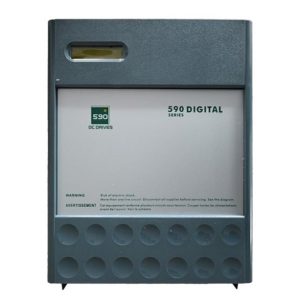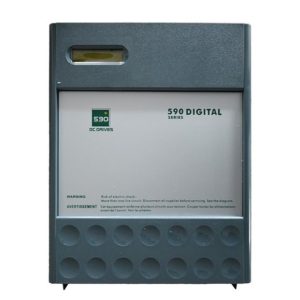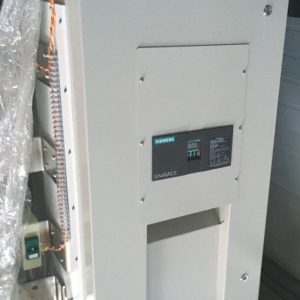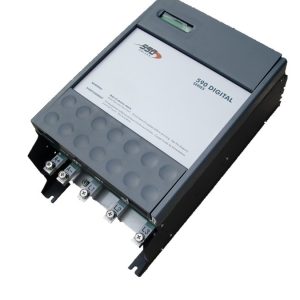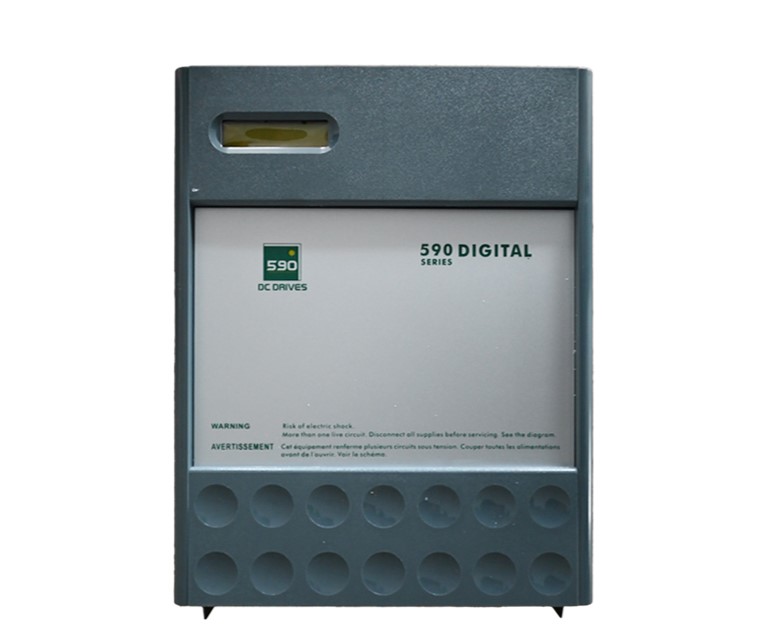
Fully Digital DC Controller – Industry 4.0 Ready Drive Cabinet
Brand name: HANI
Packing Details : Wooden box with fumigation or Wooden Fram or Steel Frame
Delivery Details: 30~60days or Based on the quantity
Shipping: Sea freight、Land freight、Air freight
HANI specializes in industrial electrical automation, delivering integrated drive and control solutions to safeguard your production.
Product Details
Fully Digital DC Controller – Industry 4.0 Ready Drive Cabinet
Engineered by HANI – Precision Digital Control for the Smart Factory Era
A new-generation electrical drives and control solution built on fully digital thyristor-based architecture, designed to integrate seamlessly into Industrial Automation environments and meet the demanding requirements of Industry 4.0 smart manufacturing.
1. Executive Overview: The Convergence of Classical Power and Digital Intelligence
Modern manufacturing environments demand more than just motor rotation — they require deterministic precision, seamless data connectivity, and energy transparency that only fully integrated electrical drives and control systems can deliver. DC motor drives, despite the proliferation of AC variable-frequency technologies, remain irreplaceable in applications where extreme low-speed torque, wide constant-power field-weakening ranges, and rapid dynamic response are non-negotiable. The Fully Digital DC Controller addresses precisely this need, merging the raw power-handling capability of thyristor-based conversion with the intelligence of a high-speed digital-signal-processor (DSP) control platform.
The fully digital DC controller represents a paradigm shift away from analog setpoint-dependent regulation toward a software-defined, field-upgradable architecture. Where legacy analog drives suffered from component drift, temperature sensitivity, and limited diagnostic capability, the all-digital approach locks control accuracy into firmware-hardened algorithms. Digital current regulation achieves sampling rates in the microsecond domain, enabling tight current-loop bandwidths exceeding 250 Hz and speed-loop update rates sufficient to stabilize even high-inertia loads with negligible overshoot. This level of performance transforms what was once a simple speed regulator into a comprehensive Industrial Automation node, capable of executing complex motion profiles, coordinating with PLC-based sequencing, and reporting operational data to supervisory SCADA and MES layers in real time.
HANI leverages decades of experience in heavy-industry drive engineering to deliver this Fully Digital DC Controller as part of a turnkey, factory-tested drive cabinet that is expressly designated Industry 4.0 Ready. The cabinet is not merely a housing — it is a pre-engineered system incorporating input protection, digital control electronics, thyristor power stacks, forced-air thermal management, field excitation modules, and multi-protocol communication interfaces. Every cabinet is subjected to full-load burn-in testing before shipment, ensuring that the electrical drives and control architecture has been validated under real-world current and thermal stress conditions.
2. Technical Architecture of the Fully Digital DC Controller
2.1 Digital Current Regulation Core
At the heart of every fully digital DC controller lies a cascaded control structure: an inner current loop and an outer speed loop, both executed on a high-performance DSP. The current regulator processes armature-current feedback — typically from a galvanically isolated Hall-effect transducer or a precision shunt — and computes the required thyristor firing angle in real time. Digital current control eliminates the drift and non-linearity inherent in analog operational-amplifier-based regulators. Research has demonstrated that optimization of the digital current control loop in thyristor-converter-fed electrical drives and control systems can significantly reduce overshoot, improve dynamic stiffness against load disturbances, and enhance overall energy efficiency by minimizing reactive power circulation.
2.2 Thyristor Power Stage and Firing Control
The power stage utilizes a fully-controlled three-phase thyristor bridge in a six-pulse (B6C) or, for higher power ratings, a twelve-pulse series-configuration. The microprocessor-based firing unit synchronizes to the mains via a digital phase-locked loop (PLL), which maintains accurate firing-angle resolution even under distorted line-voltage conditions. A dedicated gate-drive pulse transformer per thyristor ensures galvanic isolation between the control electronics and the power circuit. This architecture supports both two-quadrant (motoring only) and four-quadrant (regenerative braking) operation. Four-quadrant systems employ anti-parallel connected thyristor bridges with circulating-current-free logic or, in demanding reversing applications, circulating-current-controlled logic for absolutely seamless torque reversal through zero speed.
2.3 Field Excitation and Field Weakening
An integrated digital field exciter provides regulated DC current to the motor field winding. The excitation circuit is typically implemented as a single-phase fully-controlled thyristor bridge or, in compact formats, a half-controlled bridge. Economy-field (standby field reduction) functionality is standard, automatically reducing field current during prolonged idle periods to minimize copper losses and prevent motor overheating. Automatic field weakening extends the motor’s speed range above base speed at constant power, essential for winding, unwinding, and spindle applications. The controller monitors field current, field voltage, and field loss conditions continuously, triggering an immediate controlled shutdown if field circuit integrity is compromised.
3. Industry 4.0 Ready: Connectivity, Data, and Cybersecurity
The designation Industry 4.0 Ready is not a marketing badge; it is an engineering commitment. For a drive cabinet to be considered Industry 4.0 Ready, it must support bidirectional data exchange with higher-level automation systems, expose critical operational parameters for cloud-based analytics, and incorporate security mechanisms that protect against unauthorized access. The Fully Digital DC Controller achieves this through a layered communication architecture.
3.1 Multi-Protocol Fieldbus and Industrial Ethernet Integration
The controller natively supports major automation protocols including PROFINET, EtherNet/IP, Modbus TCP, PROFIBUS DP, and CANopen — selectable via software configuration without hardware changes. Dual-port Ethernet switches embedded in the control board enable daisy-chain and ring topologies (MRP/HRP), simplifying cabinet-to-cabinet wiring in multi-drive systems. This protocol flexibility ensures seamless integration into existing Industrial Automation landscapes, whether the plant operates a Siemens TIA Portal environment, a Rockwell Automation ControlLogix platform, or a brand-agnostic Codesys-based architecture.
3.2 OPC UA and Cloud Connectivity
Beyond traditional fieldbuses, the drive cabinet incorporates an OPC UA server function, enabling secure, firewall-friendly data access from MES, ERP, or cloud-based analytics platforms. Key performance indicators — armature current, speed deviation, thyristor junction temperature, cabinet ambient temperature, energy consumption, and running hours — are continuously published as structured data nodes. This transforms the drive from a passive actuator into an active participant in the Industrial Internet of Things (IIoT), supporting predictive maintenance strategies and energy management dashboards.
3.3 Embedded Cybersecurity
Network-connected electrical drives and control equipment presents an expanded attack surface. The controller addresses this with role-based access control (RBAC), secure boot, firmware signature verification, and TLS-encrypted communication channels. A built-in firewall function filters incoming traffic based on IP address, protocol type, and port number. Audit logging records all parameter changes with user identification and timestamp, supporting forensic analysis and compliance with IEC 62443 cybersecurity standards for industrial automation and control systems.
4. Drive Cabinet Design and Construction
The HANI drive cabinet is engineered as an integrated solution, not a collection of discretely sourced subassemblies. The enclosure is fabricated from heavy-gauge (minimum 2.0 mm) powder-coated sheet steel with a structured-surface finish offering resistance to industrial chemical exposure. Cabinet ingress protection is rated IP54 as standard, with optional IP55 available for particularly dusty or wash-down environments. Forced-air cooling is achieved via speed-controlled axial fans with easily replaceable filter mats; an air-to-water heat exchanger option is available for high-ambient installations where air-conditioned electrical rooms are impractical.
Internally, the cabinet is partitioned into distinct zones: a power section housing the thyristor modules, field exciter, AC line contactor, semiconductor fuses, and DC-link components; a control section containing the DSP controller board, I/O terminal blocks, fieldbus interface modules, and auxiliary relays; and a cooling section with fan tray and airflow baffles. Segregation of power and control wiring minimizes electromagnetic interference (EMI). All internal wiring uses tri-rated halogen-free cable with ferruled terminations, labeled to correspond with the supplied schematic diagram.
A door-mounted operator panel provides local access. The standard interface includes a high-resolution color TFT display with soft keys, a multi-language plain-text parameter structure, real-time trending screens, and a USB port for firmware updates and parameter backup. An emergency stop button and a lockable main isolator handle are mounted on the cabinet front door as standard safety features.
5. Technical Specifications
| Parameter | Specification / Value |
|---|---|
| Control Platform | High-performance 32-bit DSP, fully digital closed-loop control of armature current, speed, and EMF |
| Power Supply Input | 3-phase, 380–690 V AC ±10%, 50/60 Hz (other voltages available on request) |
| Rated Armature Current | 15 A to 3000 A DC (continuous), scalable with parallel-connected modules |
| Rated Armature Voltage | Up to 900 V DC (dependent on AC supply voltage), field-weakening range programmable |
| Field Exciter Rating | Up to 40 A DC, single-phase fully-controlled bridge; economy-field and field-loss protection |
| Quadrant Operation | Selectable 2-quadrant (motoring) or 4-quadrant (regenerative braking) with anti-parallel thyristor bridges |
| Current Loop Bandwidth | ≥ 250 Hz (typical), digitally tuned PI controller with adaptive gain scheduling |
| Speed Control Accuracy | ±0.01% of rated speed with digital encoder feedback (1024–4096 PPR incremental encoder or absolute encoder) |
| Communication Protocols | PROFINET, EtherNet/IP, Modbus TCP, PROFIBUS DP, CANopen, OPC UA (embedded server) |
| I/O Configuration | 6× digital inputs, 4× digital outputs, 2× analog inputs (±10 V / 4–20 mA), 2× analog outputs; expandable via option modules |
| Protection Functions | Overcurrent, overvoltage, undervoltage, phase loss, field loss, armature short-circuit, I²t motor overload, thyristor overtemperature, ground-fault detection, Safe Torque Off (STO) SIL 3 / PL e |
| Ambient Operating Temperature | 0 °C to +45 °C without derating (up to +55 °C with derating and enhanced cooling) |
| Cabinet Ingress Protection | IP54 standard (IP55 optional), powder-coated sheet steel, RAL 7035 light-grey finish |
| Certification & Standards | IEC 61800-5-1, IEC 61131-3 programmable, CE marking, UL 508A available |
Note: Specifications are subject to continuous improvement. Custom configurations are available upon request to match specific motor nameplate data and application requirements.
6. Digital vs. Analog DC Drive Technology: A Comparative Perspective
| Feature | Analog DC Drive (Legacy) | Fully Digital DC Controller (HANI) |
|---|---|---|
| Control Accuracy | Subject to component aging, thermal drift (±2–5%) | Firmware-defined, drift-free (±0.01% with digital feedback) |
| Tuning Method | Manual potentiometer adjustment, iterative | Auto-tuning, parameter-based, reproducible from file backup |
| Diagnostics | LED indicators only, no fault logging | Full fault log with timestamp, event-triggered waveform capture |
| Communication | Hardwired analog setpoints only | Fieldbus, Industrial Ethernet, OPC UA, web server |
| Fieldbus Connectivity | None | PROFINET, EtherNet/IP, Modbus TCP, PROFIBUS DP, CANopen |
| Remote Monitoring | Not possible | Real-time via OPC UA, cloud-ready, secure remote access |
| Cybersecurity | None | RBAC, secure boot, TLS encryption, audit logging |
| Energy Optimization | Fixed settings, no optimization | Regenerative braking, economy field, adaptive energy management |
| Maintenance | Reactive, component-level troubleshooting | Predictive, health monitoring, condition-based alerts |
| Lifecycle Management | End-of-life obsolescence risk | Firmware-upgradable, backward-compatible migration path |
7. Application Sectors and Use Cases
| Industry Sector | Typical DC Motor Application | Key Drive Requirement | HANI Solution Advantage |
|---|---|---|---|
| Metals & Steel | Rolling mill stands, coilers, uncoilers, shears | High overload capacity (200% for 10 s), rapid torque reversal, field weakening | Four-quadrant regenerative drive cabinet with adaptive field weakening |
| Mining & Minerals | Conveyor belts, hoists, crushers, grinding mills | High starting torque, multi-motor load sharing, dust-resistant enclosure | IP55-rated cabinet, droop compensation for load sharing, fiber-optic communication option |
| Pulp & Paper | Paper machine sections, winders, calenders | Precise speed synchronization, tension control, continuous operation | Digital speed trim (±0.01%), built-in dancer/tension PID control, 24/7 rated |
| Cranes & Hoists | Overhead traveling cranes, port cranes, winches | Safe Torque Off, brake control, load-holding at zero speed | STO SIL 3 / PL e, integrated brake sequencing logic, torque-proving function |
| Rubber & Plastics | Extruders, two-roll mills, internal mixers | High continuous torque, frequent starting under load | 200% starting torque, digital current limit with smooth transition |
| Textile & Fiber | Spinning frames, draw-twisters, winders | Smooth low-speed operation, precise tension regulation | Digital speed profile generator, ultra-low-speed stability (< 1 RPM) |
| Cement & Building Materials | Rotary kilns, ball mills, conveyors | Extremely high starting torque, dusty/outdoor environment | IP55 option, time-controlled torque boost, remote condition monitoring via OPC UA |
| Power Generation | Turbine turning gear, valve actuators | Safety integrity level, backup power compatibility, high reliability | Redundant control power supply option, certified safety functions, mean-time-between-failure (MTBF) > 100,000 h |
8. Energy Efficiency and Regenerative Capability
Energy cost is a dominant factor in the total cost of ownership for industrial electrical drives and control systems. The HANI fully digital DC controller incorporates several energy-saving features that deliver measurable reductions in electricity consumption. In four-quadrant configuration, braking energy is regenerated back to the mains supply rather than being dissipated as heat in braking resistors. This is particularly impactful in applications with frequent deceleration cycles — such as coilers, hoists, and elevators — where energy recovery can exceed 15% of total consumption. The regeneration process is managed by the digital controller’s line-synchronization algorithms, which ensure that regenerated current meets grid power-quality requirements with total harmonic distortion (THD) within IEEE 519 limits.
Beyond regeneration, the controller employs adaptive excitation optimization. During light-load periods, the field current is automatically reduced to minimize I²R losses in the field winding while maintaining sufficient flux for stable control. The economy-field function can reduce field copper losses by up to 60% during idle intervals, which is particularly beneficial in processes with intermittent duty cycles. Combined with the inherently high efficiency of DC motors at low speeds — where AC induction motors suffer from poor power factor and increased slip losses — the Fully Digital DC Controller delivers a compelling energy profile for variable-speed applications operating predominantly below base speed.
A built-in energy meter function records kilowatt-hour consumption, regenerated energy, and reactive power demand, presenting these data both on the local display and via OPC UA to plant energy management systems. This transparency enables ISO 50001 energy management compliance and supports the identification of further efficiency improvement opportunities within the Industrial Automation infrastructure.
9. Installation, Commissioning, and Lifecycle Support
9.1 Pre-Delivery Testing
Every HANI drive cabinet undergoes a comprehensive factory acceptance test (FAT) before shipment. The FAT includes insulation resistance measurement (megger test), functional verification of all protection circuits, full-load current run with a dummy load or back-to-back motor test, communication protocol verification, and a 24-hour burn-in test at rated current. A detailed FAT report is supplied with the cabinet documentation package.
9.2 On-Site Installation
The cabinet is delivered as a fully assembled, internally wired unit requiring only external power, motor, and control connections. Bottom or top cable entry plates are provided as standard. Clear minimum clearance distances are specified in the installation manual to ensure adequate ventilation. The cabinet is designed for indoor installation in a non-hazardous, non-condensing environment. For outdoor installations, a weatherproof canopy and anti-condensation heater option are available.
9.3 Commissioning
Commissioning is performed using the door-mounted operator panel or, for integrated systems, via the plant’s engineering workstation. An auto-tuning wizard guides the commissioning engineer through motor parameter identification, current-loop optimization, and speed-loop tuning. The auto-tuning routine injects a low-level pseudo-random binary sequence (PRBS) signal to identify the motor’s electrical and mechanical time constants, then automatically calculates optimal PI controller gains. This reduces commissioning time from hours (with analog drives) to minutes, while achieving superior tuning quality.
9.4 Remote Support and Firmware Updates
The controller’s embedded web server and OPC UA interface enable remote diagnostics by HANI service engineers, subject to customer IT security policies. Firmware updates can be applied via USB or remotely, adding new features and protocol enhancements without hardware modification. This ensures that the electrical drives and control system remains current with evolving automation standards throughout its operational lifetime.
10. Migration Path for Legacy DC Drive Installations
A significant portion of the global installed base of DC motors — particularly in metals, mining, paper, and marine industries — remains in excellent mechanical condition but is controlled by aging analog drives that are increasingly difficult to maintain. HANI offers a structured retrofit migration path that preserves the existing DC motor and cabling infrastructure while replacing the obsolete drive electronics and power stack with a modern fully digital DC controller. The retrofit approach typically involves replacing the drive cabinet in its entirety, re-using existing power and motor cabling where insulation integrity is confirmed. The digital controller is then configured to match the existing motor’s nameplate parameters, and the auto-tuning routine ensures optimal control performance without the trial-and-error iterations that characterized analog drive commissioning. This modernization delivers immediate benefits — digital precision, network connectivity, predictive maintenance capability, and spare-parts availability — while avoiding the higher capital cost and production downtime associated with a complete motor-and-drive replacement using AC technology.
11. Frequently Asked Questions (FAQ)
Q1: What does “fully digital” mean in the context of a DC controller?
“Fully digital” refers to the control architecture where all regulation loops — current, speed, field, and EMF — are implemented as software algorithms running on a digital signal processor (DSP), rather than using analog operational amplifiers, potentiometers, and discrete components. This approach eliminates thermal drift, enables auto-tuning, supports fieldbus communication, and provides comprehensive diagnostic logging — all features that are impossible with analog drives.
Q2: How does the Industry 4.0 Ready designation benefit my plant?
An Industry 4.0 Ready drive cabinet provides standardized digital interfaces (PROFINET, EtherNet/IP, OPC UA) that enable the drive to participate in the plant’s digital ecosystem. Operational data — speed, current, temperature, energy consumption — is continuously streamed to higher-level systems for visualization, analysis, and predictive maintenance. This transforms the drive from an isolated power component into a data-generating asset that supports informed decision-making and operational efficiency.
Q3: Can this controller operate existing DC motors, or does it require new motors?
The HANI fully digital DC controller is designed to operate any standard separately-excited or permanent-magnet DC motor. During commissioning, the auto-tuning function identifies the connected motor’s electrical parameters and configures the controller accordingly. This makes it ideal for retrofit projects where the existing DC motor is in good condition but the original drive electronics are obsolete.
Q4: What communication protocols are supported?
The controller supports PROFINET, EtherNet/IP, Modbus TCP, PROFIBUS DP, CANopen, and OPC UA as standard. Dual-port Ethernet enables daisy-chain and ring network topologies. Protocol selection is software-configurable — no hardware change is required to switch between, for example, PROFINET and EtherNet/IP. This offers maximum flexibility for integration into diverse Industrial Automation environments.
Q5: Is the drive cabinet suitable for outdoor installation?
The standard cabinet is rated IP54 and is intended for indoor installation. For outdoor or wash-down environments, an IP55-rated cabinet with anti-condensation heater, sun-shield canopy, and enhanced corrosion-resistant coating is available as an option. Our application engineers can advise on the appropriate specification based on your site conditions.
Q6: What safety functions are integrated?
Safe Torque Off (STO) is built in as standard, certified to SIL 3 according to IEC 61800-5-2 and PL e according to ISO 13849-1. Additional safety functions — safe stop 1 (SS1), safe brake control (SBC), and safely-limited speed (SLS) — can be implemented using external safety relays or a safety PLC in conjunction with the drive’s STO input. The cabinet also includes an emergency stop button and a lockable main isolator as standard.
Q7: How does regenerative braking work, and what are the benefits?
In a four-quadrant configuration, the drive uses a second anti-parallel thyristor bridge to invert the DC link voltage during braking, feeding the generated energy back into the AC supply. This eliminates the need for braking resistors, reduces cabinet heat load, and lowers net energy consumption — particularly in cyclic applications such as coilers, hoists, and elevators. Energy savings of 10–25% are achievable compared to non-regenerative drives.
Q8: What is the typical delivery lead time?
Standard-configuration drive cabinets with ratings up to 1000 A are typically available within 8–12 weeks from order. Larger or highly customized cabinets may require 14–20 weeks, depending on component availability and factory loading. Expedited delivery options are available for critical breakdown-replacement situations.
Q9: What warranty and after-sales support does HANI provide?
HANI provides a standard 24-month warranty from the date of commissioning (or 30 months from shipment, whichever occurs first). Extended warranty packages are available. Our after-sales support includes remote diagnostics, on-site service engineer dispatch, spare parts supply with guaranteed availability for a minimum of 10 years, and technical training programs for customer maintenance teams.
Q10: Can the controller be integrated with a plant-wide energy management system?
Yes. The controller’s built-in energy meter records consumption, regeneration, and reactive power data, which are exposed via OPC UA. This data can be consumed by any ISO 50001-compliant energy management platform or building management system (BMS) to provide drive-level energy transparency. The interface is standard and does not require proprietary middleware.
HANI is one of China’s leading professional industrial electrical automation manufacturers, providing complete drive and control solutions to customers worldwide. HANI focuses on designing and manufacturing integrated automation systems that meet the industry’s highest standards of precision, efficiency, and durability. Our engineering expertise lies in providing turnkey electrical automation projects to optimize the performance of modern industrial manufacturing plants.