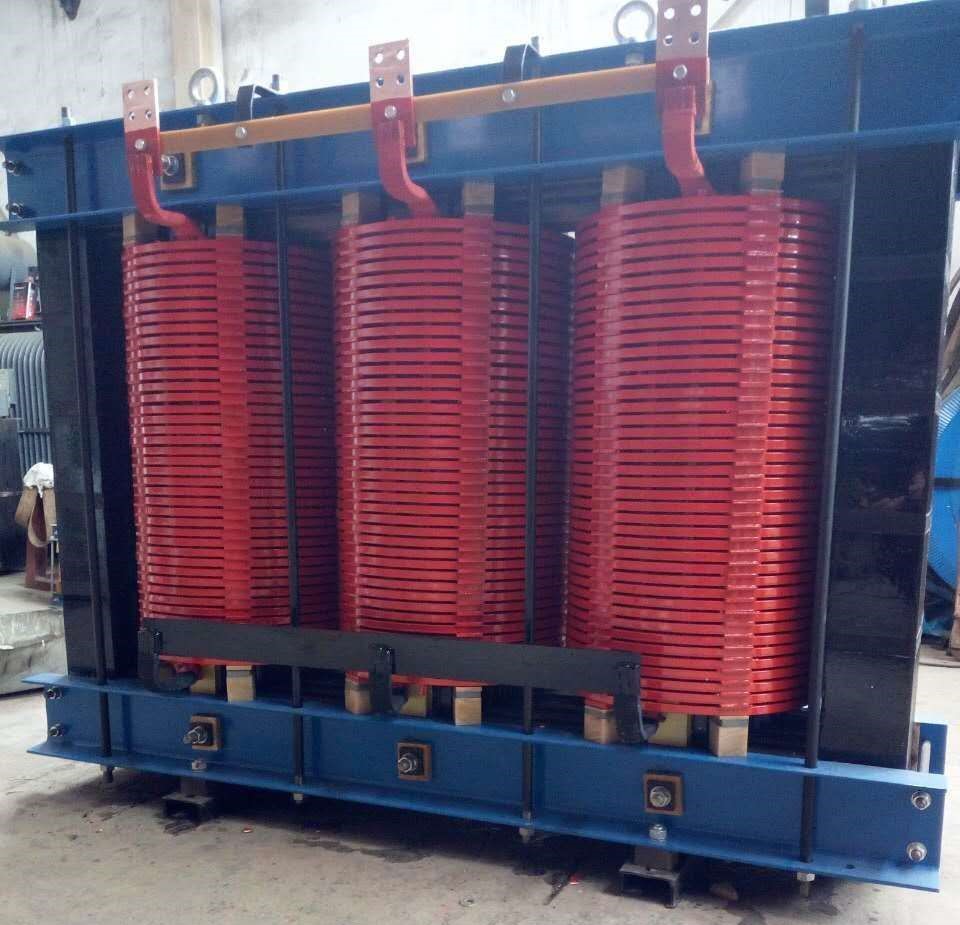
Three-Phase Five-Limb Transformer – Custom Electrical Power Control Device
Brand name: HANI
Packing Details : Wooden box with fumigation or Wooden Fram or Steel Frame
Delivery Details: 30~60days or Based on the quantity
Shipping: Sea freight、Land freight、Air freight
HANI specializes in industrial electrical automation, delivering integrated drive and control solutions to safeguard your production.
Product Details
Three-Phase Five-Limb Transformer – Custom Electrical Power Control Device
Engineered for industrial automation products · Precision power electronics · Bespoke three-phase transformer solutions
Introduction to Three-Phase Five-Limb Transformer Technology
In modern industrial automation products, the need for reliable, compact, and electrically robust magnetic components has never been greater. The three-phase five-limb transformer represents a refined core topology that directly addresses the challenges of high‑power density, harmonic control, and neutral current handling. Unlike conventional three‑limb cores, the five‑limb design introduces two unwound outer limbs that provide a low‑reluctance return path for zero‑sequence flux. This seemingly simple structural change unlocks significant performance benefits — making it a cornerstone of advanced power electronics and custom transformer manufacturing.
At HANI, we have spent decades perfecting the design and production of high‑voltage and low‑voltage transformers and reactors. Our three‑phase five‑limb transformers are built upon deep domain knowledge, strict adherence to IEC, GB, and CCC standards, and a manufacturing culture that treats every unit as a critical component in someone’s industrial automation products ecosystem. Whether you need galvanic isolation, voltage adaptation, rectifier duty, or high‑impedance fault‑current limiting, our three-phase transformer range covers a broad spectrum of ratings and configurations.
Core Principle: Why Five Limbs?
A standard three‑phase three‑limb transformer works well under balanced conditions, where the vector sum of fluxes is near zero and the core provides a closed magnetic circuit. However, when the load becomes unbalanced — a common scenario in industrial facilities with single‑phase loads, variable speed drives, and multiple power electronics interfaces — zero‑sequence flux cannot circulate effectively. It is forced to travel outside the core, inducing stray losses in structural steel, increasing temperature, and degrading efficiency. In a five‑limb design, the two outer yokes complete a magnetic path for zero‑sequence flux with much lower reluctance, channeling it safely back to the phases. This directly reduces zero‑sequence impedance, supports better voltage regulation under unbalanced loading, and minimises localised heating.
Additionally, the five‑limb core allows a reduction in the height of the main phase legs for a given power rating, since the flux per leg can be managed more efficiently. For custom transformer projects where installation space is at a premium — think offshore platforms, containerised substations, or densely packed automation cabinets — the five‑limb core becomes an enabling technology. This is precisely the kind of value that HANI delivers: not just a component, but a well‑reasoned electromagnetic solution embedded in your industrial automation products.
Key Technical Advantages and Scientific Basis
- Zero‑Sequence Flux Management: The outer limbs provide a dedicated return path, keeping zero‑sequence impedance predictable and low. This is vital for power electronics systems where neutral currents — including third harmonic triplens — can circulate heavily.
- Reduced Overall Height: For large MVA ratings (typically above 5 MVA), a three‑limb transformer would require extremely tall winding legs to accommodate sufficient core cross‑section. By distributing the flux, the five‑limb core keeps the yoke depth smaller and reduces the unit’s physical height, easing transport and installation constraints.
- Better Short‑Circuit Withstand: The mechanical forces under short‑circuit conditions are strongly influenced by winding geometry and core clamping. The five‑limb structure allows a more symmetrical clamping arrangement and reduces axial forces, contributing to longer operational life — a quality highly valued in continuous‑duty industrial automation products.
- Harmonic Tolerance: In modern factories, non‑linear loads abound: VFDs, UPS systems, rectifiers, and robotic controllers. A five‑limb three-phase transformer can be designed with specific winding arrangements (e.g., zig‑zag secondary) to mitigate harmonic propagation, making it a natural fit for high‑integrity power electronics installations.
- Thermal Resilience: With better flux distribution, hot spots are minimised. Combined with vacuum‑pressure impregnation (VPI) and use of high‑grade insulation systems (Class F or H, 155 °C or 180 °C), the transformer maintains excellent thermal performance even in enclosed or fan‑cooled arrangements.
Typical Technical Specifications – Reference Table
The following table provides a representative overview of parameters achievable with our standard and custom transformer builds. Actual values are determined during detailed engineering review based on your industrial automation products requirements.
| Parameter | Standard Range | Notes / Customisation |
|---|---|---|
| Rated Power | 1 kVA – 20 MVA | Higher ratings on request; multi‑winding options |
| Primary / Secondary Voltage | Up to 36 kV / custom levels | L‑L and L‑N configurations according to IEC 60076 |
| Frequency | 50 Hz / 60 Hz | Dual‑frequency designs for global deployments |
| Winding Material | Copper (Cu‑ETP) or Aluminium | Foil or wire; sheet‑wound for low‑voltage high‑current |
| Core Material | Cold‑rolled grain‑oriented silicon steel (CRGO) | Thicknesses 0.23 mm – 0.30 mm, low‑loss grades |
| Insulation Class | F (155 °C) / H (180 °C) | Nomex®, DMD, glass‑fibre reinforced epoxies |
| Cooling Method | AN, AF, KNAN, or mixed | Natural air, forced air, or water‑cooled variants |
| Vector Group | Dyn11, YNd5, Yyn0, Dzn0, etc. | Zig‑zag windings for neutral formation and harmonic damping |
| Impedance Voltage | Typically 4 % – 8 % | Tailored to match fault‑level requirements |
| Sound Level | <65 dB(A) for dry‑type designs | Low‑noise cores available for sensitive environments |
| Standards Compliance | IEC 60076, GB/T 10229, CCC, IEEE C57.12.01 | Full type‑test reports provided |
Construction and Manufacturing Details – Production Reference Value
Our approach to building a three-phase transformer begins with careful material selection and process control that directly influences long‑term reliability. The five‑limb core is assembled from high‑permeability, grain‑oriented silicon steel laminations, precision‑cut to minimise burrs and inter‑laminar losses. Step‑lap joints are used at the corner intersections to reduce no‑load losses and audible noise. The core is rigidly clamped using structural steel frames with distributed pressure points to avoid local stress concentrations that could degrade magnetic properties over time.
Windings are wound on dedicated formers and can be configured as layer, disc, or foil types depending on current and voltage requirements. For low‑voltage, high‑current applications — common in power electronics feeding electrolysis, plating, or induction heating — we employ foil winding techniques with inter‑layer insulation of Nomex or polyester film, ensuring excellent short‑circuit strength and thermal conductivity. High‑voltage windings receive additional corona shielding and are often encapsulated in epoxy resin under vacuum for dry‑type cast‑coil designs, providing exceptional moisture resistance and dielectric integrity.
All custom transformer units undergo a thorough testing protocol: ratio and polarity verification, winding resistance measurement, insulation resistance testing (often at 5 kV DC for dry‑type), applied and induced over‑voltage tests, partial discharge measurement (<10 pC for cast‑resin units is typical), and temperature rise simulation. These tests are conducted in our ISO‑certified facility according to IEC 60076‑11 for dry‑types and IEC 60076‑1 general requirements. For industrial automation products that demand extremely clean power, we also offer optional shield windings and Faraday screens to attenuate common‑mode noise.
Applications Across Industrial Automation
The versatility of the three‑phase five‑limb transformer makes it indispensable in a wide variety of industrial automation products settings. Below are concrete examples where its unique characteristics provide measurable benefits:
- Motor Drive Centres and VFD Input Isolation: Feeding variable‑frequency drives with a custom transformer that isolates the power stage from the utility, reduces common‑mode currents and protects sensitive semiconductor switches. The five‑limb core helps absorb zero‑sequence components generated by PWM inverters.
- Unbalanced Industrial Loads: Production lines often mix single‑phase welding stations, three‑phase motors, and single‑phase lighting. A transformer with a five‑limb core maintains voltage balance far better, safeguarding other industrial automation products connected in the same network.
- Rectifier Transformers: For high‑current DC power supplies, specially designed three-phase transformer units with interphase transformers and five‑limb cores provide low‑ripple DC output and withstand the harmonic stress typical of 6‑pulse or 12‑pulse rectifiers — a core power electronics application.
- Renewable Energy Integration: In solar farm inverter stations or battery energy storage systems (BESS), where power flow is bidirectional and harmonic content is high, the five‑limb transformer acts as a robust interface between the power conversion system and the grid.
- Test Benches and Laboratory Setups: Precision voltage, variable output, and low electromagnetic interference are essential. A dry‑type five‑limb custom transformer with electrostatic shielding can deliver clean, adjustable power for R&D environments.
Customisation Capabilities – Built Around Your Specifications
No two industrial sites are identical, and off‑the‑shelf products rarely fit perfectly. Our custom transformer programme allows you to specify every detail: voltage ratios with taps (±5%, ±2×2.5% or fully custom), vector groups (including zig‑zag for earthing transformers), impedance values to coordinate with protective devices, enclosure ratings (IP23, IP54, etc.), and terminal arrangements (busbar, cable box, plug‑in). We also handle thermal derating for high‑altitude installations (>1000 m) and special ambient temperature ranges. Every design is simulated using finite‑element analysis to verify electromagnetic and thermal behaviour before it reaches the shop floor.
This deep engineering support ensures that the final three-phase transformer integrates seamlessly into your industrial automation products — not just electrically, but physically and thermally. Documentation packages include 3D models, GA drawings, test reports, and material certifications, offering full traceability that procurement teams in regulated industries appreciate.
Quality Assurance and International Standards
Our factory operates under a quality management system that prioritises repeatability and transparency. All products undergo rigorous testing based on IEC International Standards, GB Chinese National Standards, and applicable CCC certification requirements. For dry‑type transformers, we focus on isolation transformers, rectifier transformers, and autotransformers — each category having dedicated production cells and specialist engineers. Key quality gates include incoming silicon steel inspection (Epstein frame test for core loss), in‑process winding resistance and turns‑ratio measurements, and final acceptance tests witnessed by customer representatives or third‑party inspectors when required.
Every custom transformer leaving our facility is accompanied by a detailed test report and nameplate data in accordance with IEC 60076. Our products have become the selection of choice for numerous well‑known enterprises globally, reinforcing our reputation for reliability and consistency — a foundation upon which critical industrial automation products are built.
Frequently Asked Questions
1. What is the fundamental advantage of a five‑limb core over a three‑limb core in a three‑phase transformer?
The primary benefit lies in the management of zero‑sequence (homopolar) flux. Under unbalanced loads or earth fault conditions, the outer limbs provide a dedicated low‑reluctance path, preventing flux from escaping the core and causing structural heating. This improves voltage symmetry, reduces extra losses, and allows a more compact design for a given power rating. It is a preferred topology in many power electronics and industrial automation products environments.
2. Can I have a three-phase five-limb transformer built as a dry‑type unit?
Absolutely. Most of our five‑limb custom transformer orders for indoor or environmentally sensitive locations are dry‑type designs, often cast‑resin or vacuum‑impregnated. They offer Class F or H insulation, are flame‑retardant, and have no oil risk. This makes them ideal for integration into industrial automation products where safety and maintenance access are priorities.
3. How do you determine the impedance voltage for my custom transformer?
Impedance voltage is specified based on your system’s fault‑current limitation needs and voltage regulation constraints. During the engineering phase, we use magnetic circuit calculations and 2D/3D finite‑element analysis to optimise winding geometry and air gap distribution, delivering a three-phase transformer that meets your exact short‑circuit and efficiency goals while complying with IEC 60076‑5.
4. What standards do HANI transformers comply with?
Our devices are designed and tested according to IEC International Standards (e.g., IEC 60076 series), GB Chinese National Standards, and relevant CCC certification criteria. We also accommodate regional norms such as IEEE C57.12 or EN 50588 upon request. Full type‑test documentation is supplied with every custom transformer.
5. What makes HANI different from other transformer suppliers in the industrial automation sector?
HANI pairs deep in‑house engineering with a manufacturing culture that treats each order as a partnership. From core material selection to final testing, we apply the same rigour that has made us a qualified supplier to some of the most demanding industrial automation products manufacturers worldwide. Our ability to deliver a three-phase transformer with tailored impedance, vector group, cooling method, and enclosure — while maintaining aggressive lead times — sets us apart.
6. How can I request a quotation for a custom three-phase five-limb transformer?
Simply prepare your basic requirements — rated power, primary and secondary voltages, frequency, vector group preference, cooling method, and any special standards or environmental conditions. Our application engineers will review and propose an optimised design, complete with outline drawings and performance data. We encourage early engagement to integrate the custom transformer seamlessly into your power electronics project.
Whether powering a conveyer line, conditioning grid supply for sensitive industrial automation products, or forming the backbone of a multi‑megawatt power electronics system, the three‑phase five‑limb transformer stands as a proven, adaptable technology. Its scientific basis in zero‑sequence flux control and mechanical resilience is matched only by the real‑world production expertise needed to build it right — a combination we are proud to offer with every custom transformer that leaves our factory.
HANI is one of China’s leading professional industrial electrical automation manufacturers, providing complete drive and control solutions to customers worldwide. HANI focuses on designing and manufacturing integrated automation systems that meet the industry’s highest standards of precision, efficiency, and durability. Our engineering expertise lies in providing turnkey electrical automation projects to optimize the performance of modern industrial manufacturing plants.