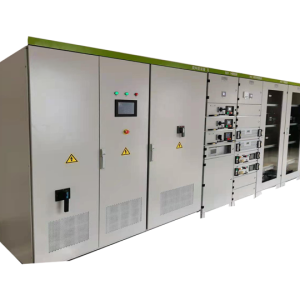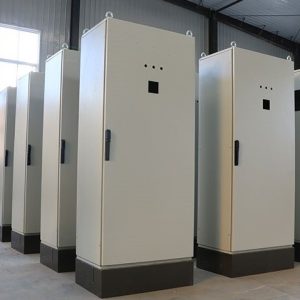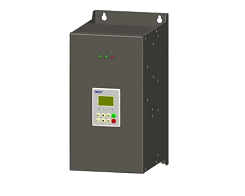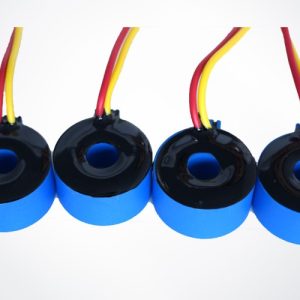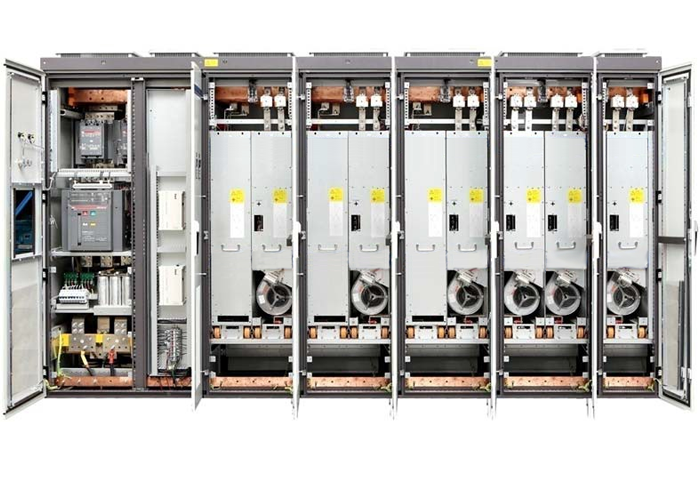
AC Drive VFD Control Cabinet – Complete Electrical Control Panel System
Brand name: HANI
Packing Details : Wooden box with fumigation or Wooden Fram or Steel Frame
Delivery Details: 30~60days or Based on the quantity
Shipping: Sea freight、Land freight、Air freight
HANI specializes in industrial electrical automation, delivering integrated drive and control solutions to safeguard your production.
Product Details
AC Drive VFD Control Cabinet – Complete Electrical Control Panel System
In modern industrial automation, the electrical control panel is the backbone of motor management, power distribution, and process control. Among the most sophisticated types of electrical control panel systems is the AC Drive Cabinet — often referred to as a VFD Control Panel or variable frequency drive control cabinet. This integrated Control Cabinet houses all necessary components to convert, condition, and distribute power to AC motors with precise speed and torque regulation. At HANI, we engineer every electrical control panel to deliver exceptional performance, safety, and energy efficiency in the most demanding environments.
🔹 What Is an AC Drive VFD Control Cabinet?
An AC Drive Cabinet is a comprehensive electrical control panel that integrates variable frequency drive technology, power electronic modules, protective switchgear, and cooling systems into one enclosed assembly. Unlike a simple motor starter panel, this VFD Control Panel is designed to vary the frequency and voltage supplied to an electric motor, enabling seamless control of rotational speed, direction, and torque. When we talk about a complete Control Cabinet for AC drives, we refer to a modular, factory-built system that can include incoming line connection, rectification, DC bus distribution, inversion, and braking — all within a single IP54 or IP55 enclosure or a suite of interconnected cabinets.
According to the functional architecture widely adopted in the industry, such an electrical control panel is subdivided into specialized cubicles: the incoming line cabinet, rectifier cabinet, inverter cabinet, and braking cabinet. Each of these fulfills a distinct role in the power conversion chain. This modularity is not only a design preference; it follows strict scientific principles of thermal management, electromagnetic compatibility (EMC), and DC bus stability.
🔹 Functional Architecture of the Electrical Control Panel System
The table below summarizes the core functional units that make up a high-power VFD Control Panel or AC Drive Cabinet. This architecture is backed by decades of power electronics engineering and is standard in heavy industries like metals, mining, paper, and marine.
| Cabinet Type | Scientific Role | Key Components | Critical Design Fact |
|---|---|---|---|
| Incoming Line Cabinet (Grid-side Connection) | Provides the first point of connection between the utility grid and the electrical control panel. It ensures safe isolation and short-circuit protection. | Main fusible disconnect switch or main circuit breaker, surge protective devices, voltage sensing | Must withstand prospective short-circuit current up to 100 kA, with proper coordination to downstream semiconductors. |
| Rectifier Cabinet (AC/DC Conversion) | Converts incoming AC voltage into a stable DC voltage for the common DC bus. Supplies all inverter modules connected to the bus. | Diode bridges or active front-end (AFE) IGBT modules, DC bus capacitors, precharge circuit, control electronics | DC bus capacitors are integrated to enable standalone testing. Multiple rectifiers can be paralleled for power scaling, and active rectifiers can return regenerative energy to the grid. |
| Inverter Cabinet (DC/AC Conversion) | Converts DC bus voltage back into variable-frequency, variable-voltage AC to precisely control motor speed and torque. | IGBT power modules, gate driver boards, current sensors, snubber capacitors, local control unit | Inverters are distributed evenly on both sides of the rectifier to minimize DC bus stress. With optional disconnect switches, an inverter can be hot-swapped without shutting down the entire Control Cabinet. |
| Braking Cabinet (Voltage Limitation) | Limits DC bus voltage rise when the motor regenerates, dissipating excess energy through external resistors. | Braking chopper IGBT, external braking resistor connection terminals, thermal monitoring | Engages when DC voltage exceeds a threshold (typically 720 V DC for a 500 V bus). Braking cabinets can be paralleled for higher braking power, a crucial feature for crane, elevator, and downhill conveyor applications. |
🔹 How the Electrical Control Panel Works — The Science Behind VFD Control
The complete electrical control panel operates on the principle of power electronics and closed-loop vector control. In a conventional VFD Control Panel, the rectifier stage first converts the fixed grid AC (e.g., 400 V, 50 Hz) to an intermediate DC voltage using a diode bridge or a PWM active rectifier. This DC link voltage is stabilized by aluminum electrolytic capacitors and film capacitors that smooth out ripple and handle both high- and low-frequency harmonics. The inverters then use insulated-gate bipolar transistors (IGBTs) to pulse-width-modulate this DC into an AC waveform whose fundamental frequency can range from near 0 Hz up to typically 400 Hz or even higher for high-speed spindles. The result is a motor shaft speed that is directly proportional to the applied frequency, following the well-established synchronous speed formula Ns = 120f / P, where f is frequency in Hz and P is the number of motor poles.
When the motor operates in generating mode — for example, during deceleration of a high-inertia load — it feeds power back to the DC bus. In a basic electrical control panel without active front end, this raises the DC bus voltage. Once it exceeds the safe threshold set by the braking chopper, a power resistor is switched in to dissipate the energy as heat. In more advanced systems, a regenerative AC Drive Cabinet can feed this energy back into the mains, achieving net energy savings that can exceed 30% in cyclic applications. This is not merely theoretical: semiconductor physics dictates the voltage drop (VCE(sat)) and switching losses, and every millijoule of heat must be managed through forced-air cooling or liquid cooling, making thermal design a vital part of the electrical control panel.
🔹 Incoming Line Cabinet — The Entry Point of the Electrical Control Panel
The incoming line cabinet is the grid-side interface of the electrical control panel. It contains the main circuit breaker or fuse switch disconnector that provides overload and short-circuit protection for the entire Control Cabinet array. According to IEC 61439-1 and -2, the assembly must be type-tested to withstand the required rated short-time withstand current (Icw). This cabinet also often houses line reactors (3% or 5% impedance) that reduce harmonic distortion and protect rectifier diodes from voltage transients. For a reliable AC Drive Cabinet system, the incoming design ensures the point of common coupling (PCC) meets IEEE 519 harmonic limits.
🔹 Rectifier Cabinet Configurations — Basic vs. Regenerative
Within any VFD Control Panel of significant power, the rectifier cabinet can be configured as a basic 6-pulse or 12-pulse diode rectifier, or as an active front end (AFE) with IGBTs. The basic rectifier is cost-effective but generates non-linear currents that require harmonic filtration. The regenerative electrical control panel rectifier, by contrast, uses bidirectional IGBT bridges to draw nearly sinusoidal current and allows power flow back to the grid. In a typical HANI electrical control panel, multiple rectifier cabinets can be paralleled on the DC bus to increase total system power, and they can even mix basic and regenerative types as needed — a practical flexibility that reduces capital cost while maintaining energy-recovery capability where it matters most.
🔹 Inverter Cabinet Design and Hot-Swap Capability
The inverter section of the VFD Control Panel is where the precise motor control algorithms execute — from simple volts-per-hertz (V/f) to sensorless vector and closed-loop field-oriented control. Inverter modules are physically arranged to minimize the length of the DC bus connections, reducing parasitic inductance and thus voltage overshoot during IGBT switching. Modern electrical control panel designs allow individual inverter cabinets to be isolated from the DC bus via optional disconnect switches. This means a single inverter can be safely removed or serviced while the rest of the Control Cabinet continues operation — an enormous advantage in continuous process lines such as paper machines or steel rolling mills, where downtime costs can exceed $10,000 per hour.
🔹 Braking Cabinet — Protecting the DC Bus in Regenerative Mode
The braking cabinet within the AC Drive Cabinet ensures that the DC bus voltage stays within safe limits. When an induction motor is driven by a VFD Control Panel and the load overhauls the motor (e.g., lowering a heavy crane load), the motor becomes a generator. The kinetic energy is converted to electrical energy and pumped into the DC bus via the inverter freewheeling diodes. Without a braking unit, the bus voltage would rapidly rise until the drive trips on overvoltage. The braking chopper IGBT is triggered at a precisely calibrated DC voltage level, routing current to external wire-wound resistors that dissipate the energy. In large electrical control panel projects, multiple braking units can be connected in parallel, with load sharing managed by the chopper control’s internal hysteresis band, a well-documented method that prevents asymmetrical thermal stress.
🔹 Technical Specifications and Ratings
The following table gives representative technical parameters for a typical medium-voltage electrical control panel / VFD Control Panel range. Actual values are tailored per project by HANI engineers based on motor data and grid conditions.
| Parameter | Typical Value / Range | Notes |
|---|---|---|
| Input Voltage | 380 – 690 V AC, 3-phase (up to 11 kV with step-down transformer) | Standard industrial voltages according to IEC 60038 |
| Input Frequency | 50/60 Hz ±5% | Auto-detection in modern VFD control panels |
| DC Bus Voltage | ≈1.35 × Input VLL (e.g., 540 V DC for 400 V AC input) | Ripple < 5% under full load |
| Output Frequency | 0 – 400 Hz (standard), up to 1000 Hz for high-speed applications | Resolver or encoder feedback for sub-Hz torque control |
| Total Harmonic Distortion (THDi) | <5% with AFE; 30-45% with 6-pulse rectifier (mitigated by passive filters) | Measured at PCC per IEEE 519 |
| Braking Chopper Turn-On Voltage | Typically 720 V DC for 500 V DC bus; 1120 V DC for 800 V bus | Adjustable threshold to match motor regeneration profile |
| Protection Degree | IP43, IP54, IP55 (higher on request) | Forced ventilation with IP55 requires filtered intake and exhaust |
| Ambient Temperature Range | -10 °C to +40 °C (up to +55 °C with derating) | Conformal coating on PCBs for harsh environments |
🔹 Why Industrial Users Choose a Comprehensive Electrical Control Panel
Every Control Cabinet manufactured by HANI is not merely a collection of components, but a precision-engineered electrical control panel tested according to international standards such as IEC 61439-1 and UL 508A. The benefits of adopting an integrated AC Drive Cabinet approach are numerous and rooted in real-world performance data:
- ▹ Energy Efficiency: A VFD Control Panel can reduce motor energy consumption by 20–50% by matching speed to load, compared to across-the-line starting or mechanical throttling. The regenerative electrical control panel goes further, recovering braking energy.
- ▹ Reduced Mechanical Stress: Soft starting and controlled acceleration ramps eliminate mechanical shocks, prolonging gearbox, belt, and coupling life — a fact supported by numerous bearing life calculations using ISO 281.
- ▹ Process Control Precision: A VFD Control Panel with encoder feedback achieves speed regulation of 0.01% and torque response within milliseconds, essential for winders, extruders, and test stands.
- ▹ Modular Redundancy: The multi-inverter electrical control panel architecture allows n+1 redundancy for critical motors, where one inverter can seamlessly take over should another fail.
- ▹ Harmonics Compliance: Built-in line reactors, passive filters, or AFE technology within the AC Drive Cabinet ensure compliance with grid codes, preventing penalties.
🔹 HANI Electrical Control Panel — Built for Extreme Reliability
Every electrical control panel leaving the HANI facility undergoes a rigorous factory acceptance test (FAT) that includes insulation resistance testing (megger test), dielectric withstand (hipot) according to IEC 61439, full-load current injection, and communication network verification. Copper busbars are electro-tin plated to prevent oxidation and minimize joint resistance. The enclosure frame is constructed from galvanized steel with a polyester powder coating that withstands salt spray testing per ISO 9227. In an HANI VFD Control Panel, the design life expectancy exceeds 20 years under continuous operation at rated ambient conditions — a claim supported by component selection using MIL-HDBK-217F reliability prediction methods for IGBTs and capacitors.
🔹 Applications Across Key Industries
The versatility of the AC Drive Cabinet makes it the preferred electrical control panel for:
Mining Hoists & Conveyors
Pulp & Paper Machines
Marine & Offshore Cranes
Oil & Gas Pumps
HVAC Chiller Plants
Water/Wastewater Treatment
Test Rig Dynamometers
In each of these, the electrical control panel must deliver not just functional control, but absolute reliability. A single failure in a mining hoist Control Cabinet could halt production and compromise safety. That’s why HANI builds every VFD Control Panel with substantial design margins and comprehensive protection functions — including ground fault detection, DC bus overvoltage, overtemperature, and IGBT desaturation monitoring.
🔹 FAQ — Common Questions about VFD Control Panels and Electrical Control Panels
Q: What is the difference between a standard motor control center and a VFD Control Panel?
A: A standard motor control center (MCC) typically provides only electromechanical starting (DOL, star-delta, soft starter) and short-circuit protection. A VFD Control Panel goes much further — it is a complete electrical control panel that actively converts voltage and frequency, enabling continuous speed variation. It integrates rectifiers, DC link, and inverters with sophisticated digital control loops, allowing energy savings and dynamic response impossible with conventional starters.
Q: What does a braking cabinet do inside the electrical control panel?
A: When the motor decelerates or the load overhauls, the motor generates electricity that raises the DC bus voltage. The braking cabinet in the AC Drive Cabinet activates a chopper transistor that diverts this energy to an external resistor, dissipating it as heat. This is a proven method to prevent overvoltage tripping and allows rapid deceleration of high-inertia loads.
Q: Can multiple rectifier cabinets be used in one Control Cabinet assembly?
Absolutely. In many high-power electrical control panel installations, rectifier cabinets are connected in parallel on the DC bus to increase total power capability. HANI often supplies Control Cabinet configurations that mix basic diode rectifiers and active front ends, optimizing both cost and regeneration capacity where needed.
Q: Why are inverter cabinets placed on both sides of the rectifier in large VFD control panels?
A: Physically distributing the inverter modules on either side of the rectifier reduces the DC bus current density and minimizes busbar stresses caused by parasitic inductance. This is a standard engineering practice that enhances the dynamic current sharing and thermal performance of the entire VFD Control Panel.
Q: Is it possible to hot-swap an inverter while the electrical control panel is running?
A: Yes, provided that the AC Drive Cabinet is equipped with optional DC bus disconnect switches for each inverter section. With proper safety procedures, a single inverter can be isolated, removed, and replaced without interrupting power to other inverters sharing the same DC bus — a critical design feature in continuous process industries.
Q: How does HANI ensure the quality of its electrical control panels?
A: Every HANI electrical control panel receives a full FAT including thermographic inspection of all bus joints, verification of control logic, and 24-hour burn-in. Materials and workmanship comply with IEC and UL standards. The result is a Control Cabinet that performs reliably for decades under harsh conditions.
🔹 Production Reference and Engineering Insight
For OEMs and panel builders who fabricate their own electrical control panel designs, the described functional split provides a validated architectural template. When constructing a VFD Control Panel cabinet line-up, ensure the DC bus bar cross-sectional area is selected for no more than 1.5 A/mm² current density to limit temperature rise, and maintain a minimum clearance of 25 mm between phases for 690 V systems. Busbar supports must be rated for short-circuit forces calculated by IEC 60865. The enclosure of the Control Cabinet must incorporate proper segregation (Form 2b, 3b, or 4b as per IEC 61439-2) depending on maintainability requirements. As HANI’s engineering team emphasizes, never underestimate the importance of capacitor reforming when a VFD Control Panel has been stored without power for over 12 months — apply a gradual voltage ramp to reform the aluminum oxide dielectric layer and prevent catastrophic failure on first energization.
HANI delivers world-class electrical control panel solutions — from standalone AC Drive Cabinet units to fully integrated drive systems with multi-megawatt capacity. Contact us to discuss your specific VFD Control Panel requirements and discover how a properly engineered Control Cabinet can transform your operation’s productivity and energy footprint.
HANI is one of China’s leading professional industrial electrical automation manufacturers, providing complete drive and control solutions to customers worldwide. HANI focuses on designing and manufacturing integrated automation systems that meet the industry’s highest standards of precision, efficiency, and durability. Our engineering expertise lies in providing turnkey electrical automation projects to optimize the performance of modern industrial manufacturing plants.