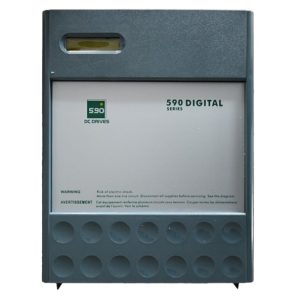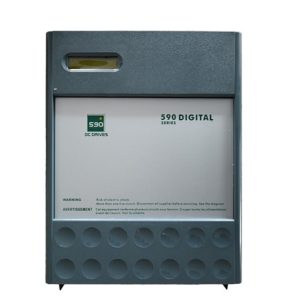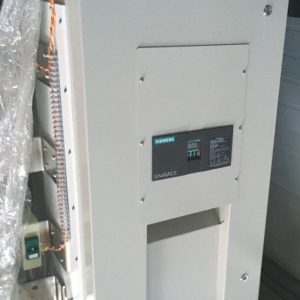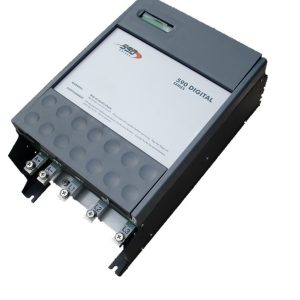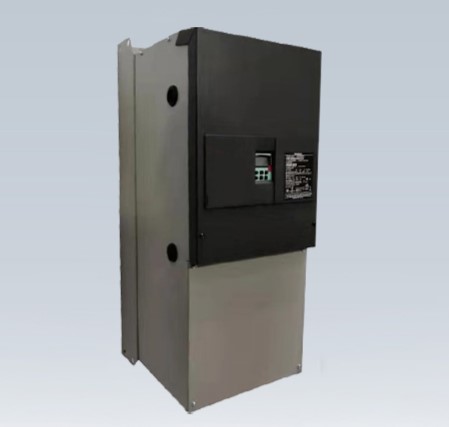
SPDM Expandable DC Drive System – Heavy-Duty Industrial Automation Control
Brand name: HANI
Packing Details : Wooden box with fumigation or Wooden Fram or Steel Frame
Delivery Details: 30~60days or Based on the quantity
Shipping: Sea freight、Land freight、Air freight
HANI specializes in industrial electrical automation, delivering integrated drive and control solutions to safeguard your production.
Product Details
Industrial Automation Series
SPDM Expandable DC Drive System – Heavy-Duty Industrial Automation Control
Engineered for precision, scalability, and uncompromising reliability in the most demanding production environments.
In modern industrial automation, the selection of electrical drives and control systems is not merely a component choice—it is a foundational decision that determines throughput, energy efficiency, and long-term operational stability. The SPDM Expandable DC Drive represents a significant advancement in DC Drives technology, delivering a modular, scalable platform engineered for heavy-duty applications where conventional drive solutions fall short. Designed and manufactured with rigorous attention to thermal management, harmonic mitigation, and real-time control responsiveness, the SPDM series stands as a benchmark among electrical drives and control solutions available to the market today.
Whether deployed in steel rolling mills, paper processing lines, mining conveyors, or large-scale extrusion equipment, the SPDM Expandable DC Drive system offers unparalleled configurability. Unlike fixed-capacity units that lock facilities into rigid operational parameters, the SPDM architecture allows plant engineers to expand current ratings, add regenerative braking modules, and integrate advanced fieldbus communication protocols as production demands evolve. This forward-compatible design philosophy places SPDM at the forefront of contemporary electrical drives and control innovation. HANI, as a key systems integrator utilizing the SPDM platform across multiple heavy-industry deployments, has documented substantial reductions in unplanned downtime after migrating legacy analog DC Drives to the SPDM digital ecosystem.
System Architecture Overview
The SPDM Expandable DC Drive employs a distributed power-stage topology with a centralized digital signal processor (DSP) controller. Each power module handles up to 250 A continuous at 600 VDC, and up to six modules can be paralleled within a single cabinet—yielding a maximum output of 1,500 A. The modularity inherent in this design ensures that electrical drives and control engineers can right-size their investment while preserving a clear upgrade path. Gate-drive isolation exceeds 4 kV, and all modules feature integrated desaturation detection with sub-microsecond fault response, a critical specification for DC Drives operating in arc-prone industrial settings.
Technical Specifications & Performance Parameters
The following table details the key performance metrics of the SPDM Expandable DC Drive system. These values are verified under IEC 61800-2 test conditions at 40°C ambient with rated line voltage. Understanding these specifications is essential for electrical drives and control professionals engaged in system design, panel engineering, and commissioning.
| Parameter | SPDM-250 | SPDM-500 | SPDM-1500 (Max Config) |
|---|---|---|---|
| Rated Armature Current | 250 A DC | 500 A DC | 1,500 A DC |
| Overload Capacity (60 s) | 150% | 150% | 150% @ 2,250 A |
| Input Voltage (3-Phase) | 380–480 VAC ±10% | 380–480 VAC ±10% | 380–690 VAC ±10% |
| Field Excitation Output | Up to 30 A @ 360 VDC | Up to 60 A @ 360 VDC | Up to 120 A @ 360 VDC |
| Switching Frequency | 2–8 kHz (adaptive) | 2–8 kHz (adaptive) | 2–6 kHz (adaptive) |
| Control Topology | DSP-based vector control | DSP-based vector control | Multi-DSP parallel |
| Speed Regulation Accuracy | ±0.01% (with encoder) | ±0.01% (with encoder) | ±0.005% (with encoder) |
| Fieldbus Protocols | PROFIBUS, Modbus RTU/TCP | PROFIBUS, Modbus RTU/TCP, EtherNet/IP | All major protocols incl. PROFINET |
| Ambient Operating Temp. | -10°C to +50°C | -10°C to +50°C | -10°C to +45°C (derated above 40°C) |
| Enclosure Rating | IP21 / IP54 (optional) | IP21 / IP54 (optional) | IP21 / IP54 (cabinet dependent) |
* All specifications subject to verification under actual installation conditions. Derating factors apply for altitudes exceeding 1,000 m above sea level per IEC 61800-2.
Thermal Management & Power Density Optimization
One of the persistent challenges in electrical drives and control engineering is managing the substantial heat dissipated by power semiconductors during continuous operation. The SPDM Expandable DC Drive addresses this through a multi-zone forced-air cooling architecture with N+1 redundant fans that are hot-swappable without interrupting drive operation. Each power module incorporates a bonded-fin heatsink with computational fluid dynamics (CFD)-optimized airflow channels, yielding a thermal resistance of less than 0.04 K/W at rated flow. For DC Drives deployed in environments with ambient temperatures exceeding 40°C, an optional liquid-cooled cold plate interface is available, reducing the thermal footprint by up to 40% compared to air-cooled configurations.
The practical implication of this thermal design is tangible on the factory floor. Facilities that previously allocated substantial square footage for drive cabinets and auxiliary cooling can now consolidate their electrical drives and control infrastructure into a significantly smaller footprint. This power density advantage—achieving up to 1,500 A in a single 2,000 mm × 800 mm × 600 mm cabinet—translates directly into reduced capital expenditure on electrical rooms and lower parasitic cooling loads. For brownfield installations where space is at a premium, the Expandable DC Drive architecture of the SPDM series delivers a compelling spatial efficiency argument alongside its electrical performance merits.
Control Precision & Dynamic Response
At the heart of every SPDM unit lies a 32-bit floating-point DSP executing a field-oriented control (FOC) algorithm at a 100 µs cycle time. The current loop bandwidth exceeds 1.5 kHz, enabling the SPDM Expandable DC Drive to maintain torque regulation within ±0.5% even during rapid load transients. A built-in adaptive resonance suppression algorithm identifies and compensates for mechanical resonances in the driven machinery, a feature that distinguishes SPDM DC Drives from simpler SCR-based designs that lack such sophisticated digital signal processing. For electrical drives and control applications involving coordinated multi-motor systems—such as continuous casting lines—the SPDM supports electronic gearing and electronic cam profiles with sub-millisecond synchronization jitter across up to 12 axes.
HANI’s commissioning records from a cold-rolling tandem mill installation documented a 22% improvement in strip thickness consistency after replacing legacy analog DC Drives with SPDM-500 units, attributable to the enhanced speed regulation and inter-stand tension control enabled by the digital electrical drives and control platform. These real-world results underscore the measurable production-quality benefits that accrue from deploying modern Expandable DC Drive technology in precision-critical processes.
Expandability: The Core Design Philosophy
The Expandable DC Drive concept embodied by the SPDM series is not a marketing abstraction—it is a concrete engineering principle reflected in every aspect of the hardware and firmware architecture. Each SPDM base unit ships with the full DSP control suite, including all software features, regardless of the initial power rating. This means a plant that initially purchases an SPDM-250 for a modest application can later expand to SPDM-500 or SPDM-1500 by adding power modules and upgrading the busbar interconnect assembly—without replacing the controller, without re-engineering the control cabinet layout, and without retraining maintenance personnel on a new platform.
This scalability extends beyond current ratings. The SPDM firmware supports field-upgradable option packs for advanced electrical drives and control functions including active front-end (AFE) regeneration, 12-pulse and 24-pulse rectifier configurations for harmonic compliance (IEEE 519), and integrated safety functions up to SIL 3 / PL e per IEC 61800-5-2. The modularity of the Expandable DC Drive platform ensures that capital investments made today remain productive and current for a decade or more, a consideration of paramount importance for asset-intensive industries where DC Drives are expected to deliver service lives exceeding 15 years.
Integrated Protection & Diagnostics Suite
Comprehensive protection is non-negotiable in electrical drives and control systems operating in heavy industrial environments. The SPDM Expandable DC Drive incorporates a layered protection architecture that safeguards both the drive itself and the connected motor and machinery.
| Protection Category | Specific Functions | Response Time | Configurability |
|---|---|---|---|
| Overcurrent / Short Circuit | IGBT desaturation detection, instantaneous trip | ≤ 2 µs | Threshold: 200%–400% Inom |
| Thermal Overload (I²t) | Motor thermal model with ambient compensation | Programmable curve | Class 5–30 per IEC 60947-4-2 |
| Ground Fault | Residual current monitoring, AC/DC sensitive | ≤ 10 ms | 50 mA–5 A trip level |
| Overvoltage / Undervoltage | DC bus monitoring with regenerative clamp | ≤ 1 ms | ±15% of nominal DC bus |
| Phase Loss / Imbalance | Input phase monitoring, automatic derating | ≤ 50 ms detection | Imbalance threshold: 5%–20% |
| Safe Torque Off (STO) | Dual-channel hardware STO, SIL 3 capable | ≤ 5 ms | Hardwired, fail-safe |
Real-time diagnostics are accessible via the front-panel HMI, a web-based interface over Ethernet, or through integration with plant-wide SCADA systems. The SPDM logs the last 1,000 fault events with time-stamped waveforms of armature current, field current, DC bus voltage, and IGBT junction temperatures—providing electrical drives and control maintenance teams with forensic-grade data for root-cause analysis. Predictive maintenance algorithms monitor capacitor equivalent series resistance (ESR) trends and fan bearing health, flagging degradation before it escalates into unplanned downtime.
Industrial Applications & Deployment Scenarios
The versatility of the SPDM Expandable DC Drive makes it suitable across a broad spectrum of heavy-duty industrial processes. Below are representative application domains where DC Drives remain the preferred choice over AC alternatives due to superior low-speed torque characteristics, simpler regeneration, and proven robustness in harsh conditions.
Metal Processing
Hot and cold rolling mills, coilers and uncoilers, levelers, and slitting lines. The SPDM excels in applications requiring rapid acceleration and deceleration with precise tension control. Regenerative electrical drives and control configurations recover braking energy, improving overall plant energy efficiency.
Mining & Material Handling
Conveyor systems, hoists, crushers, and grinding mills. The Expandable DC Drive platform delivers the sustained overload capability required for starting heavily loaded conveyors. DC Drives in mining must withstand dust, vibration, and temperature extremes—conditions the SPDM is engineered to endure.
Pulp & Paper
Paper machines, winders, and calendar stacks demand exceptional speed regulation. The multi-section electrical drives and control capability of SPDM ensures draw control accuracy across dozens of coordinated drive sections simultaneously.
Rubber & Plastics
Extruders, calenders, and internal mixers. The constant-torque characteristic of DC Drives over a wide speed range is ideal for extrusion processes where material viscosity can vary significantly with temperature and formulation.
Wire & Cable Manufacturing
Drawing machines, stranders, and take-up systems. The SPDM Expandable DC Drive provides the high starting torque and precise speed holding necessary for maintaining consistent wire gauge throughout the drawing process.
Energy Efficiency & Regenerative Capability
Modern electrical drives and control systems are judged not only by their performance but by their energy footprint. The SPDM Expandable DC Drive achieves a full-load efficiency exceeding 97.5% at rated output, with the IGBT-based chopper stage delivering significantly lower conduction losses than equivalent thyristor-based DC Drives. In applications involving frequent deceleration of high-inertia loads—such as coilers in strip processing lines—the optional regenerative front-end module returns braking energy to the supply grid rather than dissipating it as heat across braking resistors. Field data from installations with active electrical drives and control regeneration indicates energy recovery rates of 15%–25% of total drive consumption, depending on the duty cycle.
The SPDM also incorporates a proprietary Eco-Mode that optimizes the switching pattern at light loads to minimize switching losses without compromising current waveform quality. For DC Drives operating at less than 30% of rated load for extended periods—common in processes with significant idle or standby intervals—Eco-Mode can reduce energy consumption by an additional 8%–12% compared to standard PWM operation. When considered over the 15–20 year service life typical of industrial Expandable DC Drive installations, these efficiency gains compound into substantial total cost of ownership reductions.
Commissioning, Maintenance & Serviceability
The SPDM Expandable DC Drive is designed with the realities of factory-floor maintenance in mind. All power modules are front-accessible and can be exchanged in under 15 minutes by a qualified technician using standard hand tools. The control terminal strip features spring-clamp connections that accommodate conductors from 0.5 mm² to 6 mm² without requiring periodic re-torquing—a common failure point in screw-terminal electrical drives and control installations subject to thermal cycling and vibration.
Commissioning is streamlined through the SPDM StartUp Wizard, a guided software routine that performs automatic motor parameter identification, inertia estimation, and auto-tuning of the current and speed control loops. The wizard reduces the time required for initial drive setup from hours to approximately 20 minutes for most DC Drives applications. For more complex electrical drives and control configurations involving coordinated multi-drive systems, the SPDM Engineering Suite provides a graphical programming environment with pre-configured function blocks for common industrial automation tasks including PID tension control, diameter calculation for winder applications, and load sharing across paralleled motors.
Frequently Asked Questions (FAQ)
Unlike traditional thyristor (SCR) DC Drives that rely on phase-angle control of the line frequency, the SPDM Expandable DC Drive employs an IGBT-based chopper stage operating at kilohertz frequencies. This enables far superior dynamic response—current loop bandwidths exceeding 1.5 kHz versus approximately 50–100 Hz for SCR designs—while dramatically reducing line-side harmonic distortion. The modular SPDM architecture also permits field expansion of current ratings, a capability simply not available with monolithic SCR electrical drives and control systems. Additionally, the digital control platform of the Expandable DC Drive enables features such as adaptive resonance suppression and predictive maintenance analytics that are absent from analog SCR designs.
The SPDM base unit includes the DSP controller, field excitation module, HMI, and a single 250 A power module. To expand, additional power modules are installed into the cabinet’s backplane, which features a modular busbar system rated for the maximum configuration. The controller automatically detects newly installed modules and configures the current-sharing algorithm accordingly. No firmware update is required—the Expandable DC Drive platform was architected from inception to support this modularity. A 250 A unit can be field-upgraded to 500 A, 750 A, 1,000 A, 1,250 A, or the full 1,500 A rating by adding the requisite number of power modules and ensuring adequate cabinet cooling capacity. This capability is particularly valuable for brownfield electrical drives and control upgrades where future production increases are anticipated but not yet funded.
Routine maintenance for the SPDM Expandable DC Drive is minimal: semi-annual inspection and cleaning of air filters and heatsink fins, annual torque verification of busbar connections, and biennial replacement of cooling fans (which are hot-swappable). The DC-link electrolytic capacitors are rated for 80,000 hours at rated ripple current and 40°C ambient, corresponding to approximately 10 years of continuous operation. With proper maintenance and within specified operating conditions, SPDM DC Drives are designed for a service life of 15–20 years. The modular architecture means individual power modules can be replaced or upgraded without retiring the entire electrical drives and control system, extending the useful life of the capital investment considerably.
Absolutely. The SPDM control platform natively supports PROFIBUS DP, Modbus RTU/TCP, EtherNet/IP, and PROFINET, with optional gateways available for DeviceNet, CANopen, and CC-Link. The drive can coexist with legacy electrical drives and control equipment on the same network, facilitating phased migration strategies. OPC UA server functionality is included, enabling seamless integration with higher-level MES and ERP systems for production tracking and energy monitoring. For plants still operating analog speed reference systems (±10 V), the SPDM includes high-resolution analog I/O with 16-bit ADC resolution, ensuring compatibility with existing DC Drives control infrastructure while providing a clear digital migration path.
The SPDM Expandable DC Drive offers several harmonic mitigation strategies. The base configuration includes a 6-pulse rectifier with a DC-link choke that reduces input current THD to approximately 35%–40%. For stricter requirements, the SPDM supports 12-pulse and 24-pulse rectifier configurations through phase-shifting transformers, reducing THD to below 12% and 6% respectively. The ultimate solution is the active front-end (AFE) option, which achieves less than 5% THD while also enabling full four-quadrant regenerative operation. The selection of the appropriate harmonic mitigation approach depends on the point of common coupling (PCC) short-circuit ratio and the applicable utility requirements—a determination that electrical drives and control system designers should make during the project engineering phase.
Yes—in fact, retrofitting legacy DC Drives is one of the most common deployment scenarios for the SPDM Expandable DC Drive. Many industrial facilities have DC motors with decades of remaining mechanical life but are saddled with obsolete analog drive electronics that are increasingly difficult to maintain due to component obsolescence. The SPDM can be configured to match the voltage and current ratings of virtually any industrial DC motor up to 600 VDC armature and 360 VDC field. The automatic motor parameter identification routine simplifies commissioning, and the digital electrical drives and control platform immediately provides capabilities—precision speed regulation, network connectivity, diagnostic logging—that were unavailable with the original analog drive systems. HANI has successfully executed numerous such retrofits, often completing the cutover within a single planned maintenance shift.
The Strategic Value of SPDM in Modern Industrial Operations
Selecting the right electrical drives and control platform is a decision with consequences that reverberate through a facility’s operational performance for decades. The SPDM Expandable DC Drive system addresses the core challenges that plant engineers and maintenance managers face: the need for reliable, high-performance DC Drives that can adapt as production requirements change, the imperative to minimize unplanned downtime through predictive diagnostics, and the practical reality that capital equipment must justify its cost through measurable improvements in product quality and energy efficiency.
With its modular architecture, field-upgradable power ratings, comprehensive protection suite, and seamless integration with modern industrial networks, the SPDM series represents a considered, forward-looking investment in electrical drives and control technology. For heavy-duty applications where the unique characteristics of DC Drives—high starting torque, wide constant-power speed range, and inherent four-quadrant capability—remain indispensable, the Expandable DC Drive architecture of SPDM ensures that today’s investment will continue to deliver value well into the future.
SPDM Expandable DC Drive System — Engineered for the demands of today, designed for the unknowns of tomorrow.
© SPDM Industrial Drives. All specifications subject to change without notice. Consult factory for application-specific engineering support.
HANI is one of China’s leading professional industrial electrical automation manufacturers, providing complete drive and control solutions to customers worldwide. HANI focuses on designing and manufacturing integrated automation systems that meet the industry’s highest standards of precision, efficiency, and durability. Our engineering expertise lies in providing turnkey electrical automation projects to optimize the performance of modern industrial manufacturing plants.